




The Definitive Guide to Brass Hardware: Alloys, Finishes, and How They Age
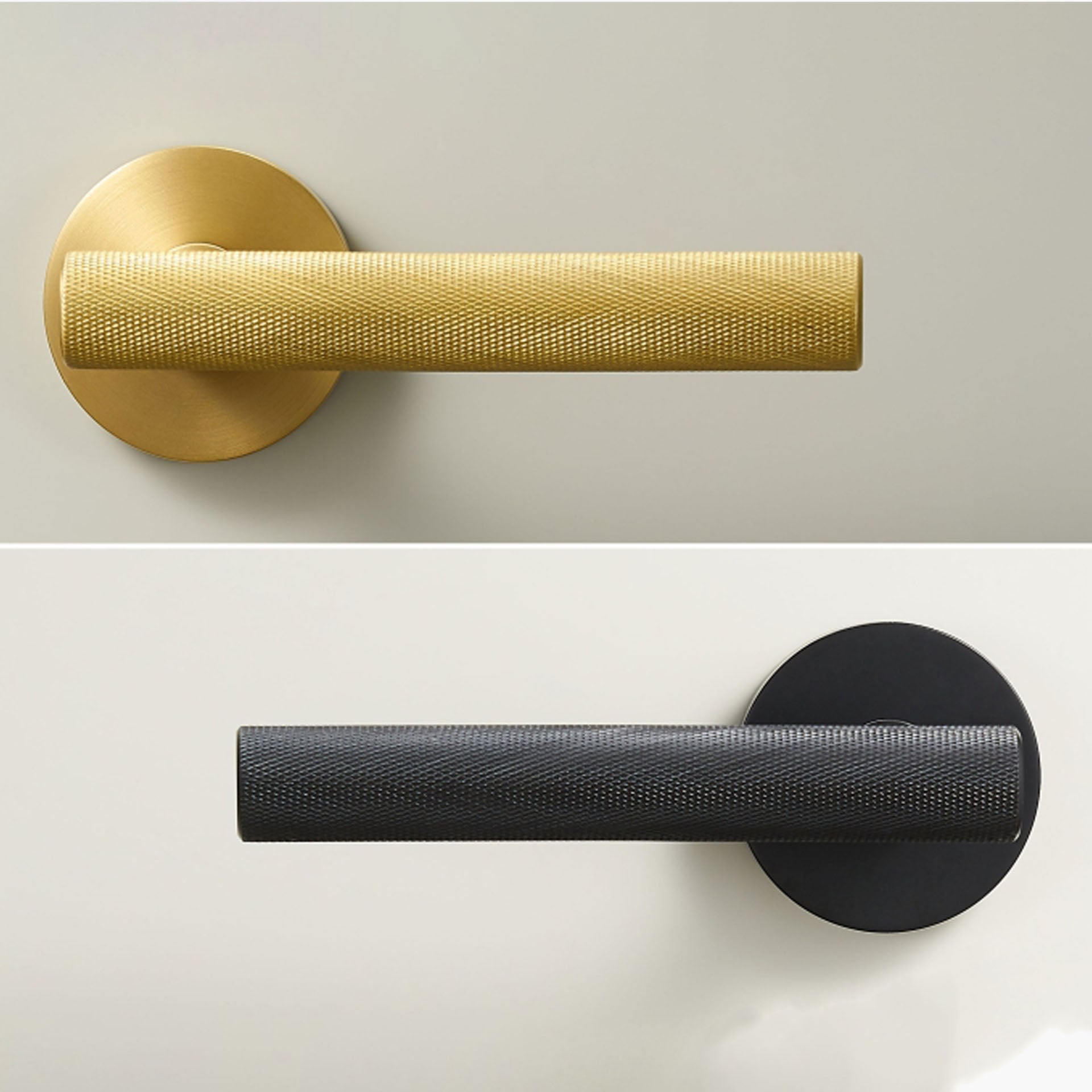
Brass hardware is cabinet, door, and architectural ironmongery cast or machined from brass, a copper-zinc alloy. In hardware applications, brass is prized for its workability, antimicrobial copper content, dimensional stability, and the way it ages: quietly, beautifully, and entirely on its own.
Brass is the oldest functional alloy in the British home. Doorknobs, hinges, locks, picture rails, fire-irons: for three centuries it has been the metal we have reached for when something needs to be both useful and beautiful. And yet, ask most homeowners what brass actually is, and the answer trails off somewhere around “a yellow metal.”
This guide is the answer to that trailing-off. It walks through what brass is made of, how the finishes are produced, and what to expect from each over the next year, the next ten, and the next fifty. It also covers where the hardware industry routinely cuts corners. If you only read one piece on brass this year, make it this one.
What brass actually is
Brass is an alloy of copper and zinc. The copper-to-zinc ratio is what determines almost everything about how a piece of brass hardware behaves: how easily it can be cast, how it machines, how it polishes, how it ages, and (yes) how it looks the day you fit it.
Pure copper is too soft for most hardware applications. Pure zinc is too brittle. Brass, a mixture of the two plus small amounts of supporting elements like lead, tin, aluminium, or iron, gives you a metal that is hard enough to take a thread, soft enough to cast in detail, and stable enough not to corrode in the way iron and steel do.
The proportions vary. A typical hardware brass might be 60% copper, 39% zinc, and 1% supporting elements. Push the copper higher and you get a redder, warmer-toned brass that ages slowly and polishes to a deep, almost gold sheen, although it is harder to machine. Push the zinc higher and you get a paler brass that machines beautifully and casts easily, although it ages faster and polishes brighter.
The main brass alloys used in hardware
Three named brass alloys turn up most often in cabinet, door, and architectural hardware sold in the UK and Europe.
CZ108 / CW508L (Common Brass, 63/37 brass)
- Composition: roughly 63% copper, 37% zinc
- Dominant property: excellent cold-formability; takes machining well
- Use case: sheet metalwork, plates, escutcheons, machined components
- Age character: patinas evenly to a warm honey, eventually deep amber over decades
- Not used for: fine sand-casting (zinc content too high; this is a wrought alloy)
Note: CZ108 is the legacy British Standard designation. Under the EN system that replaced BS 2870 in 1998, the same alloy is now coded CW508L. Both names refer to the same material.
CZ121 / CW614N (Free-Cutting Brass, 60/40 brass)
- Composition: roughly 58% copper, 39% zinc, 2.5 to 3% lead (added for machinability)
- Dominant property: outstanding machining. The lead acts as a chip-breaker
- Use case: most cabinet pulls, knobs, threaded components, screws
- Age character: patinas a touch faster than CZ108; tends very slightly cooler
- Caveat: the lead content is something we will come back to under “Solid brass vs brass-plated”
CW724R (Lead-free silicon brass — often called eco-friendly brass)
- Composition: roughly 76% copper, 21% zinc, 3% silicon, trace phosphorus. No lead
- Dominant property: lead-free, biocompatible, food-safe
- Use case: mandatory in plumbing fittings touching drinking water (UK regulations and the EU Drinking Water Directive); increasingly used in kitchen hardware
- Cost: 15 to 20% more expensive than leaded equivalents
If a manufacturer does not disclose which alloy they use, that is a flag. Most won’t. We do.
Solid brass vs brass-plated: how to tell
This is the quietest part of the hardware industry. A “brass” cabinet pull at the lower end of the market is almost never solid brass. It is more typically:
- Zinc alloy (zamak) plated with brass
- Steel plated with brass
- Aluminium with a “brass-effect” coating
Why does this matter? Three reasons. First: weight. Solid brass is dense; a CZ121 cabinet pull will weigh roughly 2.5 to 3 times what a zamak-plated equivalent weighs. Second: feel. Solid brass warms to the hand quickly and stays warm. Plated alternatives feel cool and dead. Third, and most importantly, solid brass ages with you. A plated handle wears through to its base metal at the touch points, and once that happens the finish is gone. Solid brass simply patinas.
How to spot the difference at home, in four tests.
- Weight test. Pick the handle up. If it feels lighter than expected, it is not solid brass.
- Magnet test. A magnet that sticks to a “brass” handle means there is steel underneath the plating. Solid brass is non-magnetic.
- Cut-edge inspection. If you can see a screw hole or cut edge, look at the colour. Solid brass is the same colour all the way through. Plating shows a different metal underneath.
- Sound. Solid brass rings when you tap it gently against wood. Plated zinc thuds.
If a product page does not say “solid brass”, or worse, says “brass-effect” or “antique brass finish” with no material disclosure, assume it is plated. The marketing language is doing the work the material isn’t. If you’d like to test the difference in your own hand before committing, our finish sample kit ships small solid-brass swatches in every finish we make.
How brass is finished
Once a piece of brass has been cast or machined, it needs a surface treatment. This is where the vocabulary gets confusing.
Brass finishes fall into three broad categories:
- Mechanical finishes, produced by physically working the surface (polishing wheels, sanding belts, brushing wires, hammers).
- Chemical finishes, produced by applying a chemical patina solution that accelerates oxidation in a controlled way.
- Coating finishes, produced by applying a clear coating (lacquer or wax) over a mechanical or chemical finish, locking the appearance in place.
The names you see on product pages combine these:
- Polished brass. Mechanical (mirror polish), often coated (lacquered) so it stays bright.
- Brushed brass or satin brass. Mechanical (linear brushing pattern); can be coated or uncoated.
- Antique brass. Chemical (artificial patination to a darker tone), usually coated.
- Aged brass or dark brass. Chemical (deeper artificial patination), usually coated.
- Raw brass or unlacquered brass. Mechanical finish, no coating; exposed to air and touch.
- Burnished brass. Mechanical (rubbed with a smoother); usually uncoated.
- Hammered brass. Mechanical (textural hammering before final finish).
The trade has a vocabulary problem. Different brands use different terms for the same finish, and identical terms for radically different ones. We will publish a separate finish glossary later in this series.
How each finish ages: Year 1, Year 5, Year 25
Year 1. Most coated finishes look unchanged. Lacquer is doing its job. Unlacquered brass has begun to develop touch-pattern patina: the bright spots on a doorknob where a hand grips it daily, contrasted against the gentle dulling of the rest. It is still bright; it is no longer new.
Year 5. Lacquered finishes are mostly intact, but in high-touch areas (kitchen drawer pulls, bathroom taps, door handles in heavy use) the lacquer is wearing through. Brass that has been protected from oxidation for five years is suddenly exposed and begins to age rapidly when it is. The result is uneven: bright lacquered patches next to darkening exposed patches. Unlacquered brass, by contrast, has reached its first stable state. A warm, even mid-amber tone with darker recesses and brighter touch points.
Year 25. Lacquered hardware almost always needs refinishing or replacement by this point. The lacquer has failed unevenly across the piece. Some areas are still bright, others are dull, others have developed uneven patches of patina. Unlacquered brass, by contrast, is at its peak. Deep, complex patina with the entire history of the household legible in its surface. The handles your grandparents used.
This is the case for unlacquered brass in three sentences: it costs the same, it ages better, and it never needs refinishing.
Lacquered or unlacquered: how to choose
A short decision framework.
Choose unlacquered brass if:
- You like the idea of a material that records the life lived around it
- You do not want to maintain or refinish hardware in the future
- You are fitting hardware in heritage homes, slow-design schemes, or kitchens where age is part of the look
- You are pairing with materials that themselves age well: oak, plaster, stone, leather, linen
Choose lacquered brass if:
- You want hardware that looks like it did the day you fitted it, indefinitely
- The hardware is in a low-touch area where wear is not a concern (cupboard doors that rarely open, decorative fittings)
- You are matching to a contemporary scheme where consistency matters more than character
- You strongly dislike the appearance of patina
Both are valid choices. Lacquered brass that survives 25 years intact is rare; unlacquered brass that ages badly is rarer still. Our solid-brass cabinet knobs and pulls are offered in both, so the decision rests entirely on the look you’re after, not on what we’ll sell you.
Caring for brass hardware
The single biggest thing you can do is less than you think.
For unlacquered brass:
- Wipe with a soft, dry cloth weekly. Do not use polishing compounds unless you specifically want to reset the patina.
- For accidental water marks, a microfibre with a drop of olive oil restores the surface without stripping the patina.
- If you want to re-polish to bright (most people do not, but some do), use a brass-specific cream sparingly. The patina will start over.
For lacquered brass:
- Wipe with a damp cloth as needed. Do not polish, ever. Polishing strips the lacquer.
- Once the lacquer fails in a given area, you have two choices: live with the new uneven look (which is fine, and many people prefer it), or have the piece professionally re-lacquered.
Things to avoid universally:
- Vinegar, lemon juice, ammonia, or any acidic cleaner. They will eat both lacquer and patina.
- Steel wool or scouring pads. They scratch the surface.
- Salt-water-soaked cloths (a problem in coastal homes). Wipe down weekly with a fresh-water-damp cloth instead.
Frequently asked questions
Is solid brass hardware worth the extra cost? Yes, if you plan to keep the hardware longer than five years. Solid brass costs roughly 2 to 3 times more than plated alternatives at purchase, but lasts 5 to 10 times longer in real-world use. Cost per year of ownership favours solid brass after roughly year four.
What is the difference between brass and bronze? Brass is copper plus zinc. Bronze is copper plus tin. Bronze is harder, more expensive, and used more often in sculptural and outdoor applications. In domestic hardware, brass is overwhelmingly the standard.
Can I clean brass hardware with vinegar? No. Vinegar is acidic and will damage both lacquer (on lacquered brass) and patina (on unlacquered brass). Use a damp cloth, or a brass-specific cream if you want to reset to bright.
Why does my brass hardware turn green? Green deposits, called verdigris, form when copper in the alloy reacts with moisture, salt, or acidic compounds. It is most common on hardware exposed to coastal air, salt-water cleaning, or high-humidity bathrooms. Wipe regularly with a fresh-water-damp cloth and it will not form. If it does, gentle buffing with a cloth removes it.
Is brass hardware safe in kitchens? Yes. Brass has antimicrobial properties; copper ions disrupt bacterial cells on contact. Many hospitals are reverting from stainless steel to brass on door handles for this reason. For drinking-water-contact applications such as taps, use a lead-free silicon brass (CW724R) — often referred to in the trade as eco-friendly brass.
How can I tell if my brass hardware is plated? Pick it up: if it feels lighter than expected, it is plated. Hold a magnet to it: any pull means there is steel underneath. Look at any cut edge: a colour change from yellow to silver means plating.
Will unlacquered brass match across pieces over time? Mostly. The major patina patterns are driven by use (hands, cleaning, sunlight) and as long as the pieces are in similar conditions, they patinate similarly. Slight variation is normal and is part of the appeal.
What is the most durable brass finish? For long-term durability without maintenance: raw unlacquered brass, because it has nothing to fail. For short-term unchanged appearance: lacquered polished brass — but accept that you may need to re-lacquer at year 10 to 15.
What to read next
If you are choosing brass hardware for a new project, this guide should have answered the foundational questions. If you have a specific question we did not cover, the contact link in our footer goes directly to the design team. You can also explore our full range of solid-brass cabinet, door and architectural hardware.
The rest of our brass series, including a detailed unlacquered-vs-lacquered comparison with side-by-side ageing photos, a finish glossary, and other deep dives, will publish over the next six months. Subscribe to the journal and we will send each piece as it goes live.
Further reading
- Cabinet handle sizes explained: 96, 128, 160mm centres, proportion and retrofitting
- Passage, privacy, dummy or entry: internal door handle configurations explained
- Mortice latch or tubular latch: UK/EU vs North American door preparation
- Privacy snib vs rose button: which bathroom door lock set
- Door pull handles: single or back-to-back, and how to measure fixing centres