







Help & resources
Choose the shape first, then the size, then the finish.
Six shapes cover almost every cupboard, drawer and wardrobe. This guide gives each one its trade name and its everyday name, shows how it fixes to the door, says where it suits, and points you to the right shelf, so a product page reads the way it reads to a kitchen designer.
01: Six shapes at a glance
Every cabinet handle is one of six shapes.
The names change from store to store, which is most of the confusion. Here is what we call each shape, what else it is called, and where it lives on the site. The sections below take them one at a time.

Handles
Also called: Bar handle, pull handle, D pull
Drawers of every width and cupboard doors. The shape that holds a kitchen together.

T-Bar Handles
Also called: T-pull, T handle
Narrow drawers and doors where a knob reads too small. Modern on slab fronts.
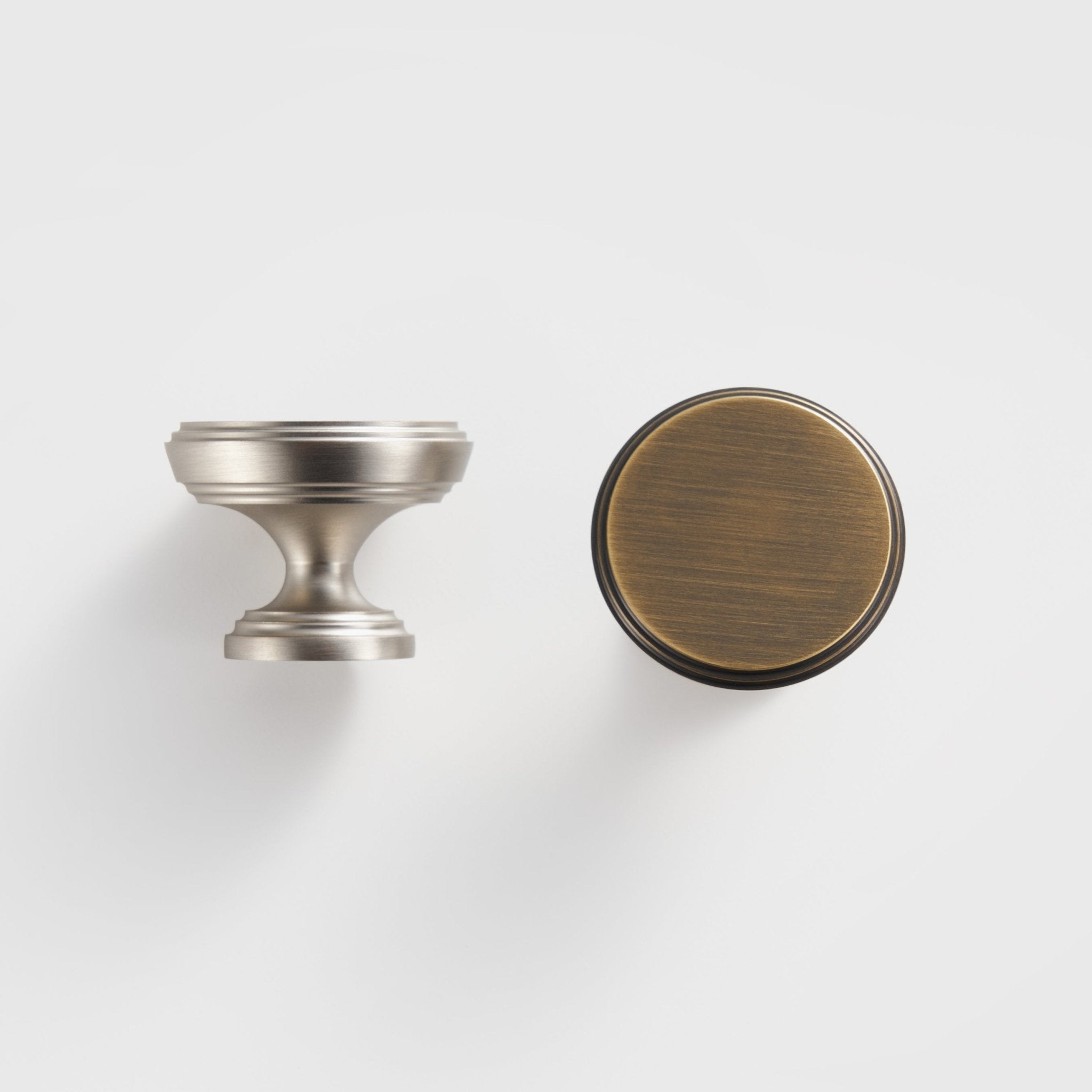
Knobs
Also called: Cabinet knob, cupboard knob, drawer knob
Cupboard doors first. Pair knobs on doors with handles on drawers.

Cup & Edge Pulls
Also called: Cup pull, bin pull, edge pull, lip pull, half-moon
Cup pulls on shaker drawers. Edge pulls on flat fronts for a handleless look.
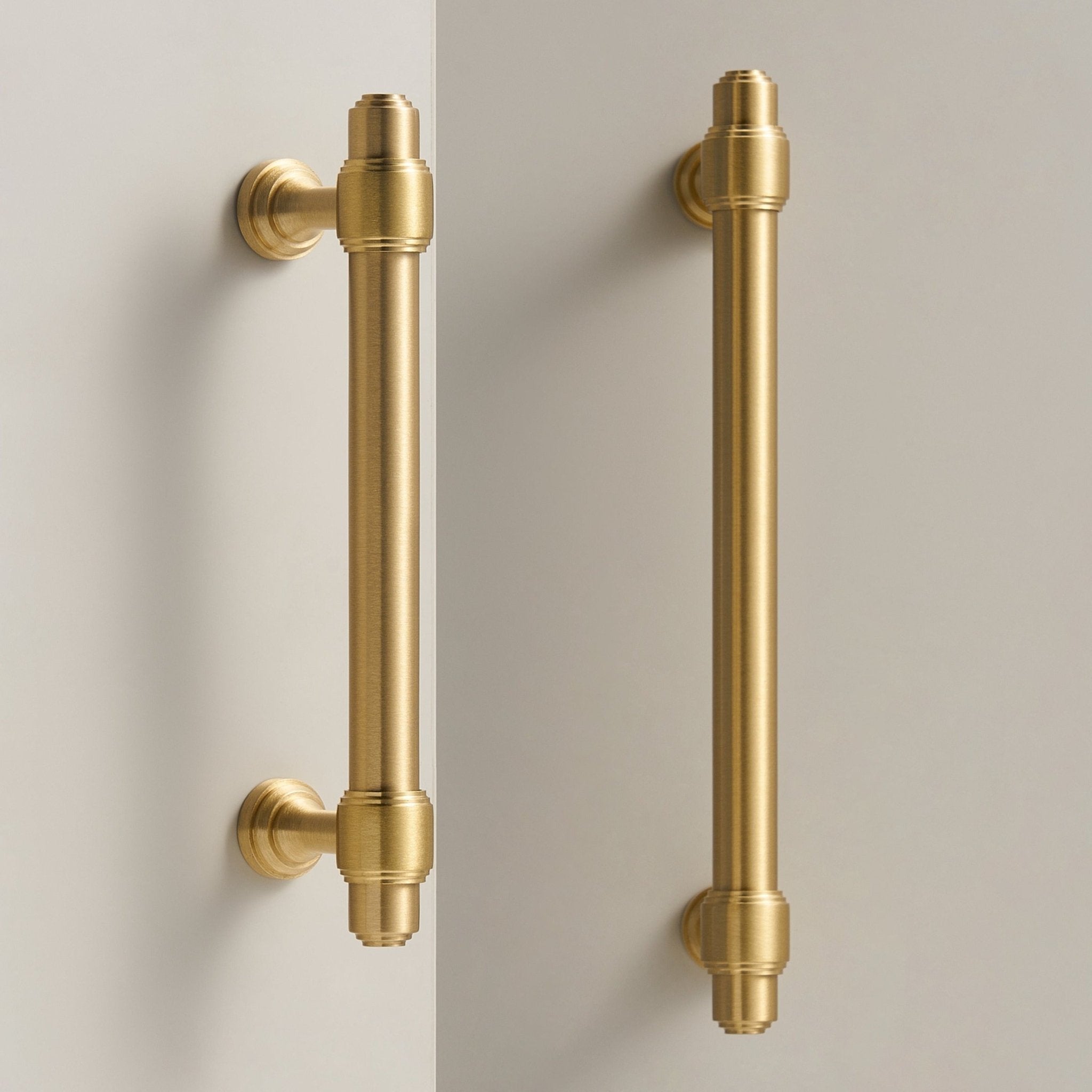
Appliance Handles
Also called: Appliance pull, long handle
Fridge doors, larders, tall units and wide drawer banks. The long sizes of the handle families.

Backplates
Also called: Rose, escutcheon plate
Behind a knob or handle. Covers old holes on a refit and adds a traditional note.
The order to decide in
Shape first, because it decides how the door is drilled. Size second, because the distance between the two screw holes, the centres, has to match the door or the holes already in it. Finish last, because every shape here comes in the same finishes, so it never limits the choice.
02: Handles
Handles: the bar your hand knows best.
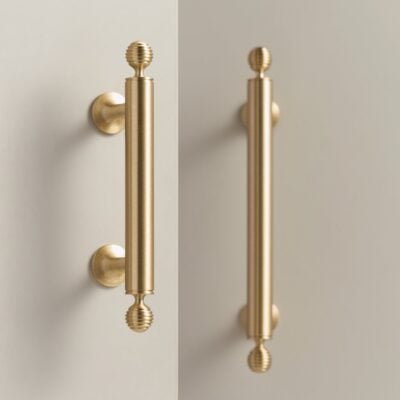
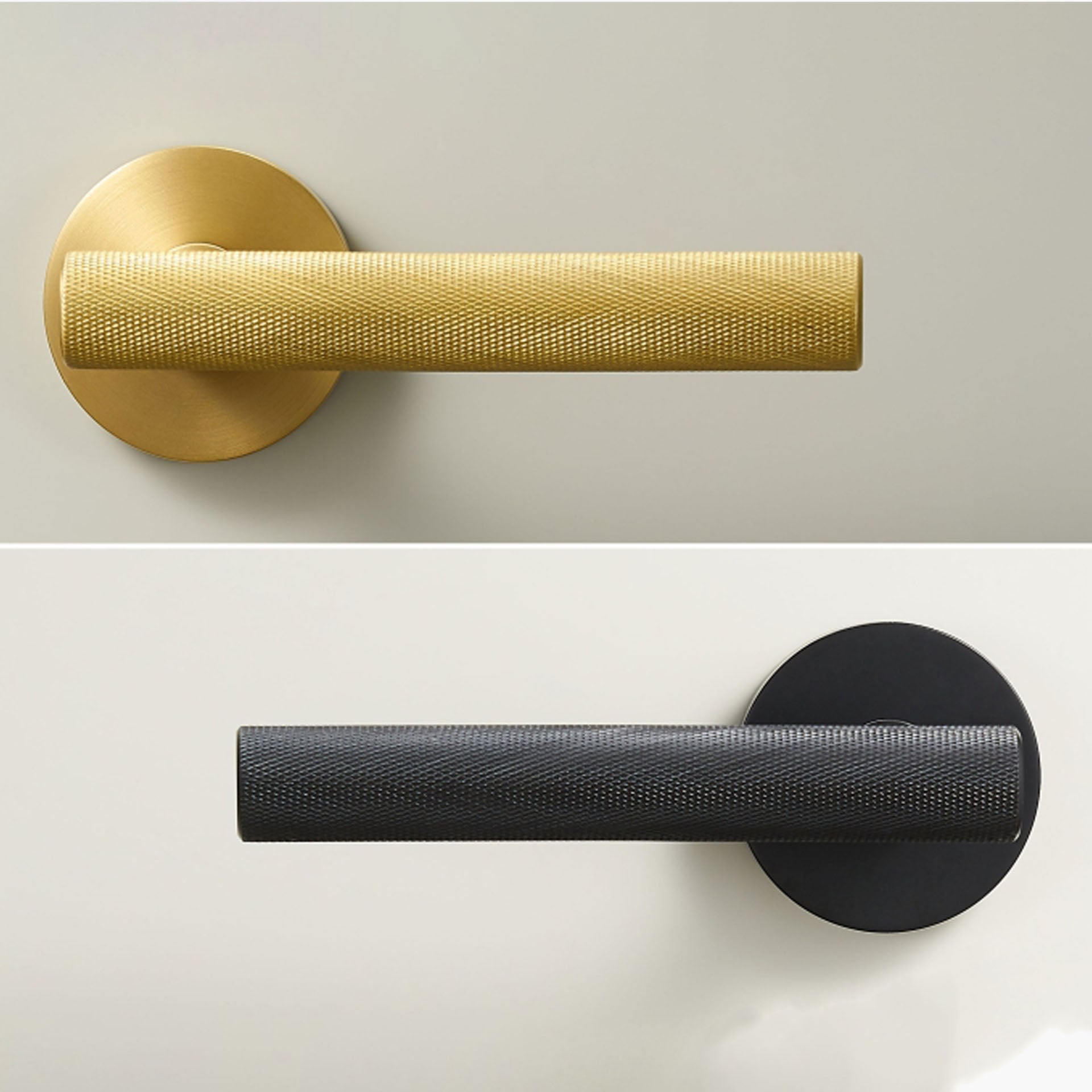
A bar handle fixes with two screws a set distance apart, the centres, and is gripped along its length. It is the most common cabinet handle there is, and the shape that carries most of a kitchen.
- Also called
- Bar handle, pull handle, D pull. In North America, a bar pull or cabinet pull.
- Fixing
- Two screws from inside the door or drawer. Our families come on the standard centres of 96, 128, 160, 192 and 224mm, and most add a longer size.
- Suits
- Drawers of every width and cupboard doors, fitted across a drawer and up a door. Shaker and slab fronts alike.
- The profile
- A round bar for a softer line. A square bar for flat slab fronts. A reeded or knurled bar where you want texture under the hand. A D pull where the ends should return to the door.
- Pairs with
- The knob or T-bar of the same family on narrow doors, so one kitchen speaks one language.
03: T-bar handles
T-bars: a short bar on a single post.
A T-bar stands off the door on one central post, so the fingers close around a bar that is shorter than a handle and clear of the front. It reads modern on slab doors and tidy on small shaker drawers.
- Also called
- T-pull, T handle, T-bar pull.
- Fixing
- One screw from inside the door into the post. Only one hole to drill, so it is the easiest shape to retrofit over a single old knob hole.
- Suits
- Narrow drawers, upper cupboards, bathroom vanities, and any door where a knob reads too small. Fitted across a drawer and up a door.
- Sizes
- Most families offer two or three lengths. A shorter T-bar on doors and a longer one on drawers keeps the proportion right without changing shape.
- Pairs with
- The handle of the same family on wide drawers and the knob on small doors.
04: Knobs
Knobs: one fixing, one gesture.
A knob fixes with a single screw and is held between finger and thumb. It belongs on doors first. A wide drawer on one knob can rack as it opens, so the classic pairing is knobs on doors and handles on drawers.
- Also called
- Cabinet knob, cupboard knob, drawer knob.
- Fixing
- One screw from inside. A backplate behind the knob covers old holes and protects a painted front.
- Suits
- Cupboard doors, narrow drawers, wardrobes with the larger sizes. Traditional kitchens and modern ones alike.
- Sizes
- About 25 to 35mm across for kitchen doors, larger for wardrobes and tall units. Two knobs on one wide drawer is the period answer; a handle is the modern one.
- Pairs with
- The handle or T-bar of the same family on drawers.
05: Cup & edge pulls
Cup and edge pulls: for drawers, and for flat fronts.
Two shapes share this shelf because both are gripped differently from a bar. A cup pull is held from underneath. An edge pull is held over the top of the door or drawer and leaves the front flat.
- Also called
- Cup pull, bin pull, shell handle. Edge pull, lip pull, finger pull. Half-moon and arch pulls sit here too.
- Fixing
- Cup pulls take two screws at set centres like a handle. Edge and lip pulls screw to the top edge or the back of the front, so nothing shows from the room.
- Suits
- Cup pulls on drawers in shaker and country kitchens, where the drawer is pulled from below. Edge and lip pulls on slab fronts and anywhere you want a handleless look. Half-moons where you want a softer grip.
- Pairs with
- Knobs on the doors above a run of cup-pull drawers. Edge pulls usually run alone across a whole kitchen.
06: Appliance handles
Appliance handles: the long sizes.
Fridge and freezer doors, larder cupboards, tall units and wide drawer banks want a handle of 300mm or more. Ours are the long sizes of the families on the Handles shelf, so the appliance door matches the drawers beside it.
- Also called
- Appliance pull, long handle, long bar handle.
- Fixing
- Two screws at long centres, commonly 320 to 440mm. On an integrated appliance door, check the door panel carries a fixing rail at those centres.
- Suits
- Integrated fridge and freezer doors, larders and tall units, fitted vertically. Drawers over about 600mm wide, fitted horizontally.
- Pairs with
- The shorter sizes of the same family on the drawers and doors around it.
07: Backplates
Backplates: the plate behind the knob.
A backplate sits between the knob or handle and the door. It covers old holes when you refit, protects a painted front from fingers, and adds a more traditional or more architectural note to a plain knob.
- Also called
- Rose, escutcheon plate, knob plate. A handle on a plate is a backplate handle.
- Fixing
- The knob or handle fixes through the plate with its own screw, so no extra holes.
- Suits
- Refits where old holes or shadows need covering, painted shaker doors, period kitchens, and anywhere a bare knob looks too small on a large door.
- Pairs with
- The knob or handle it is made for; check the product page for the matching plate.
08: Size and finish
Then the size, then the finish.
Two short rules here. The detail lives on the measuring guide and the finish guide.
Size
Match the centres.
Replacing handles: measure between the two screw holes already in the door or drawer and match that number. New doors: a handle about one third of the drawer width looks right, and a door takes the handle vertically near the opening edge.
Measuring guide →Finish
Lacquered stays, unlacquered lives.
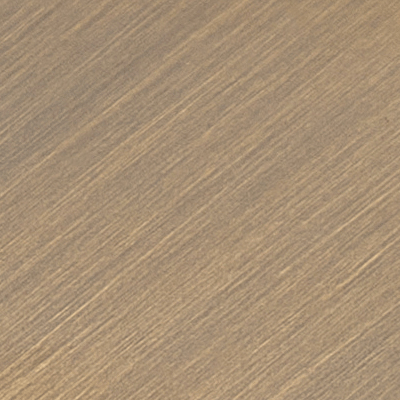
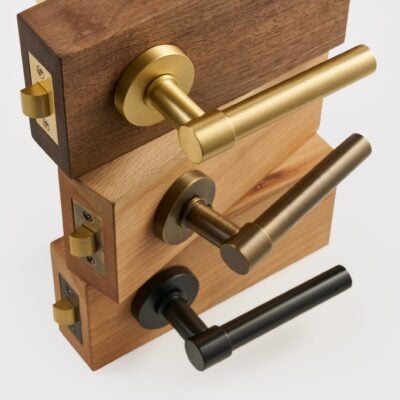
Satin brass, antique brass, matte black and satin nickel are lacquered and stay as they arrive. Unlacquered brass is raw metal that darkens where it is touched; polished unlacquered starts as a mirror and does the same. Every shape here comes in the same finishes.
Finish & care guide → · Build a sample kit →09: Common questions
Things customers ask us most.
Short answers. The product pages and the measuring guide carry the detail.
Can I mix knobs and handles in one kitchen? +
Yes, and it is the classic arrangement: knobs on the doors, handles on the drawers. Keep to one family and one finish and the mix reads as a decision rather than an accident.
My existing holes are 96mm apart. What fits? +
Any handle or cup pull on 96mm centres, which is most of our families. On the shelf, filter by Centre to Centre. A T-bar or knob needs only one hole, so it can cover one of the two with a backplate.
Horizontal or vertical? +
Horizontal on drawers, vertical on doors, near the opening edge. A long appliance handle on a tall door is fitted vertically; on a wide drawer, horizontally and centred.
Which shape gives a handleless look? +
Edge and lip pulls, fixed to the top edge of the door or drawer so nothing shows from the room. They sit on the Cup & Edge Pulls shelf.
Do appliance handles fit an integrated fridge door? +
Yes, when the door panel carries a fixing rail at the centres you choose. Check the panel maker’s instructions for where the rail sits, then pick the length to match.
Will the brass change colour? +
Lacquered finishes stay as they arrive. Unlacquered brass darkens where it is handled and stays brighter where it is not, which is the point of it. The finish and care guide shows what each one looks like after a year.
Know the shape?
Browse the shelf, or measure first if you are replacing handles on doors and drawers you already have.