




In short
A backplate makes a knob look better when the knob is small for its drawer front, on painted doors where it saves the paint, on period furniture, and where it hides old screw holes. Size it so the plate frames the knob: we’d leave at least 5mm showing all round, and more on a star, clover or flower.
Backplates are coming back. Kailee Blalock, who co-founded the studio House of Hive with Taylor Troia, told Homes & Gardens that she expects the return of decorative backplates to be one of the biggest kitchen hardware trends, because they bring character without committing to an entirely new hardware style. The interior designer Lucy MacNicoll told Livingetc that they began as a practical way to cover screw holes and have become a feature in their own right, and the interior designer Wendy Smit sees them as the kind of detail that takes a room back to a time of real craftsmanship.
They don’t suit every knob, and in our view a plate that is too small for its knob looks like a washer. Below we start with when a backplate makes a knob look better and how to size it, then look at what a backplate is, how it differs from a rose and an escutcheon, where it came from, and how it works on doors and handles.
When a backplate makes a knob look better
Designers use them to lift plain hardware, and sparingly. The designer Brittney Ferguson told Homes & Gardens that she likes to dress up basic round knobs and pulls with them, so that ordinary cabinetry looks custom and curated. Ashley Macuga of the Bay Area studio Collected Interiors calls them the perfect embellishment, a touch of class for little cost, and considers them for smaller, more intimate spaces such as a wet bar. Kailee Blalock and Taylor Troia find that a backplate adds interest to a traditional knob or pull. Livingetc’s advice is to use them in moderation, in one area so they don’t overwhelm the room, and Wendy Smit warns that a very decorative plate needs other intricate details around it to balance it.
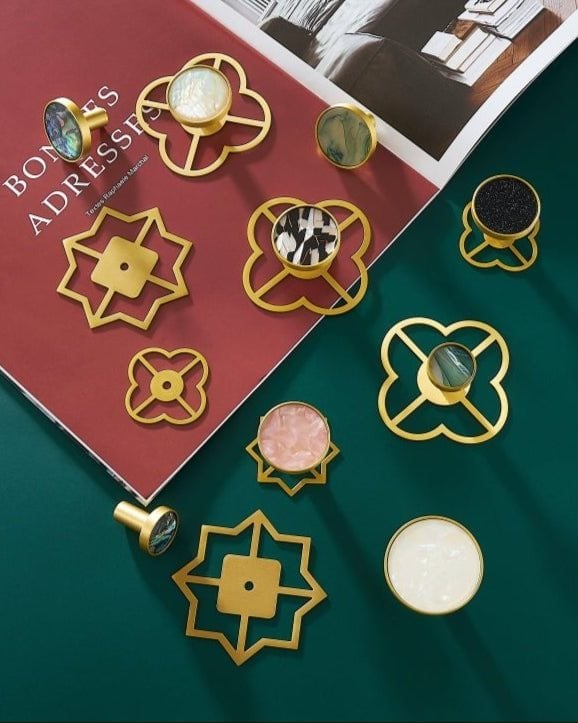
No cabinet knob strictly needs one, so we’d use a backplate in four situations. The first is a small knob on a large drawer front, where a plate adds width without changing the knob; our TESTA clover backplate listing describes exactly that extra presence. The second is a painted door that you want to keep clean around the knob, where fingers land each time it is pulled; our listings for GRAFF and FLORE both describe that protection. The third is period or traditional furniture. The fourth is a retrofit, when you swap a handle for a knob and need to hide the old holes, which is how backplates started, according to Lucy MacNicoll, and which Homes & Gardens also points to.
For a retrofit, measure the old holes before you choose. A plate only covers holes under solid metal, and on a star or clover the gaps between the points leave holes exposed. Our guide to handle sizes, centres and retrofitting explains how to measure existing centres.
How to size a backplate to the knob
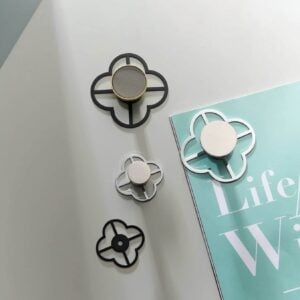
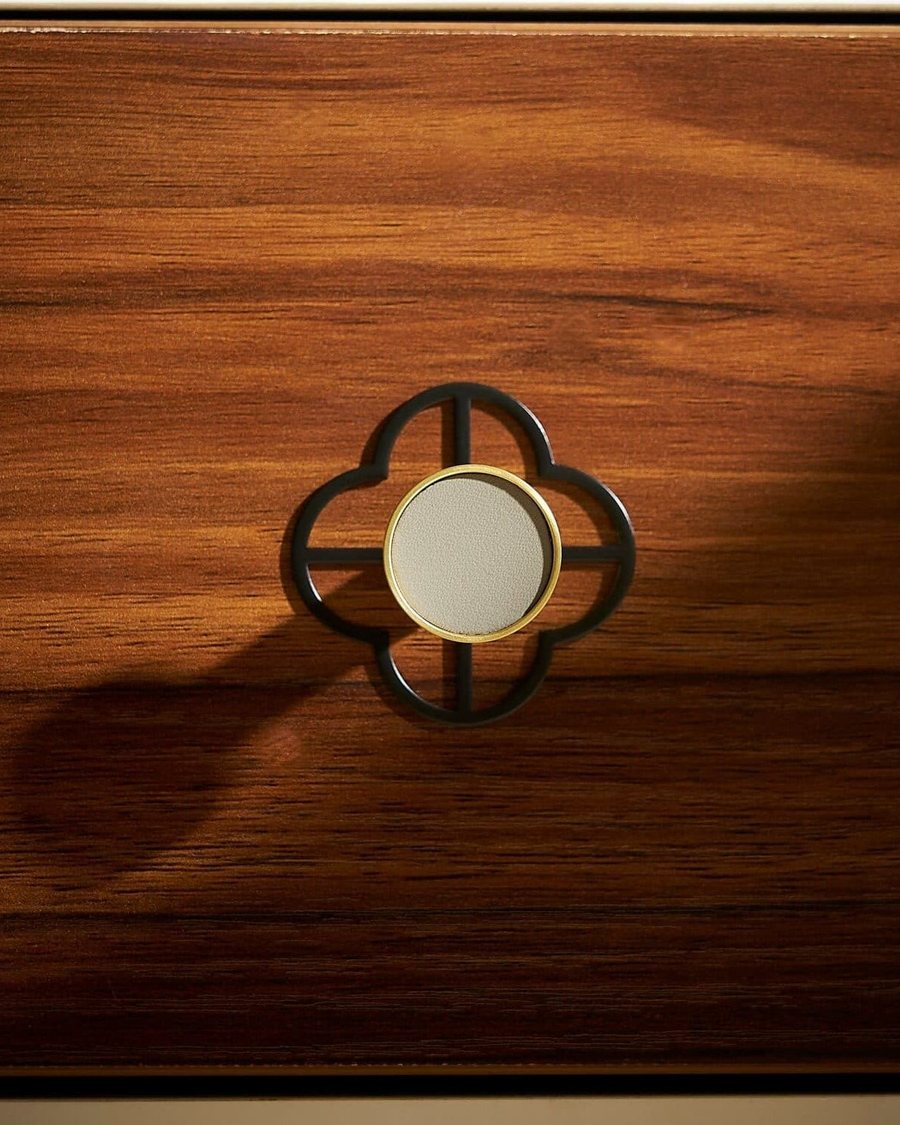
A backplate should be wider than the knob by enough to read as a frame. TESTA knobs come in 22, 32 and 42mm diameters, and the TESTA backplates are 43mm and 70mm wide. A 22mm knob on the 43mm plate leaves about 10mm of plate showing on each side, a 32mm knob leaves about 5mm, and a 42mm knob on the 70mm plate leaves 14mm. At the other end, FLORE is 28mm wide and 30mm high, so it suits small knobs: a 22mm knob on it leaves about 3mm of petal showing on each side.
As a rule of thumb, we’d want at least 5mm of plate showing all round a knob, and more on a star, clover or flower so the shape can be read. Scale works the other way too: following Wendy Smit’s point about balance, we’d keep the large, shaped plates for rooms that already have some detail in them. For handles, the LUX handle with plate measures 150mm long for 128mm centres and 218mm long for 200mm centres, and 25mm wide.
| Backplate | Shape | Size or version | Finishes | Pairs with |
|---|---|---|---|---|
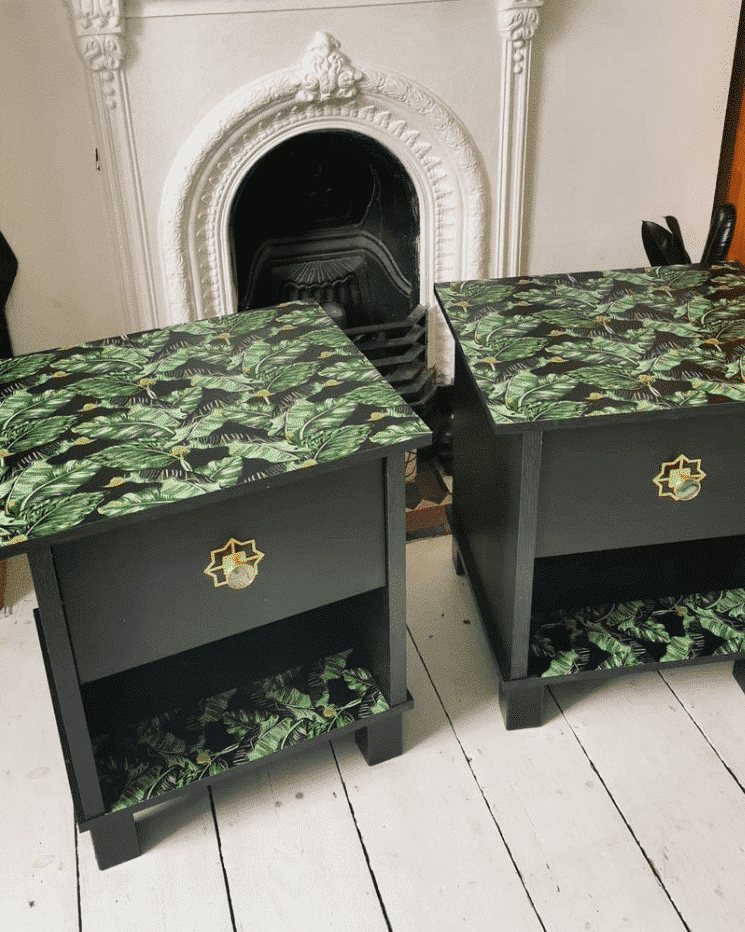
| TESTA star | Six-pointed star outline | Small 43mm, large 70mm wide | Satin brass, satin nickel | TESTA knobs, or any round knob |
| TESTA clover | Four-leaf clover, open or solid | Small 43mm, large 70mm wide | Matte black, polished chrome, satin brass, satin nickel; solid clover in satin brass and satin nickel | TESTA knobs, or plain brass knobs |
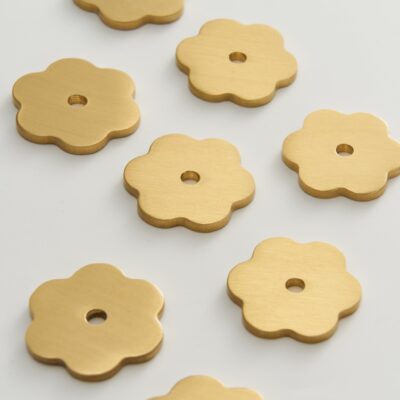
| FLORE | Six-petal flower | 28mm wide, 30mm high | Antique brass, matte black, satin brass | Small cabinet knobs |
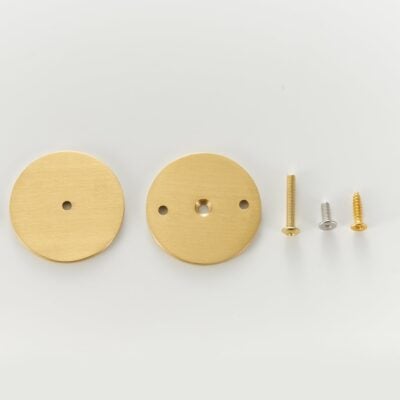
| GRAFF | Circular | Single hole, or triple hole with self-tapping support | Satin brass | Single-screw knobs; handles and pulls with the triple hole version |
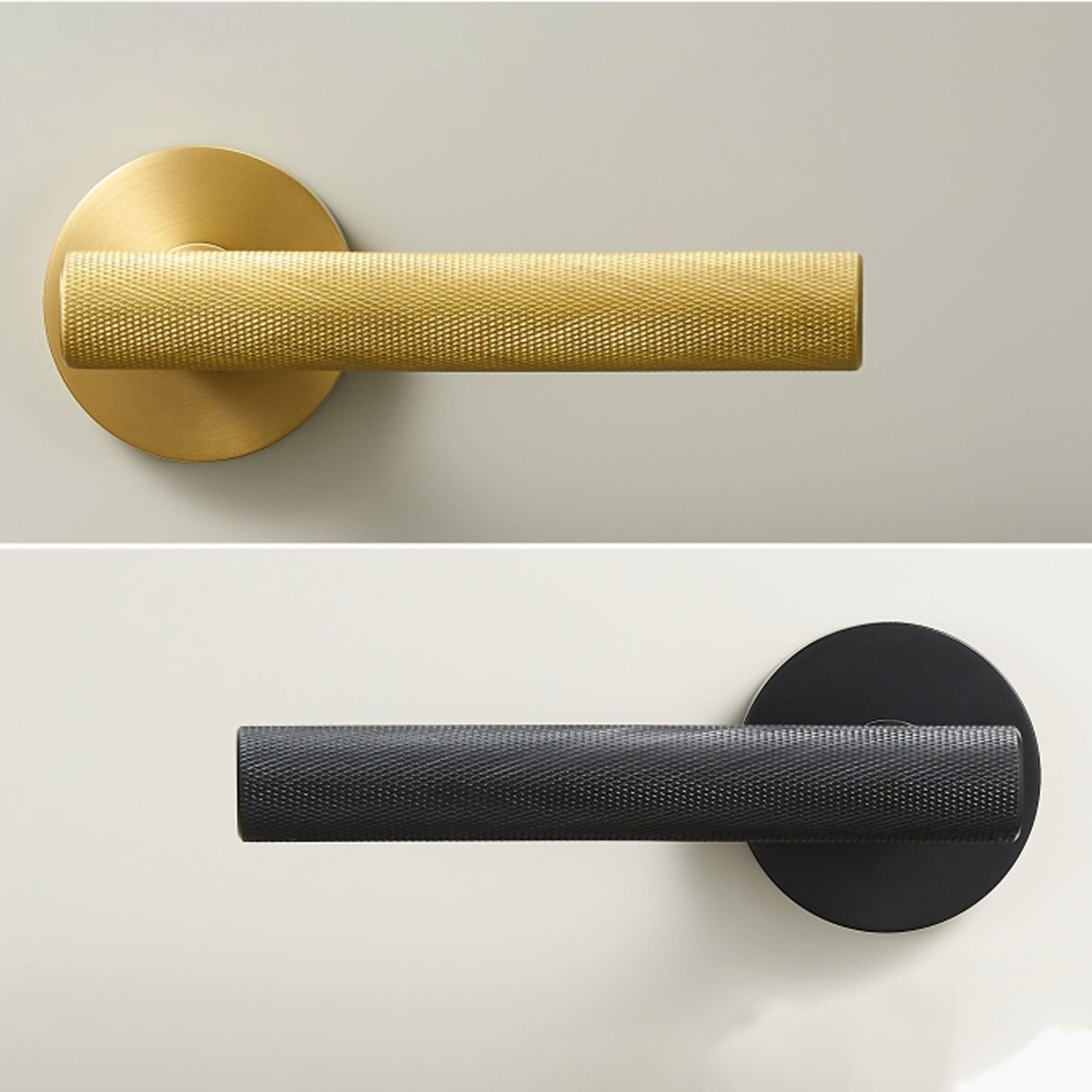
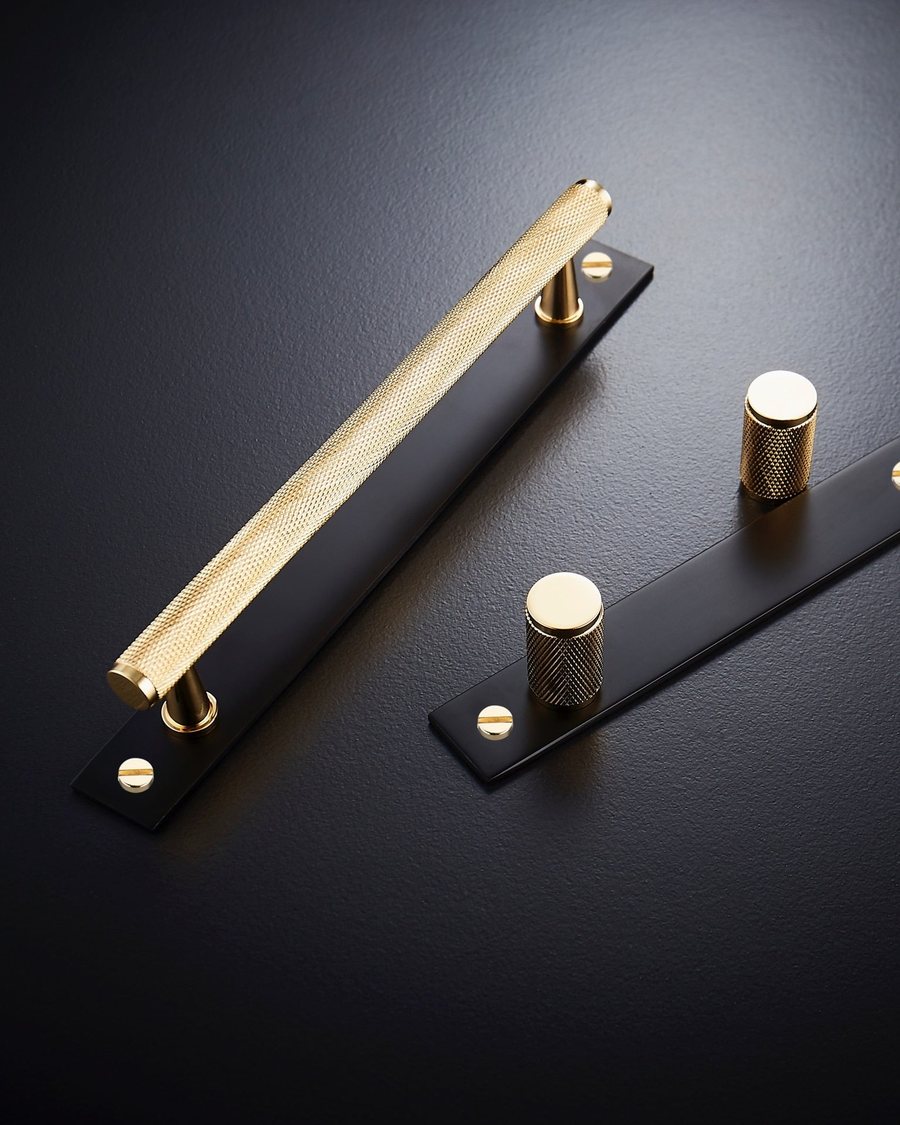
| LUX handle with plate | Rectangular plate with knurled bar | 150mm (128mm CC) or 218mm (200mm CC), 25mm wide | Matte black, polished brass (PVD), polished chrome, satin brass, polished or satin brass on a black plate | Sold together as one handle |
| KROM door knob with backplate | Shaped door backplate | Pairs: dummy, mortice key or mortice thumbturn | Antique brass, matte black, satin brass | Internal wooden doors; the KROM rose version in other rooms |
What a backplate is, and how it differs from a rose and an escutcheon
A backplate is a flat plate that the hardware is mounted on, fixed to the face of the door or drawer. The Guild of Architectural Ironmongers defines it for doors as the plate on which a set of lever lock or lever latch door handles is mounted for fixing to the door surface. On furniture it sits between the knob and the drawer front, with the knob’s screw passing through its centre; our FLORE backplate, a six-petal flower in solid brass, is described in exactly those terms.
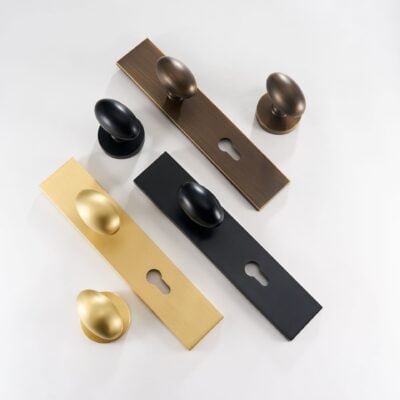
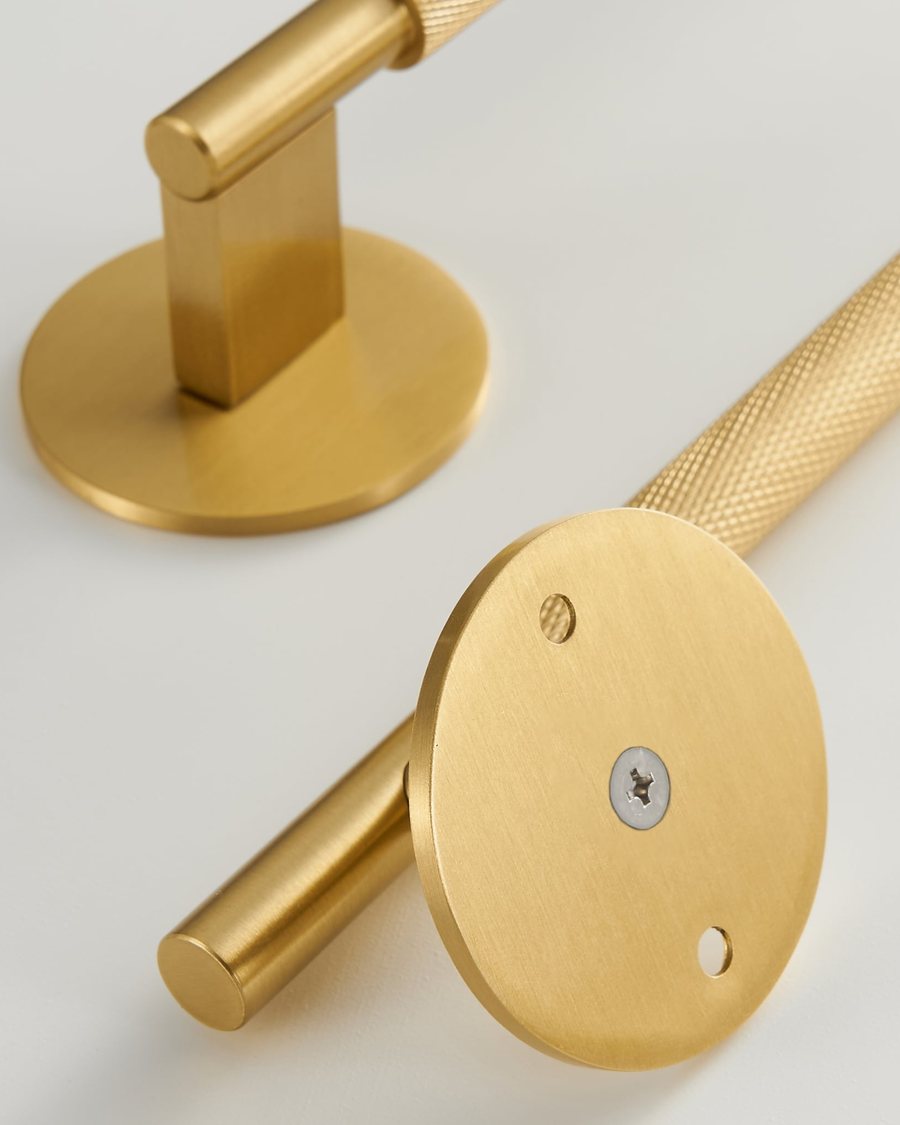
The GAI describes a rose as a small shaped plate on which the door handle or knob is mounted, mainly to improve the appearance and the fitting of the door furniture, and notes that many handle designs offer the choice of handles on a rose or on a backplate. An escutcheon is the keyhole cover, fitted over or around the keyhole to match the rest of the door furniture, and a covered escutcheon is normally used on an external door to keep out draughts. So a lever on a rose with a mortice lock below it has a separate escutcheon for the keyhole, while a lever lock backplate carries the lever and the keyhole on a single plate. On furniture the words have been used more loosely, as the next section shows.
Backplates on old furniture and doors
Plates behind handles are old. The V&A holds a wrought iron plate for a handle, with incised and pierced decoration, made in Suffolk in the early 17th century. In brass, it catalogues a pair of pierced furniture mounts from mid 18th century England as possibly escutcheons for drop handles, using the word for the plate behind a handle rather than a keyhole cover.
The museum also records that the Birmingham brass founders John Marston and Samuel Bellamy took out a patent in 1777 to produce brass fittings for furniture and locks, and a pattern book of such fittings offers finger plates for doors, commode handles and escutcheons side by side. Brass founders, the V&A adds, made handles, hinges and lock plates as well as decorative furniture mounts. Homes & Gardens traces the same story through the house: brass appeared on door furniture in Georgian and Regency homes, and the Victorians extended it to cabinet handles. In our view that history is why a shaped plate behind a knob reads as a traditional detail even in a modern kitchen.
Lever on backplate or lever on rose
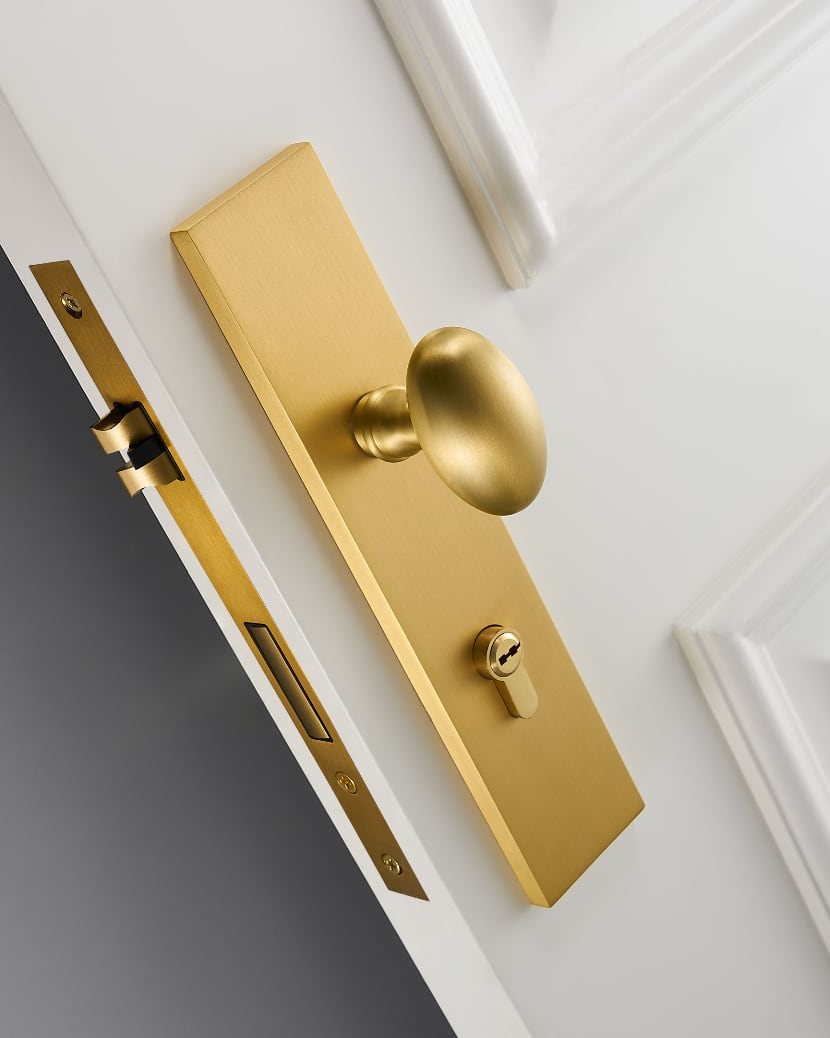
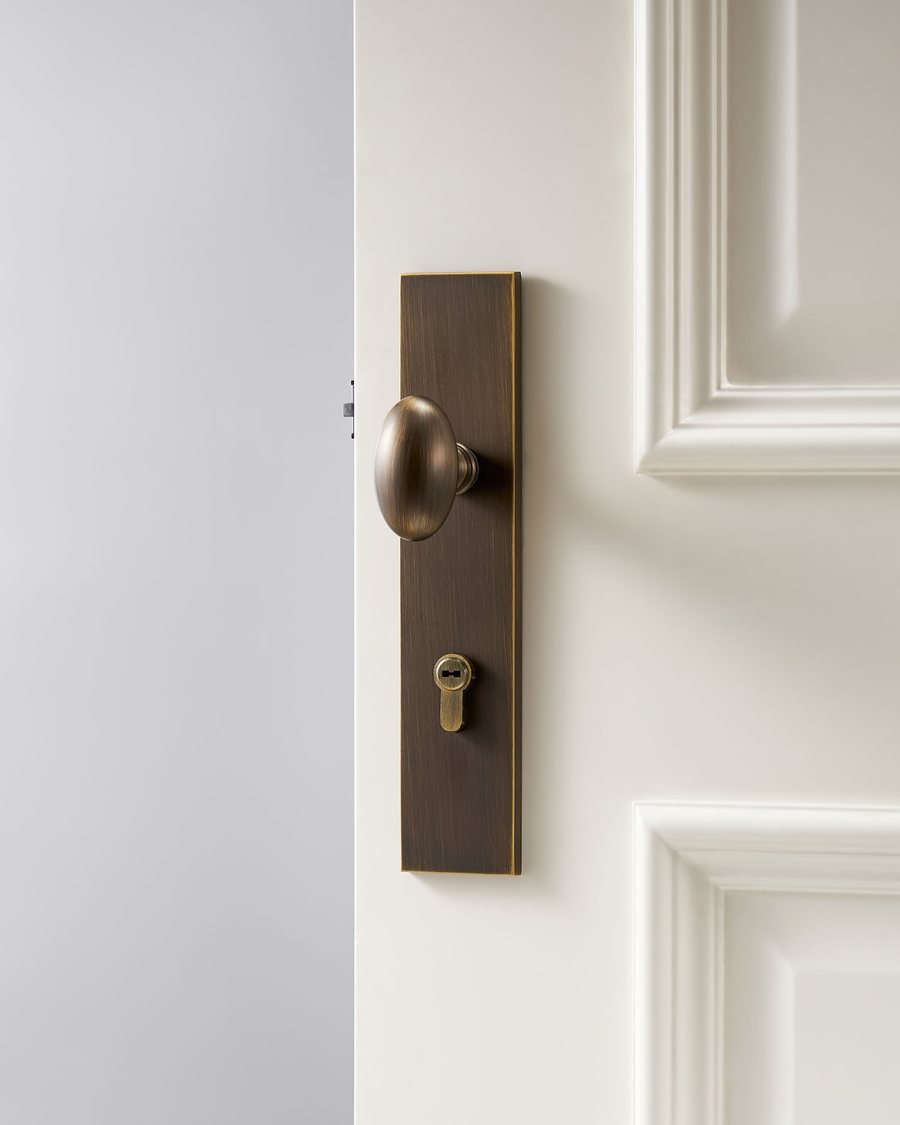
On doors, the choice is between a lever or knob on a long backplate and one on a small rose, and both are common, as the GAI notes. A backplate puts the handle and the keyhole or turn on one plate and covers more of the door face. A rose is smaller and quieter, and leaves the lock to its own escutcheon or turn.
Our KROM door knob with backplate is described as adding visual weight and a more traditional character compared with the rose version, and as suiting Victorian and Edwardian properties. It comes as a dummy set or an entry set with a mortice key or thumbturn lock. We’d choose a backplate for a period panelled door and a rose for a plain modern one. Our guide to door handle configurations explains what passage, privacy, dummy and entry sets do.
Backplates behind handles
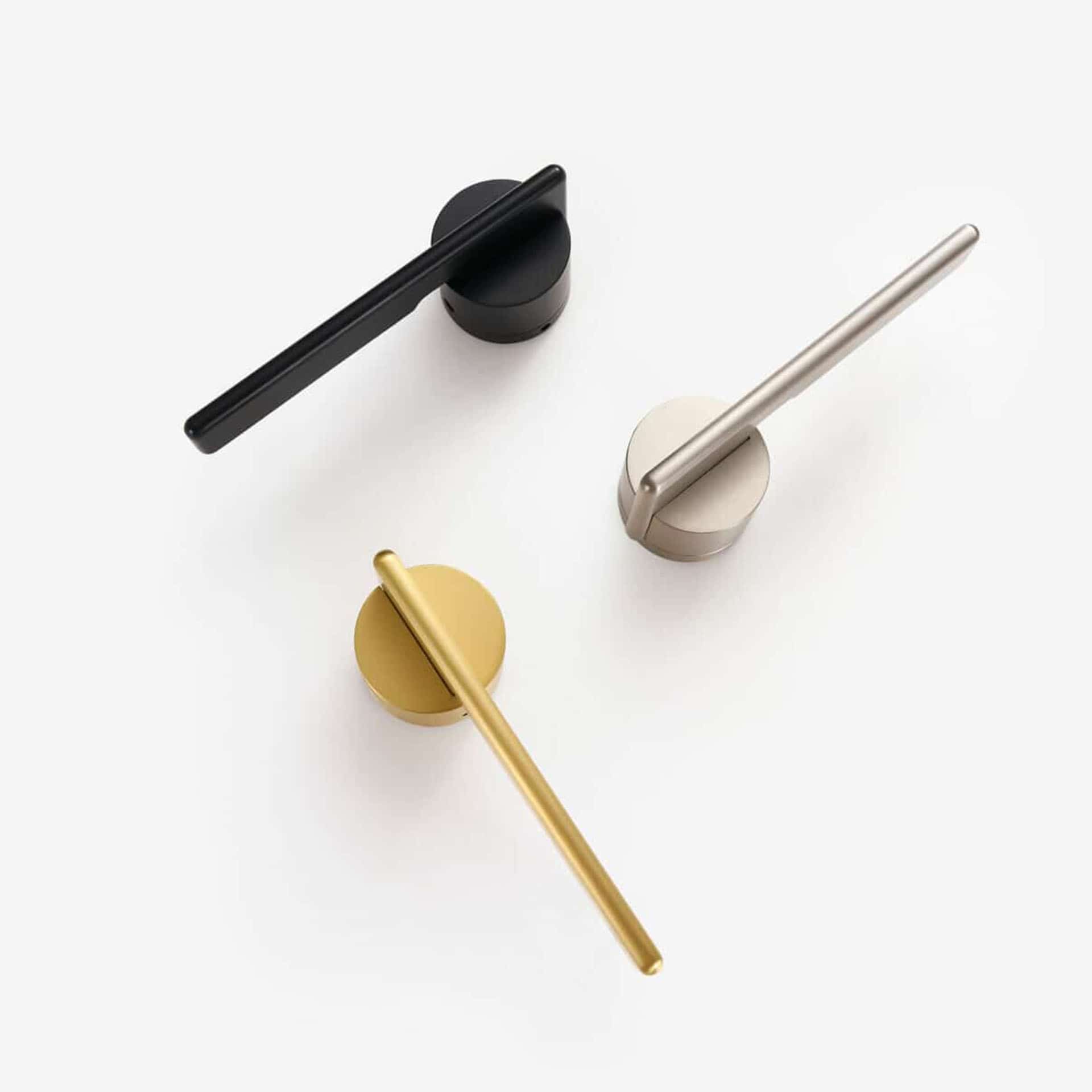
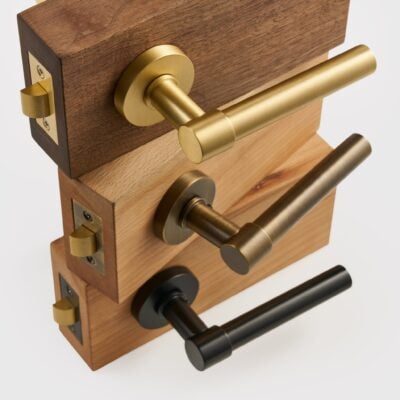
Handles can sit on a plate too, and we think a long plate suits a bar handle that sees heavy use. The LUX handle with plate is sold as one piece and covers mounting marks while adding visual weight, and its two-tone versions put a polished or satin brass bar on a black plate, a combination that stands out on dark cabinetry. The GRAFF triple hole plate is listed for use behind handles or pulls that need wider fixing centres. On a run of kitchen drawers, we’d follow the designers and keep backplates to the pieces that need emphasis, such as an island, a dresser or a bar cabinet. A plate on every drawer can look busy.
Matching the finish and the metal
A backplate usually looks best in the same finish as the knob, so the two read as one piece of hardware. Wendy Smit’s advice in Livingetc is to choose a plate that suits the style of the cabinets and the colour of the hardware throughout the room, and she is happy to mix two metals for interest: if the taps and lights are black, gold or chrome on the cabinet hardware works. The LUX black plate shows that kind of contrast, and it looks deliberate when it is repeated elsewhere in the room.
The plate takes as much wear as the knob, and every backplate in the table is listed as solid brass. If you’re comparing plates from different sources, our guide to telling solid brass from plated explains the checks you can do before you buy. You can browse the full range on our backplates page.
Fitting a knob with a backplate
Fitting a knob with a backplate is the same job as fitting the knob alone. The TESTA backplates come with M4 x 25mm screws, and our listings point to longer screws for doors or drawers over 20mm thick. Because the plate adds to the thickness the screw passes through, hold the knob, plate and screw against the edge of the door before you drill to check the screw still reaches well into the knob.
Drill from the front and fix the plate and knob together. On a star or clover, set one point straight up or straight down so every plate in the room lines up. On a freshly painted door, we’d wait until the paint has fully hardened before fitting, so the plate doesn’t stick to it or mark it.
Quick answers
When does a cabinet knob need a backplate?
Never strictly. We’d use one for a small knob on a large drawer front, on painted doors, on period furniture, or to hide old holes.
What size backplate do I need for a knob?
One that leaves a clear border of plate around the knob. We’d want at least 5mm all round, and more on a shaped plate.
What is a backplate on a cabinet knob?
A plate fitted between the knob and the drawer or door. It protects the surface around the knob, covers old holes and makes a small knob look larger.
What is the difference between a backplate and a rose?
A rose is a small plate under a door handle. A backplate is longer and can carry the handle and the keyhole together.
What is an escutcheon?
A keyhole cover, fitted over or around the keyhole to match the rest of the door furniture.
Should every cabinet have a backplate?
Usually not. Livingetc advises using them in moderation, and Ashley Macuga keeps them for smaller spaces such as a bar. We’d pick an island, a dresser or a few pieces that deserve the attention.
Should a backplate match the knob finish?
Usually, so the two read as one piece. A deliberate contrast such as brass on a black plate also works when repeated in the room.
Sources
- Livingetc: Cabinet backplates are a whimsical hardware addition. Lucy MacNicoll and Wendy Smit on what backplates are for and how to use them.
- Homes & Gardens: Kitchen hardware trends. Brittney Ferguson on dressing up plain knobs and pulls; covering old holes.
- Homes & Gardens: The kitchen hardware trends designers say you need to know. Kailee Blalock on the return of decorative backplates and the character they add.
- Homes & Gardens: What’s the most timeless kitchen hardware?. Kailee Blalock and Taylor Troia on backplates with traditional knobs and pulls.
- Livingetc: Kitchen finishing touches. Ashley Macuga on backplates for intimate spaces such as wet bars.
- Homes & Gardens: Aged brass. Brass door furniture in Georgian and Regency homes; Victorian cabinet handles.
- Guild of Architectural Ironmongers: Glossary of architectural hardware terms. Definitions of backplate, rose and escutcheon.
- V&A: Plate for a handle, Suffolk, early 17th century. An early wrought iron handle plate.
- V&A: Furniture mounts, pierced brass, English, mid 18th century. Brass mounts catalogued as possibly escutcheons for drop handles.
- V&A: Pattern book of metal furniture mounts. The 1777 patent; finger plates, commode handles and escutcheons in one pattern book.
- V&A: Brass furniture mount, Cope and Timmins. Brass founders making handles, hinges, lock plates and furniture mounts.
Images: Product photographs and diagrams are our own.