









In short
Solid brass is copper and zinc all the way through; plated hardware has a thin coat over a cheaper metal, usually zinc alloy or steel. Before you buy, read the material line, compare weights, try a magnet, look inside the fixing hole and scratch a hidden spot. The last two show you the metal itself.
Two handles can look identical in a photograph and be quite different objects. One is machined or cast from solid brass. The other is a cheaper metal with a decorative coat on the outside, and the difference shows only after years of hands, cleaning and polish.
That is why the checks are worth doing before you buy, ideally on a single piece or a sample before you order a whole kitchen’s worth. Below are five, in the order we’d do them, from the listing on the screen to the metal under the finish, after a look at why designers ask for solid brass at all.
Why designers specify solid brass
Designers talk about solid brass in terms of how it ages. The interior designer Cortney Bishop, writing in Homes & Gardens, describes unlacquered brass as a living finish that reacts to the oils from hands, water and the air around it, and prefers it to the synthetic patinas some makers apply by chemical means. In Dezeen, the designers Mark Holmes and Tamara Caspersz made the case for the material itself: solid unlacquered brass ages to a rich natural patina, yet can be brought back to a bright polished shine. The California designer Todd Prince told Livingetc to spend where the hardware is used most, on the cabinets opened and closed many times a day, and the Nashville interior designer Ryan Ratkowski told Homes & Gardens that unlacquered brass hardware matures well and is durable. The New York designer Fawn Galli recommends unlacquered brass for shaker kitchens.
It is also the traditional material. Roger Hunt, Period Living’s renovation expert, told Homes & Gardens that cast, sheet or spun brass was widely used for door and window furniture, and the V&A describes decorative brass furniture fittings as staple products of the Birmingham and London brass founders in the 18th and 19th centuries. Each of those qualities depends on the piece being brass all the way through, which is what the five checks below are for.
1. Read the material line, not the finish name
Roger Hunt adds a caution in the same Homes & Gardens piece: some pieces that look like brass may be lacquered or brass plated. Livingetc makes the same point about finish names, noting that polished nickel is itself a plating applied to a base metal. A finish name describes the colour and surface. Satin brass, antique brass and brushed steel are finish names, and they can sit on several different metals. A specification that says solid brass, or names the alloy, tells you what the piece is.
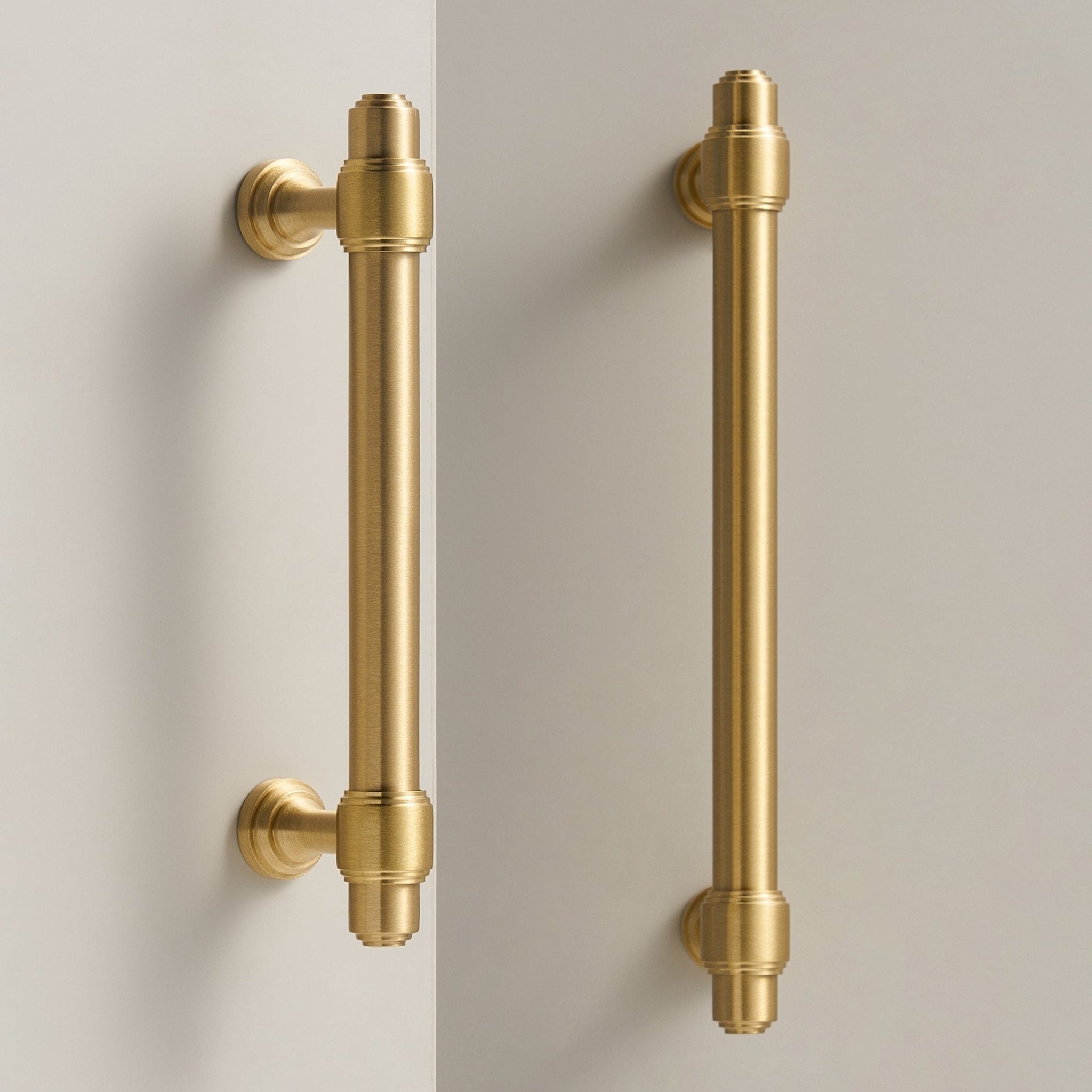
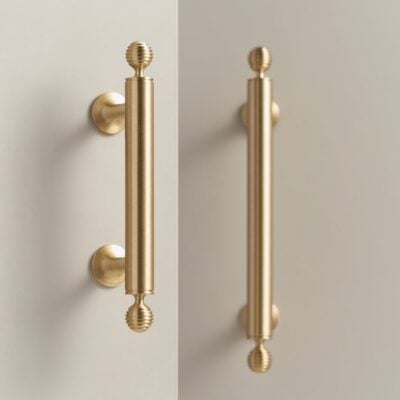
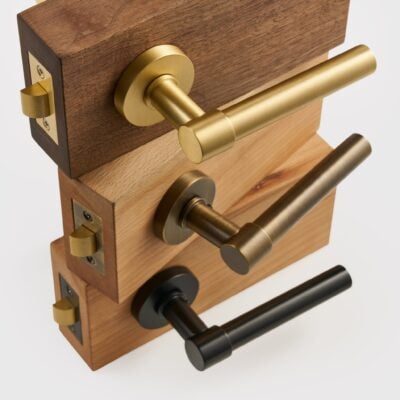
Brass is an alloy of copper and zinc. The Copper Development Association’s architecture handbook puts it simply: alloys chiefly of copper and zinc are brasses, and alloys chiefly of copper and tin are bronzes. It also notes that the word bronze is often used for copper alloys with little or no tin, so a listing that says bronze may not tell you much on its own. Solid means the whole piece is that alloy, whether it was machined from bar or cast; our COMMET handle, for example, is machined from a single piece of solid brass, as its listing states.
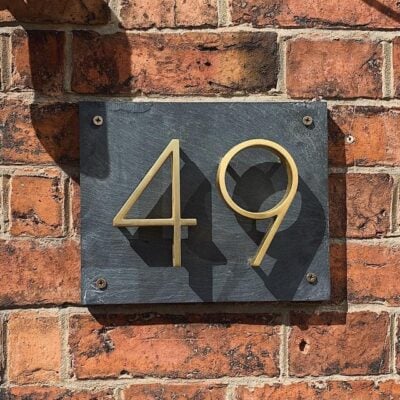
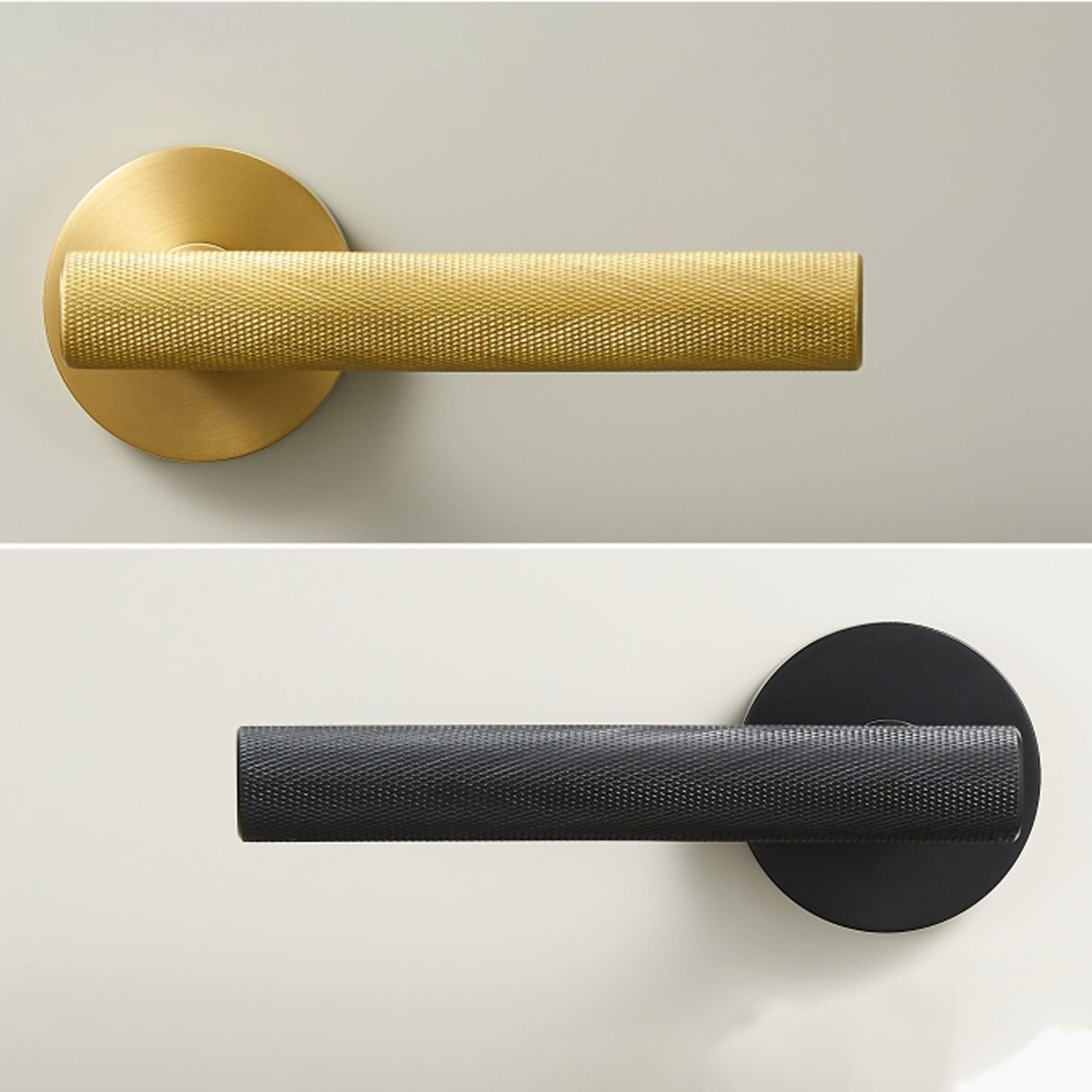
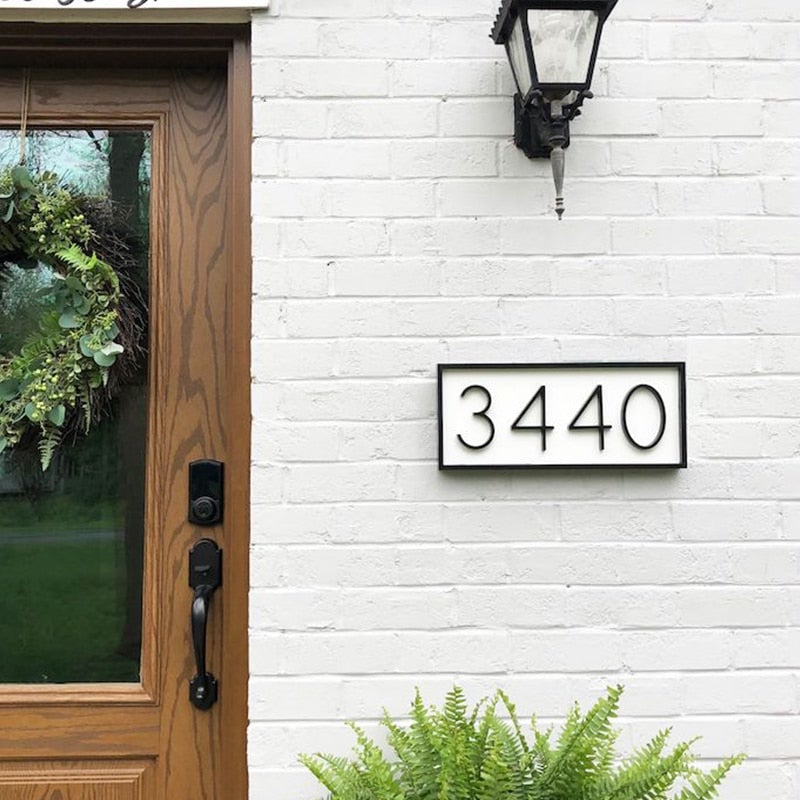
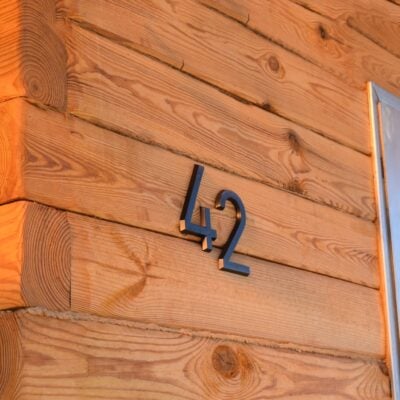
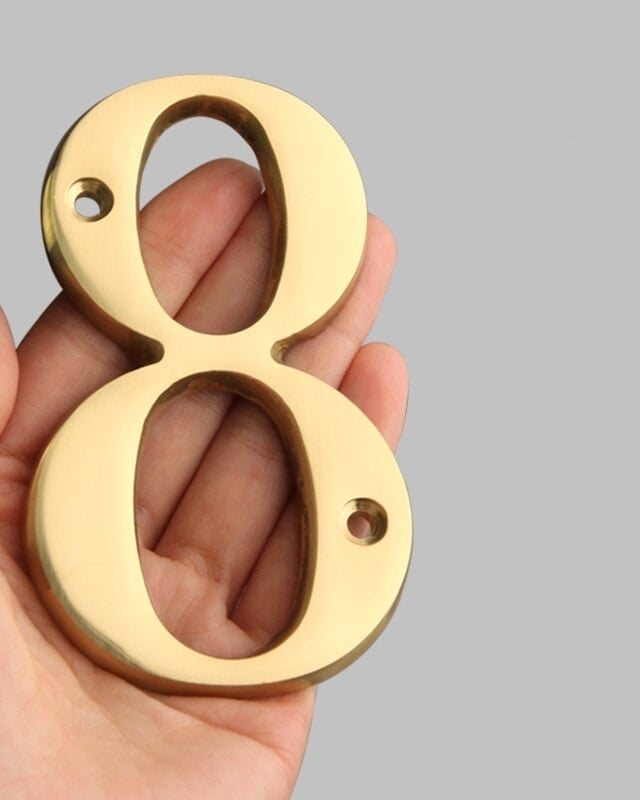
Our own listings are read the same way. Among our house numbers, the OBRE satin brass, satin nickel and black numbers are zinc alloy, and so are the BROOKFIELD satin brass, matte black and brushed steel numbers and the ANTIK aged bronze numbers, despite the word bronze in the name. Their specifications say so. Our PECK, METRO, EZRA and AMYTHUS numbers are listed as solid brass. Our guide to brass hardware goes further into alloys and finishes.
2. Ask for the weight, and compare like with like
The International Zinc Association’s own figures explain why weight is a clue. Most plated hardware is a zinc die-casting, usually from the ZAMAK family, and the IZA calls its Alloy 3 the most widely used zinc alloy in North America. In its comparison table, free-cutting brass has a specific gravity of 8.49, Alloy 3 is 6.66, a low-carbon steel 7.87 and a die-cast aluminium 2.76.
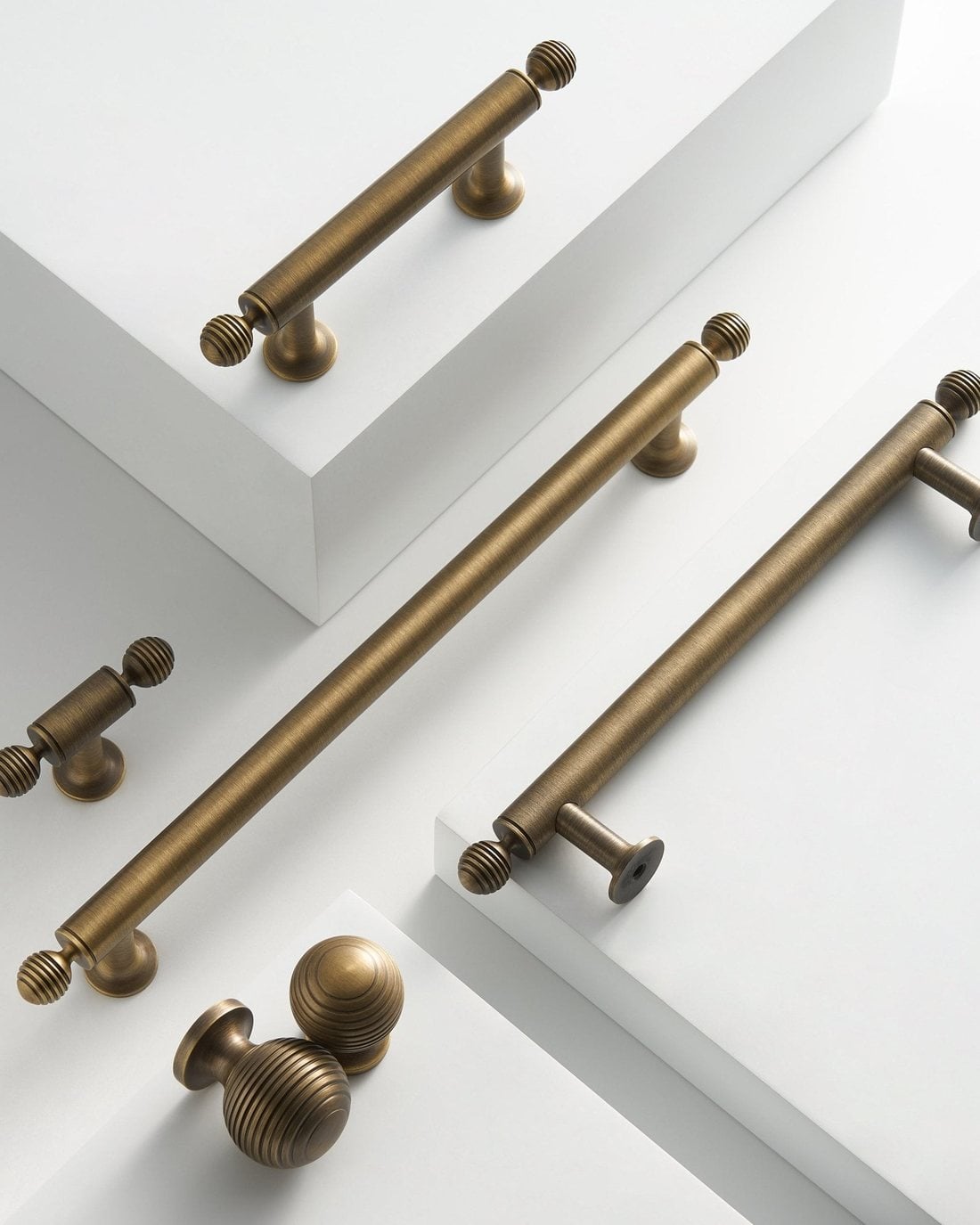
Put into a real piece, our COMMET handle at 128mm centres weighs 200g. By those figures, the same shape cast in Alloy 3 would weigh about 157g, roughly four fifths as much. That is easy to feel with the two side by side, and hard to judge with one piece in your hand. A slim solid brass knob can weigh less than a chunky plated one, so the comparison only works between pieces of the same shape and size. A seller who knows the material will give you the weight: our OSLO bar handle lists it for every size.
3. Try a magnet, with the screws out
Designers use the magnet as their first check once a piece is in hand. Homes & Gardens‘ guide to restoring brass suggests touching the hardware with a magnet: if it sticks, it is not brass. The bathroom designer Barrie Cutchie gave Livingetc the same test, adding that a piece the magnet grips is only brass plated.
Take the screws out first, because steel screws will hold a magnet whatever the handle is made of. Expect a faint tug now and then, too. The Copper Alliance, the copper industry’s UK association, notes that brass is said to be non-magnetic but some samples react to a magnet, probably because of iron from recycled scrap. A firm grip on the body tells you there is steel inside. A faint one proves very little.
A magnet that slides off tells you even less. It rules out plated steel and nothing more. The zinc alloys the IZA lists are zinc with aluminium and in some cases a little copper, with no iron for a magnet to find, so a fridge magnet won’t separate plated zinc from brass. That is why the last two checks matter.
4. Look inside the fixing hole
The IZA’s guide to plating zinc explains why the fixing hole gives so much away. Plating builds up on corners and edges and is starved in holes, grooves and deep recesses, so a threaded hole is often where the base metal shows without any scratching at all. Its common decorative finishes on zinc are chromium, nickel, brass, silver and gold, and a chrome-look piece is built up in layers: copper first, then one or two layers of nickel, then chromium. The CDA adds that plated layers are normally thin enough to follow the surface texture beneath.
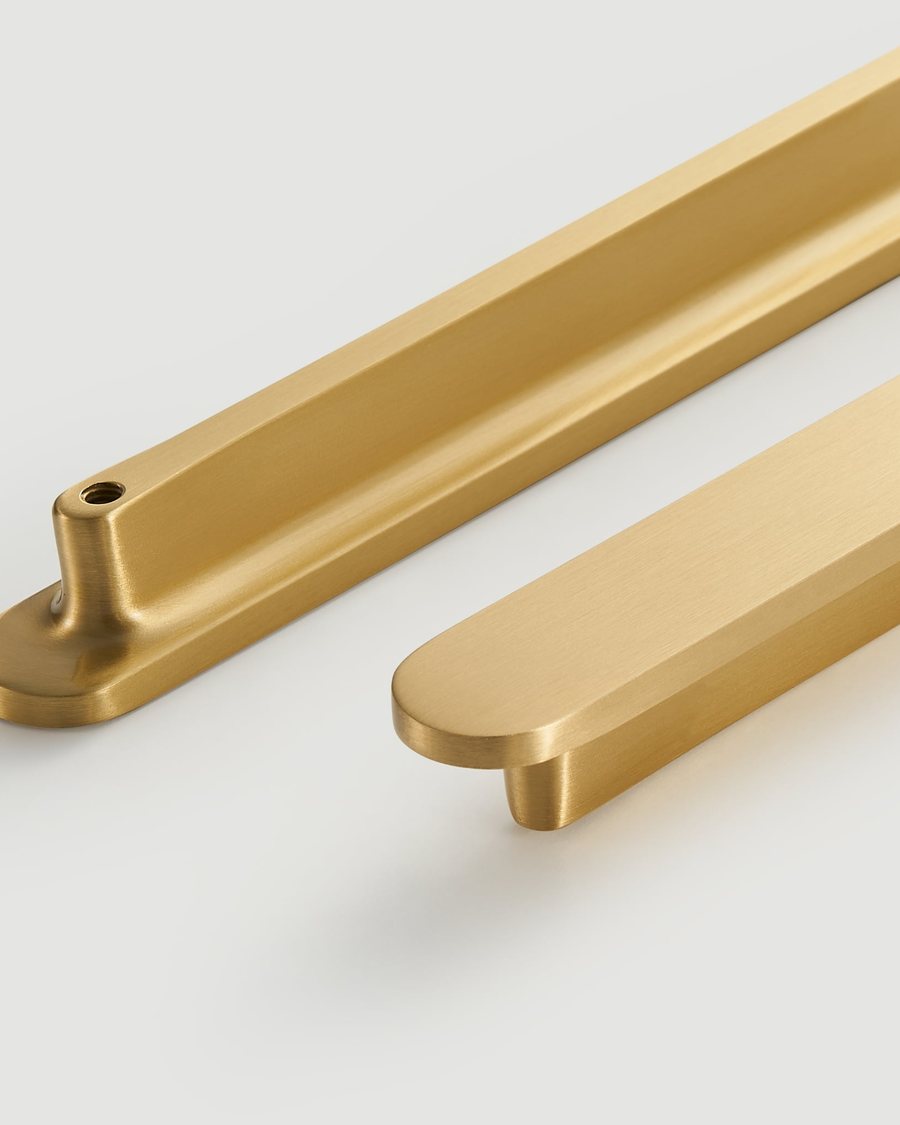
Unscrew the knob or handle and look into the hole with a torch. On solid brass the thread is the same yellow metal as everywhere else. A grey or silvery thread under a brass-coloured face means a plated piece.
5. Scratch somewhere nobody will see
In our view a small scratch on a part nobody will see is the most telling check of all, because it shows you what is under the finish. Choose the back face of a knob, the underside of a handle foot or the edge of a fixing hole, never the front, and do it before you fit the rest of the set.
The CDA describes the colour of brasses as yellow, so a scratch through lacquer, a black finish or an antique finish on solid brass shows yellow metal. Zinc looks different: the IZA describes polished zinc die-castings as a highly reflective bluish white that tarnishes to a dull grey. A grey or silvery line under a brass-coloured surface means a plated piece, and a pinkish copper line points to a coat as well, since plating is often laid on a first layer of copper.
What each check proves
| Check | What it tells you | What it cannot tell you |
|---|---|---|
| 1. The material line | What the seller says the material is, in writing | Whether the claim is true, which the other checks can test |
| 2. Weight, like for like | Whether one piece is denser than another of the same shape and size | Anything certain about a single piece, or between different designs |
| 3. Magnet, screws removed | If it grips firmly, there is steel inside, so it is not solid brass | If it doesn’t stick, whether it is brass or plated zinc alloy |
| 4. Inside the fixing hole | Often the base metal, because plating is thinnest in holes | Nothing, if the hole is fully plated or blocked |
| 5. A hidden scratch | The colour of the metal under the finish | The exact alloy, and it marks the piece |
How the difference shows over the years
Handles are touched every day, and wear is where the two kinds part company. On a plated piece the coat is uneven from the start, and the IZA notes that the area with the thinnest plate is commonly the first to fail. Polish speeds that up: Barrie Cutchie warns that polishing a brass-plated piece can scratch the plating off, and Homes & Gardens advises washing plated hardware with soapy water rather than polishing it. A clear lacquer has limits too. The CDA notes that clear coatings slow tarnish but degrade over time, and Homes & Gardens observes that lacquered brass tends to peel, letting the brass beneath tarnish in patches. On solid brass, a worn patch just shows more brass.
Unlacquered brass is meant to change, and only solid brass can be polished back again and again. Designers differ on how quickly it changes. The kitchen designer Judi Cooper told Livingetc that unlacquered brass darkens, spots and collects fingerprints within days, and suggests sealed brushed or satin finishes for anyone who wants a consistent look. The CDA’s figures describe the slower side: indoors, a noticeable change in colour can take many years, and brass push plates at a Birmingham hospital ward entrance had not darkened after three years. Handled brass stays bright where hands touch it and changes slowly everywhere else.
That is why our polished unlacquered pieces, such as the GREPP handle and the VELA knob, are solid brass. Our piece on polished unlacquered brass explains how it ages and how to care for it.
Quick answers
How can you tell if brass is solid or plated?
Read the material line first, then look inside the fixing hole or scratch a hidden spot. Solid brass is yellow all the way through, while plated zinc shows grey or bluish white under the coat.
Is brass magnetic?
No. If a magnet grips the body of a handle firmly with the screws removed, there is steel inside and it is not solid brass. A very faint pull can come from traces of iron in recycled brass.
Does a magnet prove something is solid brass?
No. It only rules out plated steel. Zinc die-cast hardware is not picked up by a magnet either, so you need weight, a scratch or the specification as well.
What is brass plated hardware made of?
Usually a zinc die-casting alloy such as ZAMAK 3, or sometimes steel, with a thin electroplated coat on the outside.
Is solid brass heavier than plated?
Generally yes. The IZA gives brass a specific gravity of about 8.5 against about 6.7 for the common zinc die-casting alloy, so the same shape weighs roughly a fifth less in zinc.
Why do designers prefer solid brass?
Because it ages rather than wears through. Designers such as Cortney Bishop value unlacquered brass as a living finish, and solid brass can always be polished back to a shine.
Does satin brass mean solid brass?
No. Satin brass is a finish name. Check the material line in the specification.
Sources
- Homes & Gardens: How I choose kitchen fixtures with the perfect patina, by Cortney Bishop. Unlacquered brass as a living finish that reacts to hands; natural over synthetic patina.
- Dezeen: „Nostalgic comfort“ brings brass back into contemporary design. Mark Holmes and Tamara Caspersz on solid unlacquered brass.
- Livingetc: What type of kitchen handles are best? Designers explain. Todd Prince on investing in hardware used most.
- Homes & Gardens: Jenna Lyons and unlacquered brass. Ryan Ratkowski on unlacquered brass hardware.
- Remodelista: Shaker-Style Kitchen Cabinets, Remodeling 101. Fawn Galli on unlacquered brass.
- Homes & Gardens: How to restore brass. Roger Hunt on brass door furniture and plated pieces; the magnet test; not polishing plated pieces; lacquer peeling.
- Livingetc: 3 ways to clean brass taps. Barrie Cutchie on the magnet test and polish scratching off plating.
- Livingetc: Luxury kitchen materials experts would never recommend if you’re worried about maintenance. Judi Cooper on how fast unlacquered brass changes.
- Livingetc: Bathroom hardware trends. Polished nickel as a plating on a base metal.
- Copper Development Association: Copper in Architecture Design Handbook. Brass and bronze, thin plated layers, clear coatings.
- Copper Development Association: Antimicrobial Copper FAQ. The yellow of brasses; how slowly bare brass darkens indoors.
- Copper Alliance: Design and manufacture. Why some brass reacts faintly to a magnet.
- International Zinc Association: Zinc die casting alloys. The ZAMAK family and Alloy 3.
- International Zinc Association: Comparison with alternative materials. Specific gravities.
- International Zinc Association: Polishing and plating. Decorative plating on zinc, plating layers, colour of polished zinc, thin plating in holes.
- V&A: Brass furniture mount, Cope and Timmins. Brass furniture fittings as staple products of Birmingham and London founders.
Images: Product photographs and diagrams are our own.