



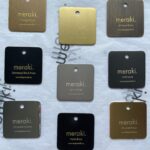



Our bare brass is polished bright before it ships. It is uncoated, so it changes with use. Here is what that means, and what to expect from day one.
Polished unlacquered brass is the only finish we sell with nothing on top of it. Satin brass, matte black, satin nickel and the rest all have a sealed layer that keeps them looking the way they arrived. Unlacquered has no layer at all. The metal is bare, so it reacts to the air in the room and to the oils on your hands, and it changes.
What unlacquered actually means
No lacquer, no coating, no plating. Solid brass, left as metal.
Over a few months it darkens towards a warm brown. Where hands touch it most often it stays brighter, so a handle ends up with a lighter track along the part you actually hold. That is patina. It is surface oxidation, not wear or damage, and indoors it goes honey and brown. The green you see on statues comes from years of rain, not from a kitchen.
Because there is no coating, you cannot really get the cleaning wrong. A dry cloth handles marks. Brass polish takes it back to bright whenever you want it back. Or you leave it alone, which is where most people end up. Our finish and care guide covers the detail, and we wrote separately about brass in the bathroom, which is the room where it moves fastest.
An older idea than it looks
Unlacquered is not a new fashion. It is the original condition. Brass door furniture, letterplates and window fittings in Georgian and Victorian houses were left bare. Keeping them bright was simply one of the household jobs, done with a cloth and a tin of polish. Lacquer arrived later to put a stop to that, and sealed finishes gradually became the norm.
Brass then fell out of favour for a long stretch, while chrome and brushed steel took over kitchens and bathrooms, and it has only come back in recent years. What came back was mostly the sealed version.
So a bare brass handle is not a modern idea at all. The genuinely modern part is choosing not to polish it, and letting the metal go where it was always going to go.
Bright on day one
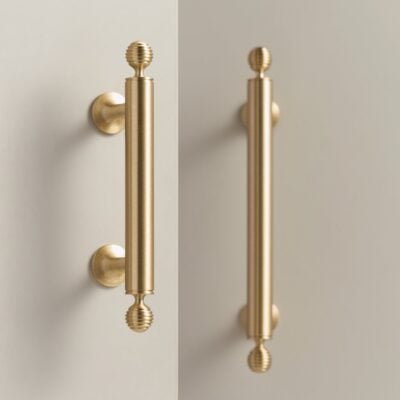
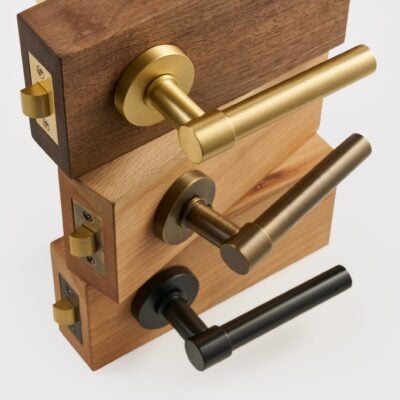
Polished unlacquered brass is bare metal, polished to a bright shine before it ships. It is the brass most people picture: bar rails, pub door pushes, the letterbox on an old front door. Bright, warm, and completely bare.
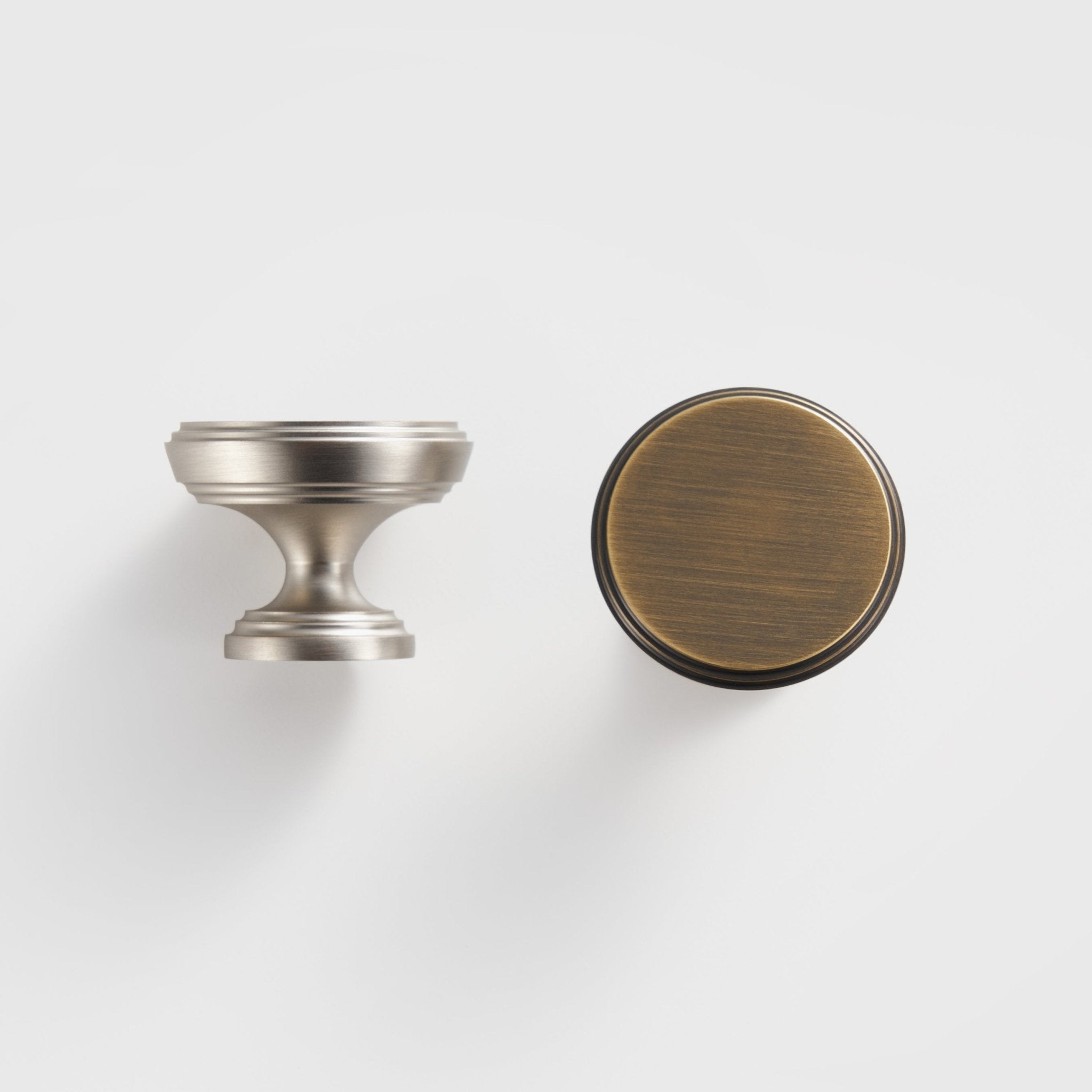
One thing worth saying plainly. This is not the same as our Polished Brass (PVD), which is sealed and stays a mirror indefinitely. Polished unlacquered brass will not stay bright. It starts bright.
What actually happens over the first year
The shine goes first where fingers land, and the colour deepens everywhere else. Within a few months it reads as mellow rather than shiny. Give it a couple of years and it settles into a warm brown with a brighter path where the hand goes.
So the choice is about the first year, not the tenth. If you want a kitchen or bathroom to look finished the week it goes in, this finish gives you the brightness straight away, and the ageing happens gradually afterwards. If you are matching brass already in the house, polished is closest to something newly restored. Anything more than a couple of years old will be darker, and the new piece catches up with it.
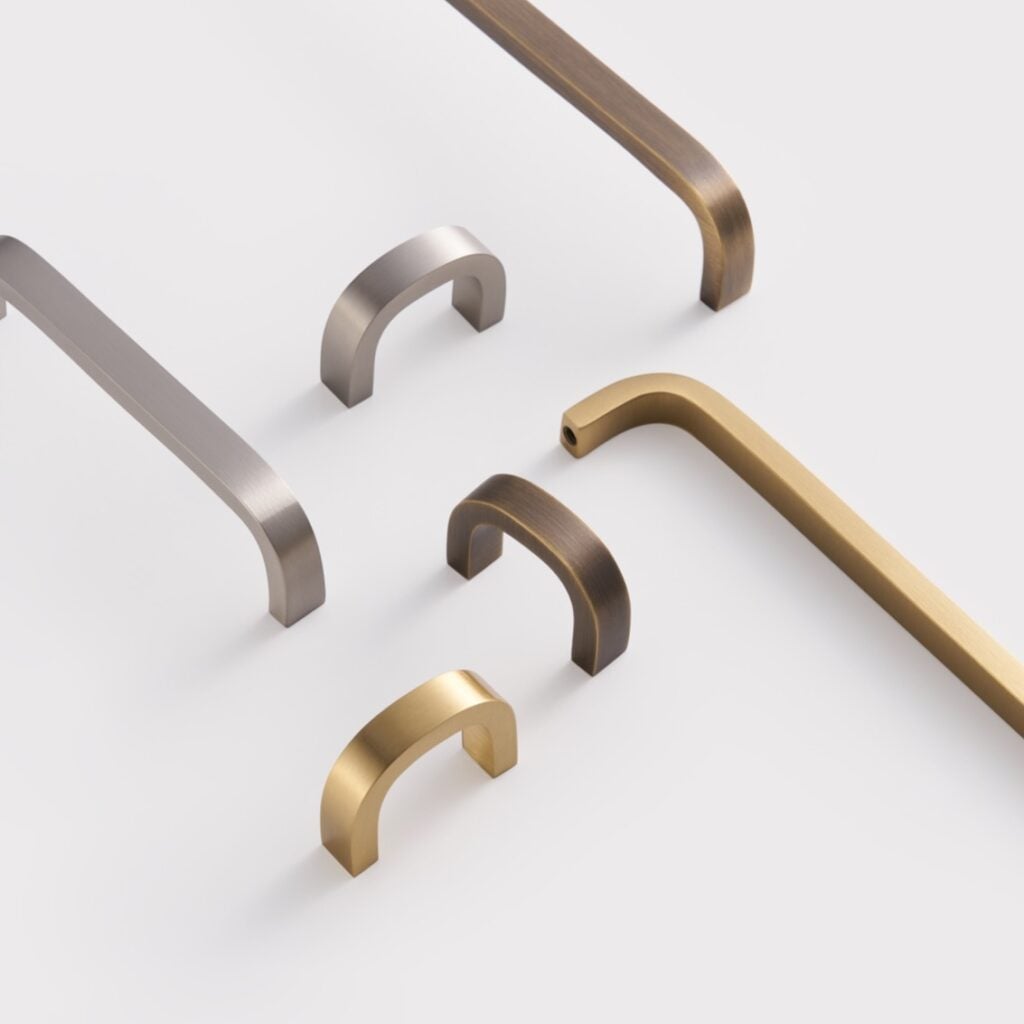
A living finish also sits well next to sealed ones. It works best on the piece you touch most: the front door, or the drawer you open every morning. We made that case in mixing metals at home.
A note on expectations
The one thing you cannot do with this finish is keep it exactly as it arrived. That is not a fault to be managed, it is how bare metal behaves, and it is the reason people choose it.
Everything else is reversible. Dark back to bright with a little polish, bright back to dark by leaving it alone. After a few years you have a piece of hardware that looks like yours and nobody else’s.
meraki. designs and sources solid brass hardware in sealed and living finishes, so you can choose a piece for where it starts as well as where it ends up.