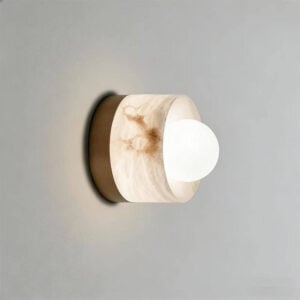









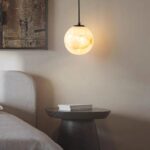


Turn one on in a hallway late in the evening, once the daylight has gone, and watch what happens to the wall. There is the pool of light you expected, softened at its edges, but there is also the stone itself, lit as if a low fire sat somewhere behind it. Veins that were faint grey lines by day become the whole pattern of the thing. The surface looks warm before your hand gets anywhere near it. It does not read as a fitting. It reads as a small lit window set into a thick wall, which, in a sense, is what alabaster has always been.
Where the light actually comes from
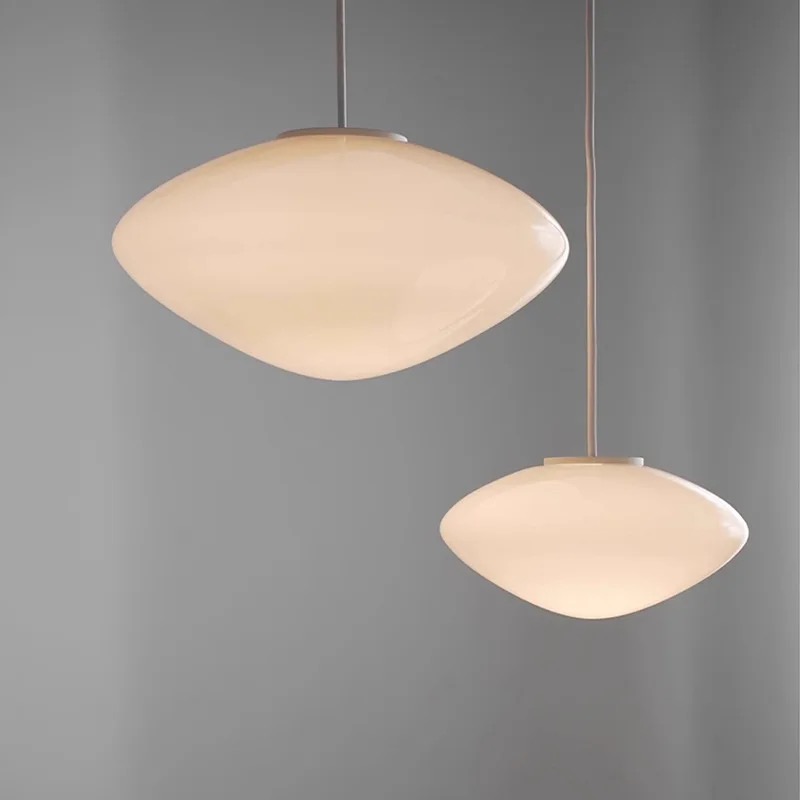
With a fabric or glass shade, the bulb does the work and what you see is a thin skin lit from behind; look at one with the light on and you can usually find the bulb, a brighter patch behind the fabric. Alabaster is lit through. The glow seems to come from inside the material because it does, and there is no bulb to find, only stone that is thinner in some places and denser in others. That is why the light from a hollowed sphere or a carved drum has an even, weighted quality a shade never quite manages: a solid thing lit through, not a skin lit from behind.
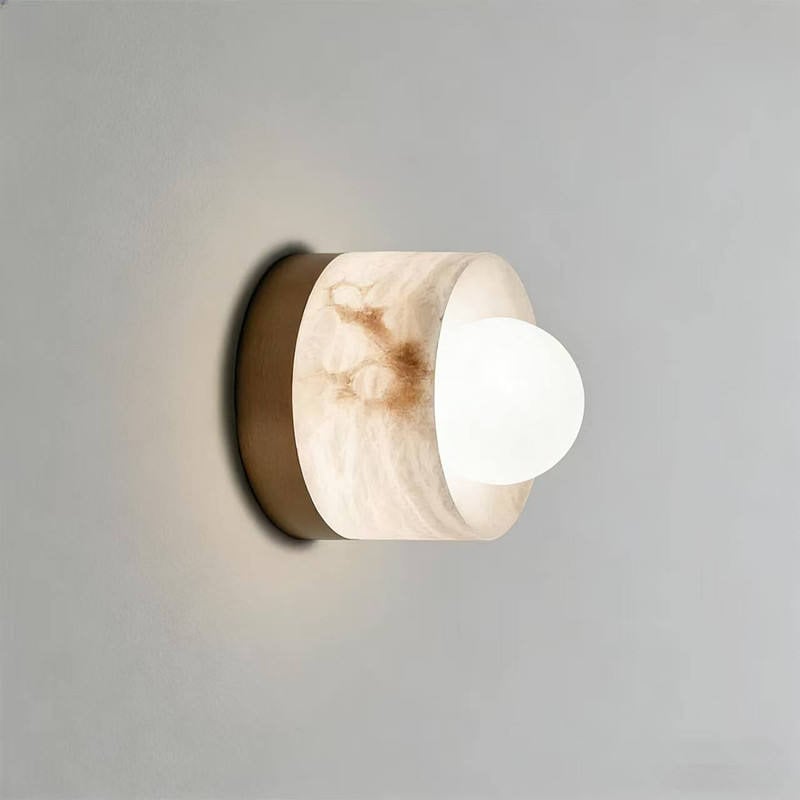
Alabaster is a soft, translucent stone that has been worked since antiquity, and it was set into windows in some historic buildings. The pieces in our range are that idea at domestic scale. The ALMA sphere and wall light, the LUME fluted wall light, the TONDO drum sconce and the MARMO disc are hollowed or carved from natural alabaster, most of it Spanish, and lit from within so that the veining shows.
Veining as pattern
By daylight the stone is a quiet, milky thing and its veins look almost like faults. Switched on, they organise themselves. Denser passages hold the light back and read darker; thinner passages let more through and go bright; the result is a pattern that was settled a very long time ago and belongs to that one piece alone. No two are alike, and we would not want them to be. Two TONDO sconces either side of a mirror will match in shape and in the finish of their fixings and differ in their markings, which is exactly what makes them feel like stone rather than a moulded imitation of it. Within a day the difference stops being a flaw and becomes which one is which.
This is ambient light, not task light. It will not light a page in bed. It sets the temperature of a room and gives a wall something to do after dark.
Warm, and where it belongs
Warm white in the region of 2700 to 3000K flatters brass and it flatters skin, which is why we would always choose the warm option where one is offered. Passed through alabaster it warms again and comes out with a cream cast. On a bedside wall at eleven at night, one alabaster wall light at the height of a resting head is enough to read a face by and not enough to keep anyone awake. On a landing it is the light you leave on. Either side of a mirror, the classic place for stone wall lights, it lights the person in front of it kindly rather than accurately.
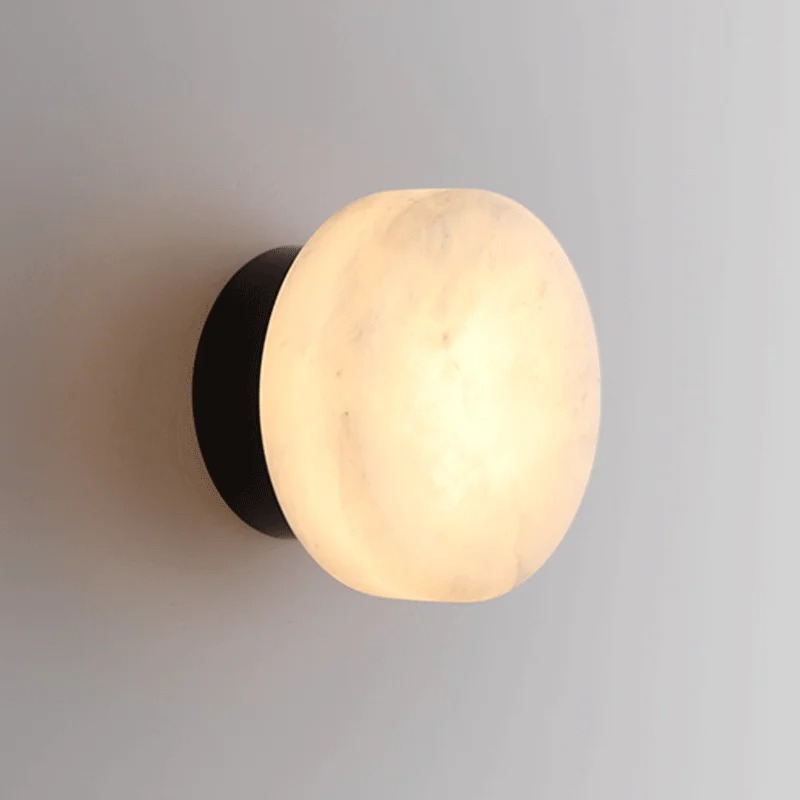
Hallways suit it particularly. They are passed through rather than sat in, so atmosphere costs nothing in usefulness, and a MARMO disc on a hallway wall carries the eye down the space in the evening the way a picture does by day.
Stone light and brass hardware in one room
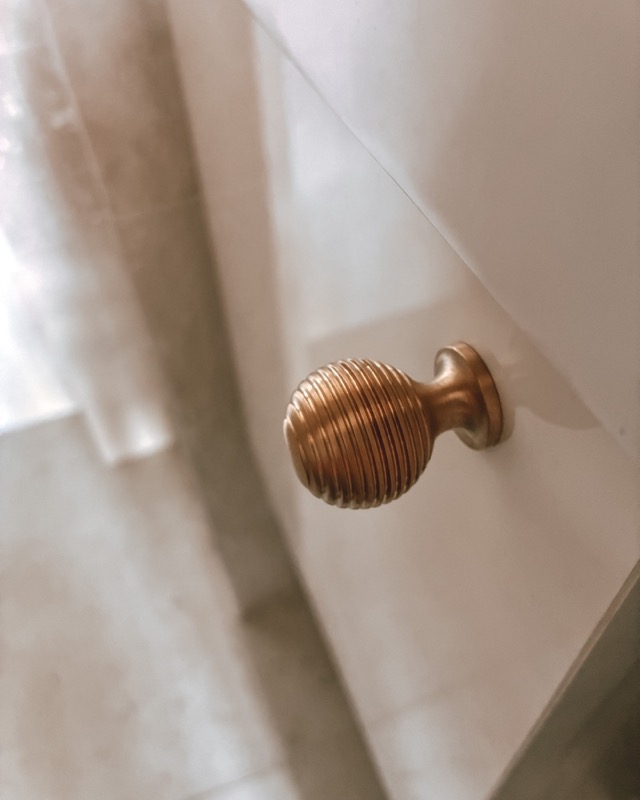
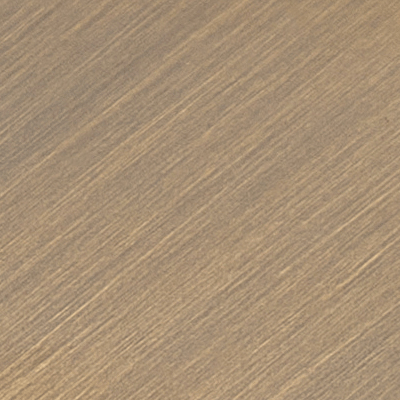
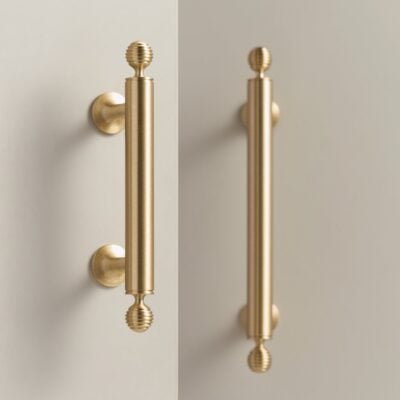
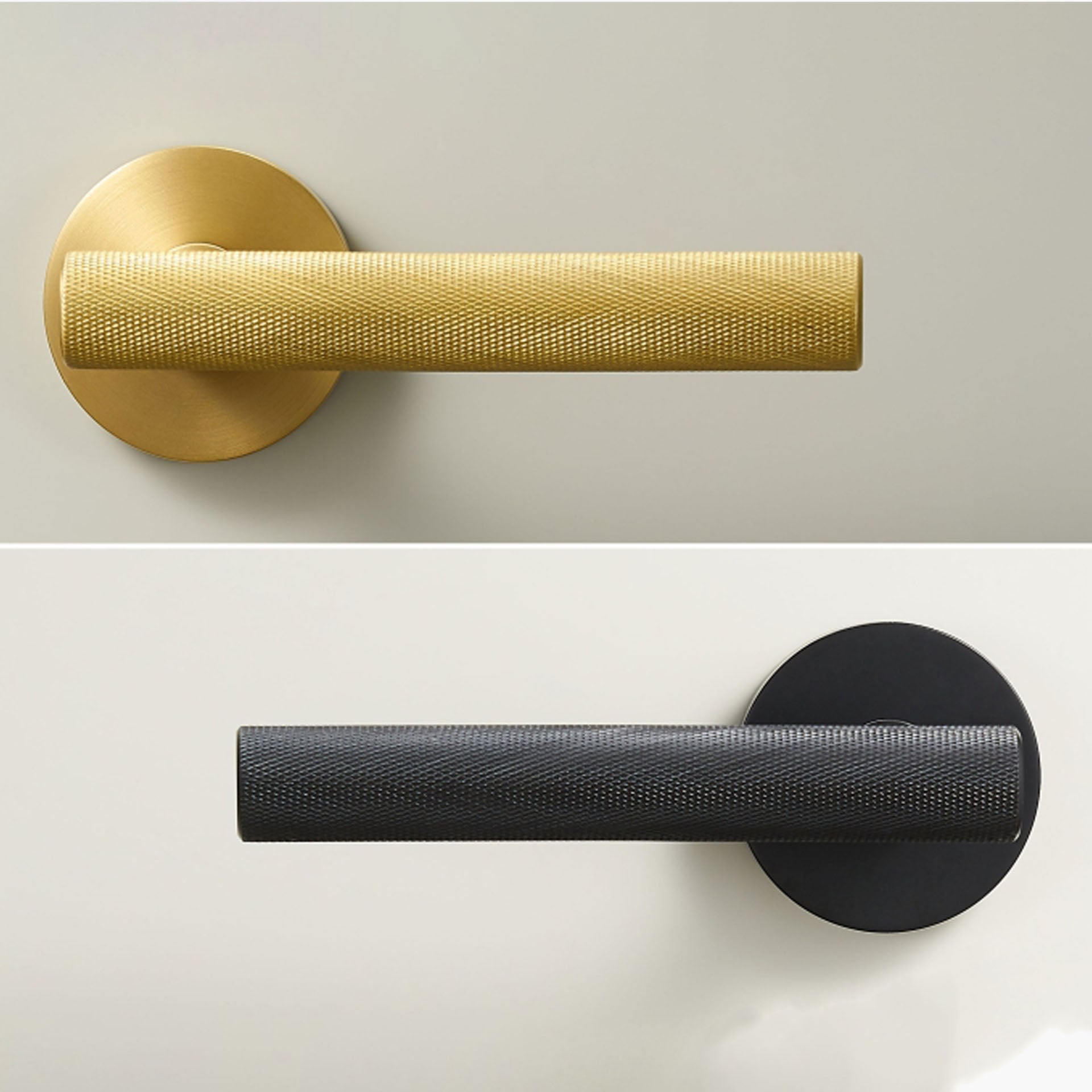
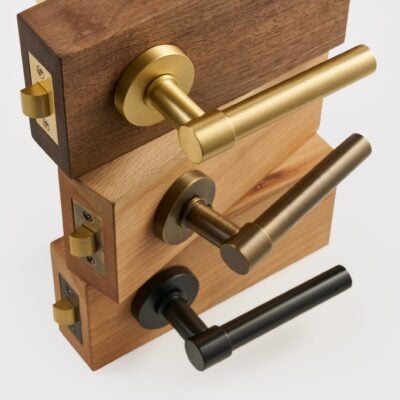
They are the same colour, near enough. Alabaster lit warm and satin brass share a note, and the brass canopy on an ALMA light picks up the glow of the stone without any conscious matching. A satin brass lever on the bedroom door and a stone light on the wall inside it, and the room agrees with itself. Unlacquered brass on a bedside drawer knob will darken over the years towards honey and brown, and the alabaster, which keeps its colour, becomes the constant it darkens against. That is a quieter version of the thinking in the art of cohesion: a family of warm finishes rather than an exact match, and lighting treated as part of the hardware of a room, not a separate purchase.
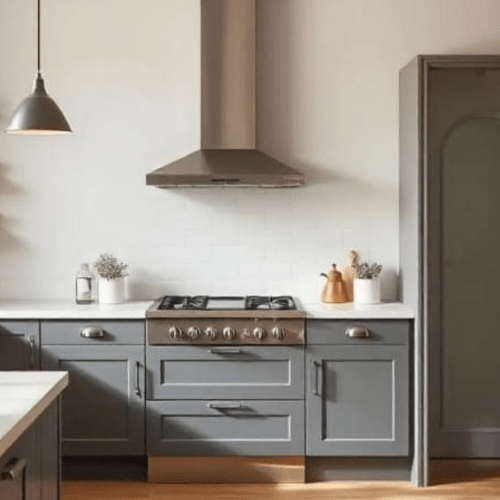
Where the scheme runs cooler, satin nickel or matte black hardware still sits comfortably next to stone light. The stone does the warming; the metal can afford to be reserved.

The pleasure of a thing that was always there
A light that is stone first and a light second is easy to live beside. It looks like part of the building in daylight, and it only declares itself when the room needs it to. Most of what we put in our homes wants noticing. Alabaster spends the day as a pale, heavy, faintly veined object on a wall, and then, at the hour the room turns inward, does the one thing it was quietly made to do. Living with it is less like owning a lamp than like having kept a small piece of the outside world indoors and found that it glows.
meraki. designs and sources solid brass hardware and natural stone lighting, chosen to be lived with rather than looked at.