












In short
Designers place bathroom accessories by reach: the towel rail where you step out of the bath or shower, hooks by the shower and on the door, a ring or short rail by the basin. The one published height is the NKBA’s: a toilet roll holder centred 660 mm high, 203 to 305 mm in front of the bowl.
Once the bath, the basin and the tiles are in, a bathroom can look finished and still feel bare. Livingetc’s guide to a bathroom’s finishing touches starts with the hardware: towel rings, wall hooks, door stops and cupboard handles, the pieces beyond the taps that give the room its personality. In the same piece the designer Lauren Sullivan says she is a great believer in upgrading the things you see, touch and use every day.
They are also the pieces you reach for without looking, wet or half asleep, so a rail on the far side of the room or a holder behind your shoulder is felt every day. The designers who plan bathrooms for a living place them by where you stand rather than by a tape measure. Below are the seven details they get right, from what they have told House & Garden, Livingetc and Homes & Gardens, with the one height the NKBA publishes and our own methods where nobody gives a figure.
1. The towel rail goes where you step out of the bath
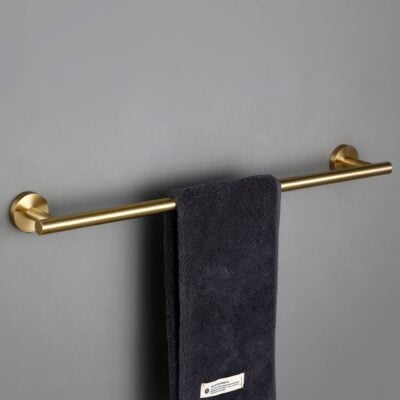
Naomi Astley Clarke plans the rail from the bath. In Homes & Gardens the interior designer advises investing in a good heated towel rail and making sure it sits “nicely within reach of your bubble bath or shower door”. Deborah Bass, founder of the design studio Base Interior, told the same magazine that a family bathroom works when it is planned around ease of movement and ergonomics, and her list of what that means includes towel radiators you can actually hang a towel on. The bathroom planning guidelines of the National Kitchen and Bath Association, written for designers, say it in plainer words: towel holders should be conveniently placed near every fixture in the room.
A heated rail squeezed behind the door may warm the room, but if it is awkward to reach it stops being where the towels live. We’d sketch the room first and mark where each person stands, dripping, as they get out. None of these designers gives a height, and the NKBA doesn’t either, so we use what we call the towel test. Fold a bath towel over a broom handle, hold it against the wall where the rail will go, and raise it until the towel clears the skirting, the edge of the bath or the top of a radiator. Then check you can reach it from the bath or the shower tray without stepping onto the floor, and mark the centre of the bar rather than its top.
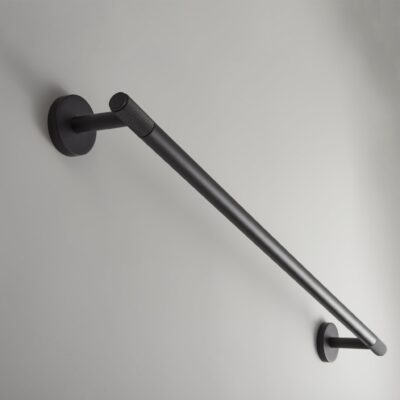
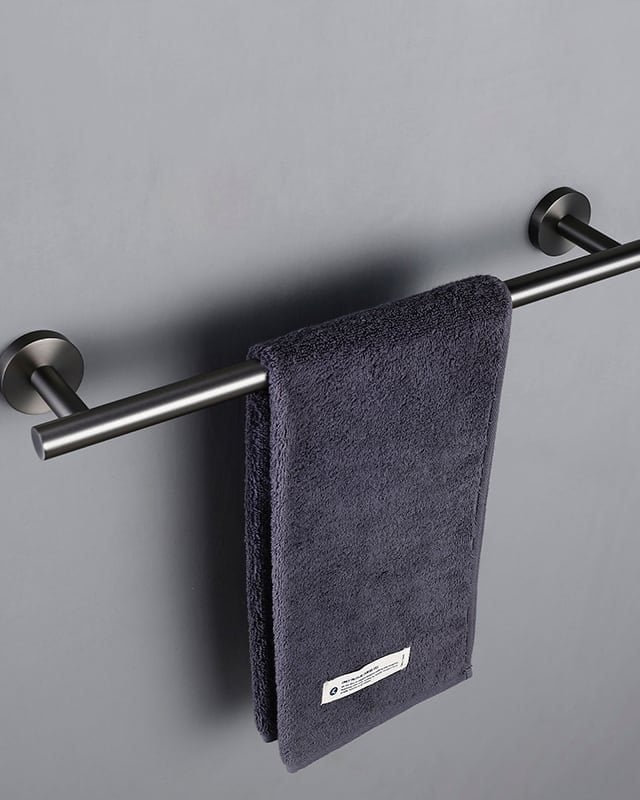
The KRAM towel rail is 500 mm long and stands 78 mm off the wall, which we think is close enough not to catch a hip on the way past. The KOL towel rail is a plain stainless steel bar for the same job, and both come with matching hand towel rails and hooks.
2. A hook beside the shower or bath
Annie Downing would put a hook where others put a rail. In a Homes & Gardens round-up of things designers leave out of a bathroom, the Austin designer called heated towel bars finicky and a waste of energy and wall space, and suggested hooks instead, because they are easier to place and most towels now come with a fabric loop. The Florida designer Nicole Roe, in the same piece, would rather have a portable towel warmer that moves round the room. In a bathroom by Jessica Bennett of Alice Lane Interior Design, shown in Homes & Gardens’ guide to towel storage, two towels hang from small metal hooks beside the bath, and the magazine notes that towel rings, like rails, can be placed beside a shower or bath to give those towels a zone of their own.
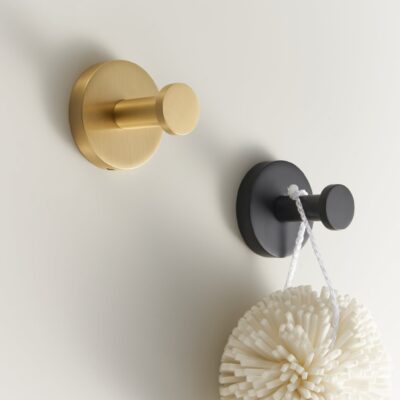
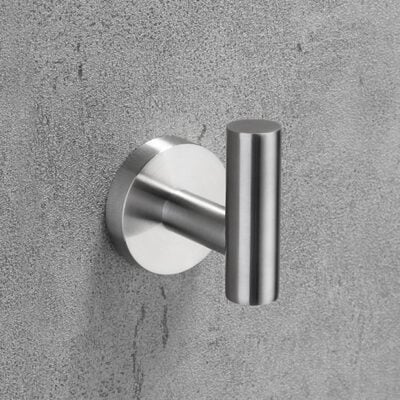
Each has its strength. House Beautiful points out that a bar dries a towel faster because it hangs open rather than bunched. A hook, in our view, takes a towel in one movement and fits the narrow strip of wall beside a shower screen where a rail won’t go. In a family bathroom we’d have both: a rail for bath towels beside the bath, and a hook or two within reach of the shower, placed by the same towel test so the towel clears the tray and the floor. The KRAM robe hook and KOL hook match their towel rails.
3. A ring or short rail for the hand towel, beside the basin
Sara Johnson prefers a short rail. The interior designer told Livingetc she isn’t fond of a hand towel ring, and cuts a regular towel rod down to hand towel length instead. Homes & Gardens notes that rings are usually placed beside a basin for exactly this job, where wet hands find the towel without dripping across the floor, and that a ring can be fixed to the side of a vanity unit where there’s little free wall. In a small cloakroom with a wall-hung basin and no ledge, the Los Angeles designer Kirsten Blazek chose a single brass hook in place of a ring, she told Livingetc.
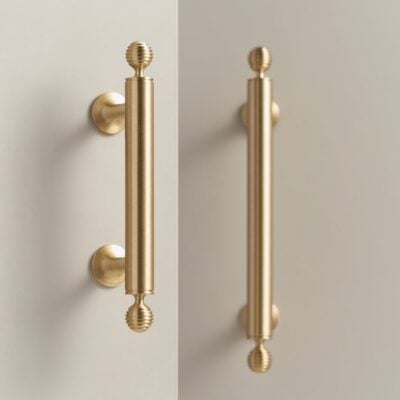
Our KRAM hand towel rail is 280 mm long and projects 78 mm, a size that suits the narrow strip of wall beside a basin, and its knurled bar gives the towel some grip. The KOL hand towel rail is the smooth version. For the height, use the towel test again, with a hand towel, and check it clears the basin rim and the top of the vanity.
4. The toilet roll holder, just ahead of you as you sit
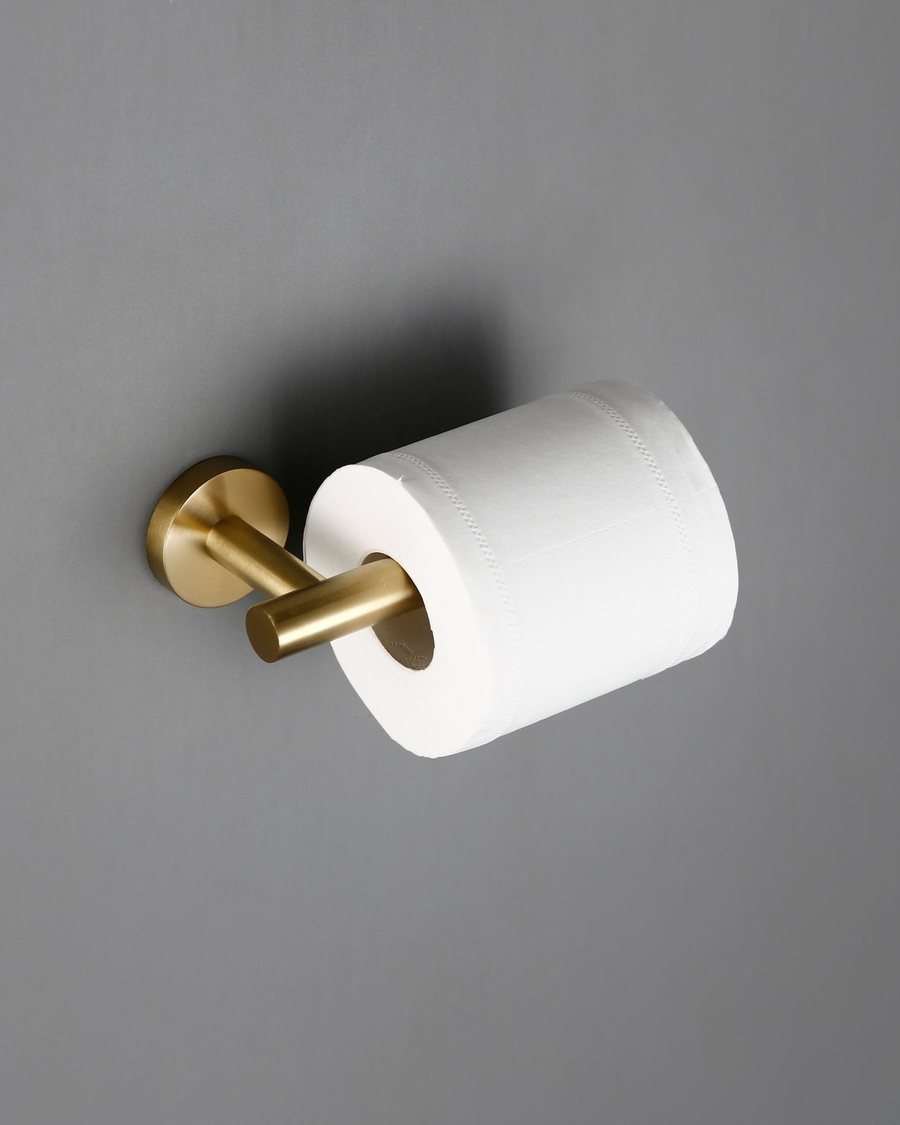
The NKBA gives the one published position in this piece. Its bathroom planning guidelines put the toilet roll holder 203 to 305 mm (8 to 12 inches) in front of the edge of the toilet bowl, centred 660 mm (26 inches) above the floor. In practice that means slightly ahead of you as you sit, never behind, and it’s where we’d start in any home bathroom.
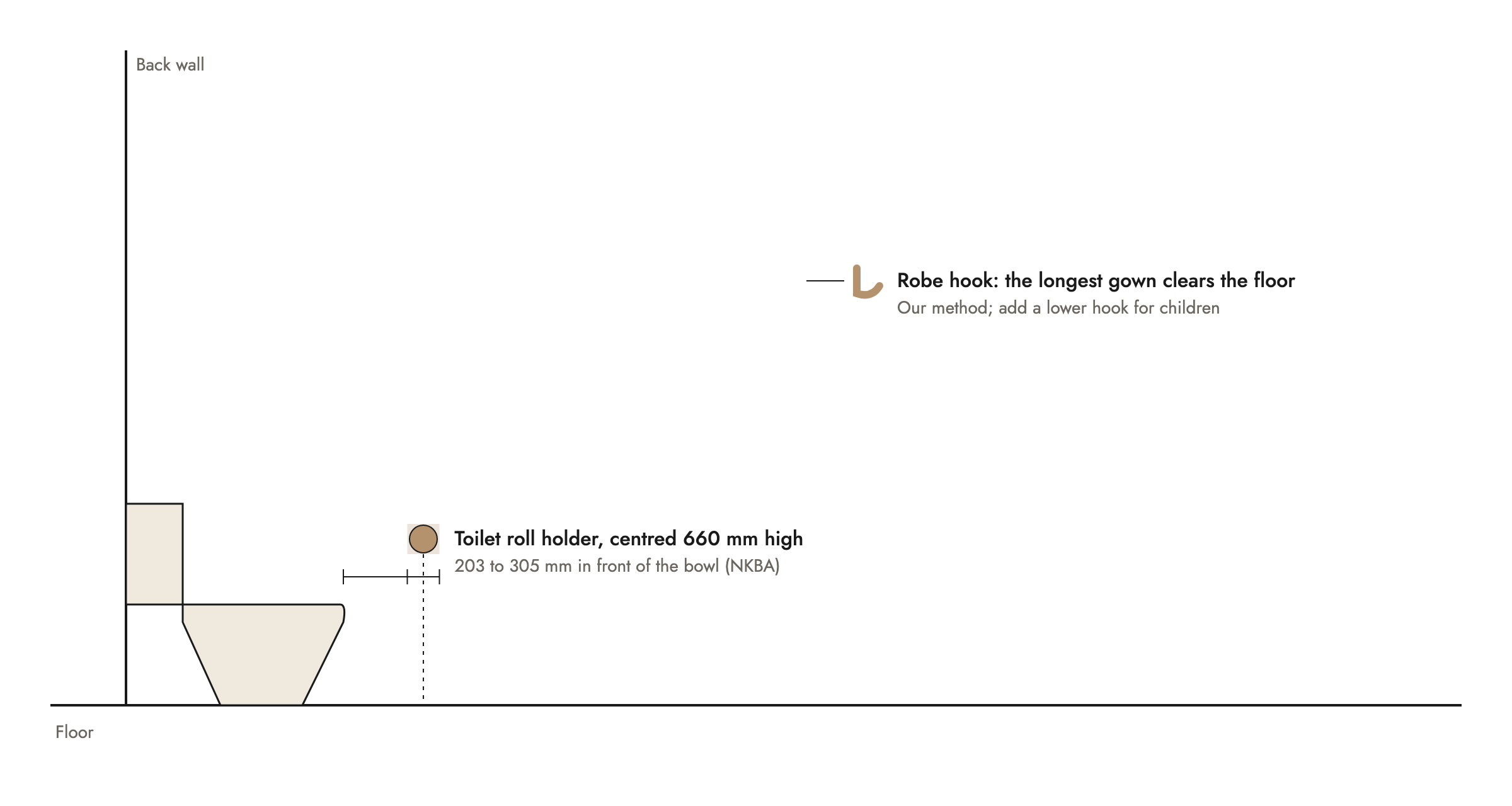
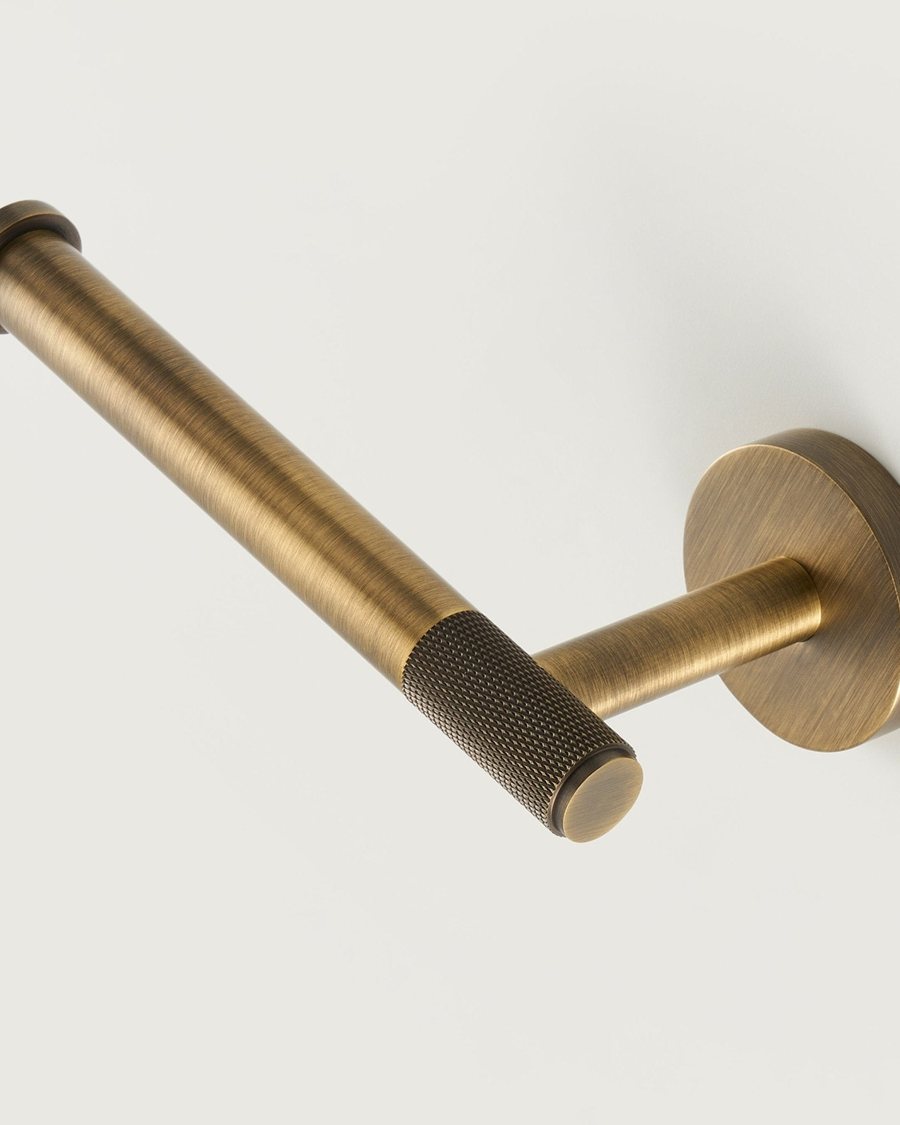
Check the spot against the room before you drill. A vanity unit, a radiator or a return wall can sit right where the holder wants to go, and you need room for a hand to change the roll. Our KRAM toilet roll holder is 160 mm long and projects 78 mm on a 52 mm round plate, and the KOL toilet roll holder is its plain stainless steel counterpart. Both are open ended, so the roll slides on from the side; leave a little space on that side.
5. Robe hooks on the back of the door
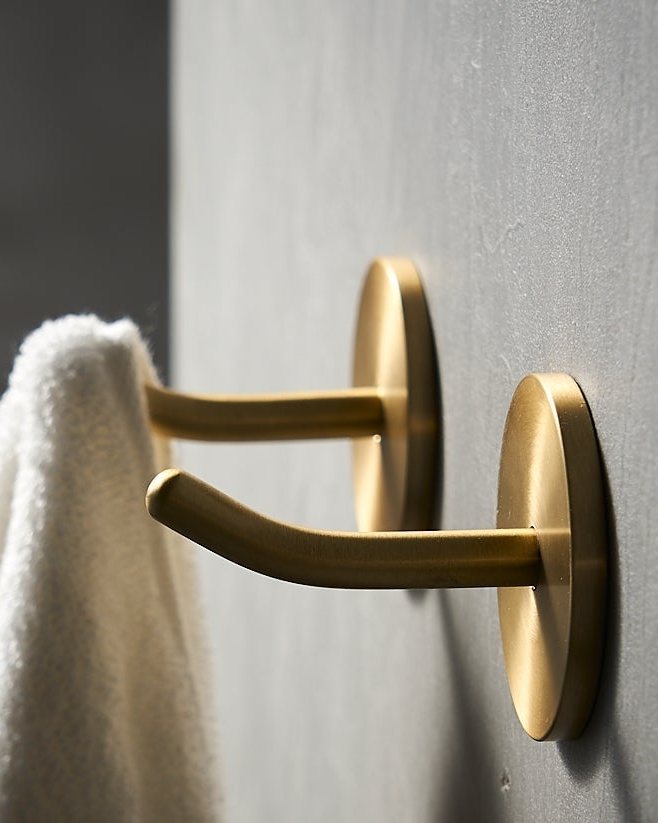
Jenni Lauri looks to the door. Livingetc suggests making use of the back of the bathroom door, which is otherwise dead space, and the Beverly Hills designer advises good-looking hooks there for towels and bathrobes.
No designer we’ve read sets a height for a robe hook at home, so we use the gown test. Hold the longest dressing gown in the house at the planned spot and fix the hook where its hem clears the floor and the skirting. In a family bathroom we’d add a second hook lower down that children can reach for themselves.
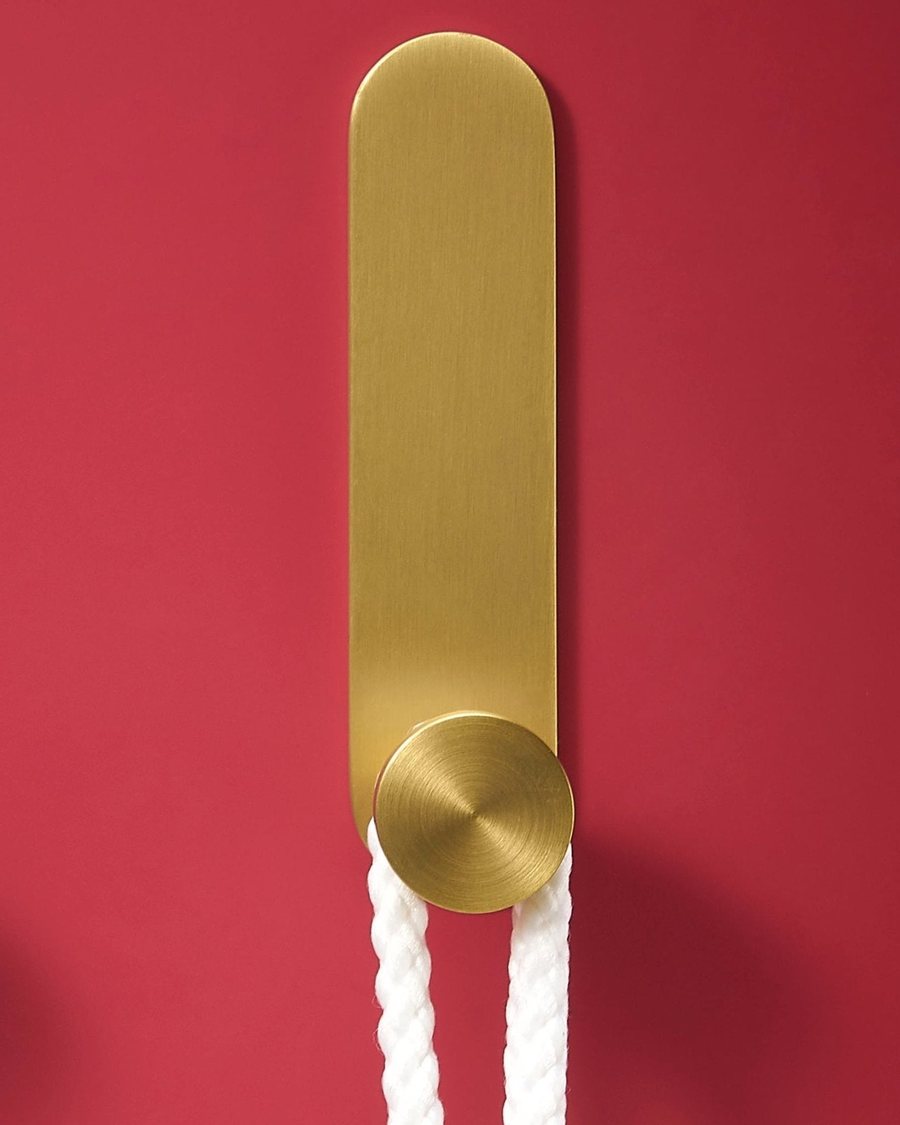
On a door, check the hook’s projection against the handle and the wall the door opens onto. HAMO projects 59 mm, while BRAZE and BEETHAM hooks are 90 mm tall and project 28 mm. Our wall hooks collection has the rest.
6. One finish, taken from the taps
Samantha Struck starts from the taps. She told Livingetc that she matches the accessory hardware to the plumbing so the room reads as one piece, and keeps the profiles simple. Tiffany Duggan told House & Garden that a bathroom gathers metal from many makers, from toilet roll holders to taps and wall lights, so she keeps pieces of the same type in one finish and lets the ironmongery take a complementary one, such as bronze beside unlacquered brass. The interior designer Clare Gaskin, in the same piece, encourages mixing, antique brass with bronze tones for a more layered look.
Upkeep matters as much as colour. Chloe Willis told House & Garden that polished nickel and unlacquered antique brass look warm but need more looking after, while Kate Earle prefers live brass, “which tarnishes beautifully over time”. The Copper Development Association explains that brass darkens slowly, that indoors a noticeable change can take many years, and that the brass push plates on a hospital ward entrance in Birmingham had not darkened after 36 months. Unlacquered brass stays brightest where hands touch it and changes slowly everywhere else. Our piece on brass in the bathroom covers how sealed and unlacquered finishes behave in steam.
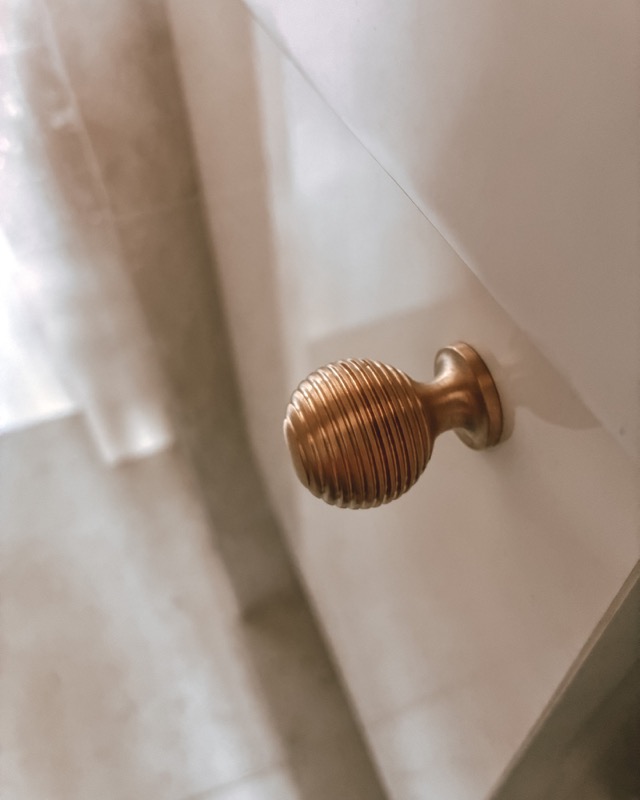
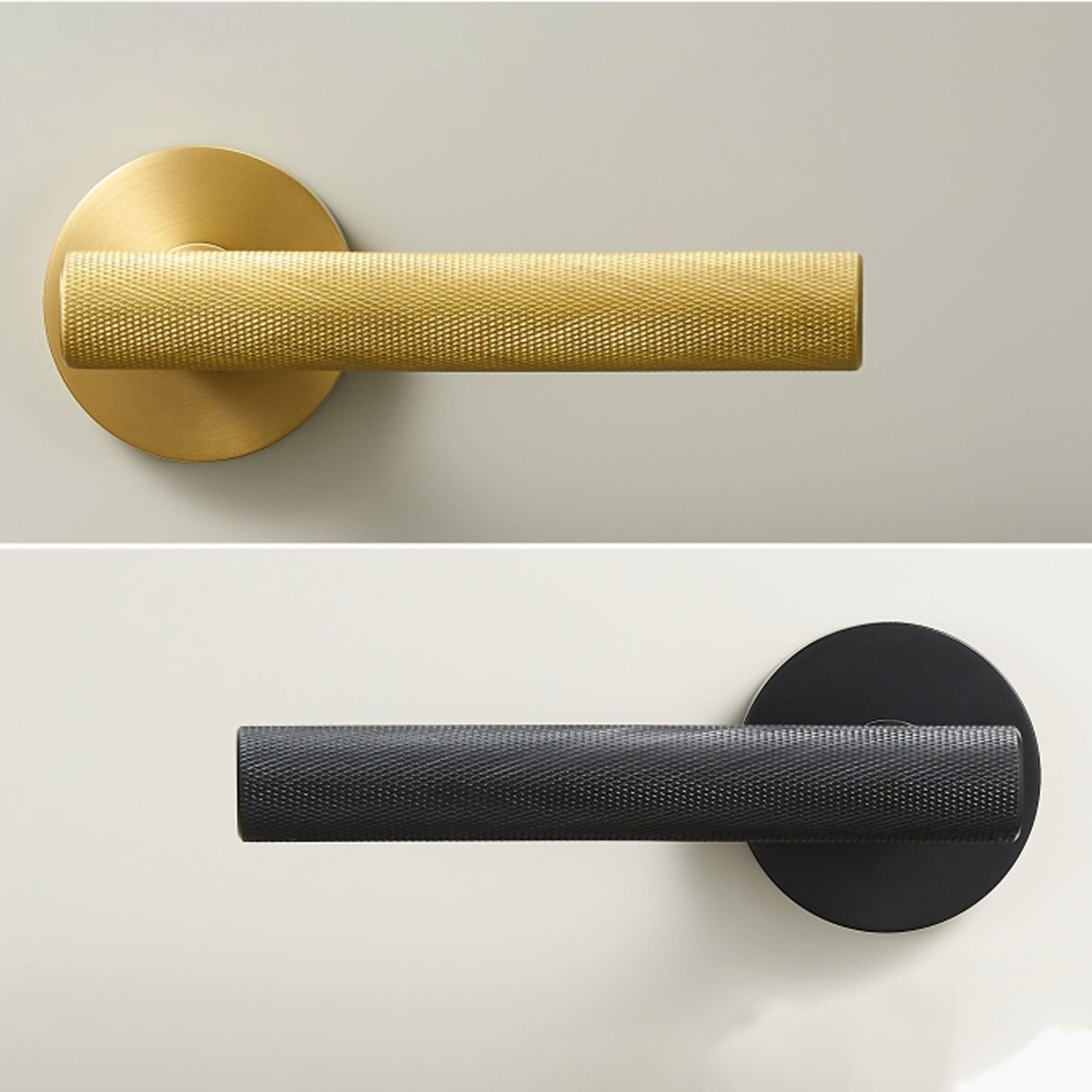
KRAM is solid brass in antique brass, matte black, satin brass and satin nickel. KOL is stainless steel in brushed stainless steel, graphite grey, matte black, polished chrome and satin brass. Our finish and care guide covers cleaning each one.
7. Fixings planned before the tiles go on
The Tile Association, the tiling trade body, sets out how to drill a tile cleanly. It advises sticking masking tape on the tile first to stop the drill slipping, notes that diamond-tipped bits are made for fully vitrified and porcelain tiles, and says that some porcelain needs a wet drill stand with a diamond core bit, run at low speed. If you’re tiling from scratch, mark where the rails, hooks and holder will go before the tiles go on, so every fixing lands on solid backing.
Plasterboard holds a hook well with the right fixing, but a towel rail gets pulled and leaned on. Siniat, which makes plasterboard systems, says suitable plasterboard fixings give greater pull-out resistance, and recommends local reinforcement with a pattress or timber for large or heavy items. On a stud wall we’d screw into a stud or a timber noggin wherever possible, and in a renovation we’d add noggins at rail and holder height before the walls are boarded.
Some of our hooks can be fixed with adhesive as well as screws. The HAMO and LAMO listings say they suit ceramic, marble, metal, glass, wood and any wall that isn’t peeling, but not wallpaper or limestone; screws are included and adhesive is bought separately. The KURVER hook set is fixed with adhesive only, and MODULA hooks come with M4 60 mm dowel screws and M6 wall plugs. The rest of our range is in bathroom accessories.
Where each piece goes, at a glance
| Accessory | Where it goes | Height | From |
|---|---|---|---|
| Towel rail | Within reach as you step out of the bath or shower | Set by the towel test: the towel hangs clear of the skirting and the bath edge | Naomi Astley Clarke; NKBA guidelines; our method |
| Towel hook | Beside the shower or bath, where a rail won’t fit | Set by the towel test: the towel clears the tray and the floor | Annie Downing; Jessica Bennett; our method |
| Hand towel rail or ring | Beside the basin, or on the side of the vanity | The towel clears the basin rim and vanity top | Homes & Gardens; Sara Johnson; our method |
| Toilet roll holder | 203 to 305 mm (8 to 12 in) in front of the edge of the bowl | Centred 660 mm (26 in) above the floor | NKBA Bathroom Planning Guidelines |
| Robe hooks | On the back of the door | Set by the gown test: the longest robe clears the floor; a lower hook for children | Jenni Lauri; our method |
Quick answers
How high should a toilet roll holder be?
The NKBA’s bathroom planning guidelines suggest centring it 660 mm (26 inches) above the floor.
How far from the toilet should the toilet roll holder be?
The NKBA puts it 203 to 305 mm (8 to 12 inches) in front of the edge of the bowl, so it sits slightly ahead of you, never behind.
How high should a towel rail be?
There’s no standard height. Designers place it within reach of the bath or shower; fold a towel over a broom handle and set the rail where the towel clears the skirting and the bath edge.
How high should a robe hook be?
No published height applies to a home. Hold your longest dressing gown at the spot and fix the hook where its hem clears the floor, with a lower hook for children if you need one.
Towel rail or hooks in a bathroom?
Designers differ. Naomi Astley Clarke plans around a heated rail, while Annie Downing prefers hooks. A rail dries a towel faster; a hook fits a narrow wall.
Can I drill into bathroom tiles?
Yes. The Tile Association suggests masking tape to stop the bit slipping and diamond-tipped bits for porcelain.
Should bathroom accessories match the taps?
Many designers match them, as Samantha Struck does. Others, such as Tiffany Duggan, keep like with like and give the ironmongery a complementary finish.
Sources
- Livingetc: How do you give a bathroom the perfect finishing touch? Hardware as the first finishing touch; Lauren Sullivan, Samantha Struck, Sara Johnson and Kirsten Blazek.
- Homes & Gardens: Interior designer Naomi Astley Clarke shares her top 4 bathroom remodel rules. A heated towel rail within reach of the bath or shower door.
- Homes & Gardens: Family bathroom ideas. Deborah Bass on ergonomics and towel radiators you can use.
- Homes & Gardens: 10 things interior designers say you don’t need in your bathroom. Annie Downing and Nicole Roe on hooks and towel warmers over heated towel bars.
- Homes & Gardens: Towel storage ideas. Jessica Bennett’s hooks beside the bath; towel rings beside the basin, the vanity, the shower or bath.
- Livingetc: 7 ideas for organizing a bathroom with little to no storage. Jenni Lauri on hooks on the bathroom door.
- House & Garden: How to choose the right bathroom fixtures. Tiffany Duggan, Clare Gaskin, Chloe Willis and Kate Earle on finishes.
- House Beautiful: Towel bars vs. towel hooks. Bars dry towels faster.
- National Kitchen and Bath Association: Bathroom Planning Guidelines. Toilet roll holder position; towel holders near every fixture.
- Copper Development Association, Antimicrobial Copper: FAQ. How slowly brass darkens indoors and where it is handled.
- The Tile Association: Cutting ceramic wall and floor tiles. Masking tape, diamond-tipped bits and wet drilling for porcelain.
- Siniat: Fixings. Plasterboard fixings and local reinforcement with a pattress or timber.
Images: Product photographs and diagrams are our own.