






In short
Match the hardware to the age of the house: simple brass or painted knobs on Georgian doors, beehive or octagonal knobs on larger backplates on Victorian ones, plainer knobs or early levers in Edwardian houses. Keep the knob, hinges and escutcheon on each door in one finish, and bring in modern materials or levers only where you mean to.
An old house keeps much of its history in the metal on its doors: the knob halfway up the lock rail, the hinge knuckles down the frame, the keyhole and its plate. Country Life traces front door furniture growing heavier with the Victorians and plainer again with the Edwardians.
Designers working on these houses mostly keep the shapes a house was built with, and take their liberties with material and finish, or with a lever where a knob is hard to turn. These are the six details they and the heritage bodies return to, with our view marked as ours.
1. Choose knobs or levers by the age of the house
The interior designer Angelica Squire told House & Garden that she generally prefers traditional hardware throughout a home, even in a contemporary scheme. Its guide to door handles traces the sequence. Reeded knobs came into fashion in the 18th century, and the round Bloxwich knob with its concentric rings is still popular in Georgian and Regency houses. The Victorians added the beehive and the octagonal knob, Edwardian terraces and cottages took plainer bun knobs, and levers only came into wide use at the start of the 20th century.
The Georgian Group adds that Georgian doorknobs were simple painted or brass knobs, halfway up the lock rail, often 2 feet 9 inches, about 840 mm, from the floor. The interior designer Nina Lichtenstein gives the case for a lever in Homes & Gardens: replacing a hard-to-turn knob can make daily life easier, especially for anyone with specific physical needs.
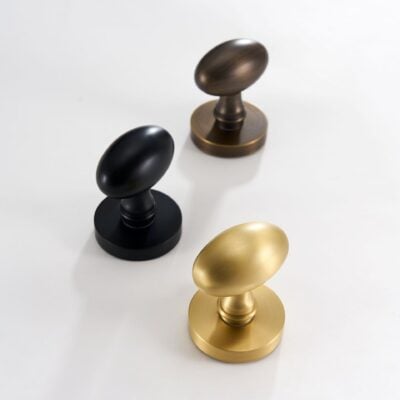
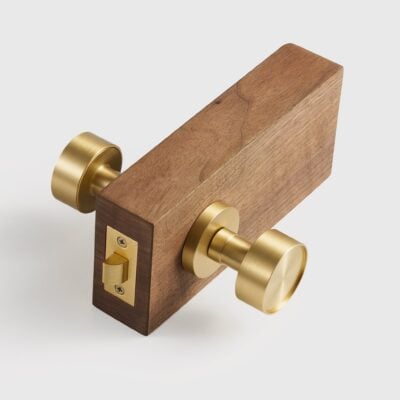
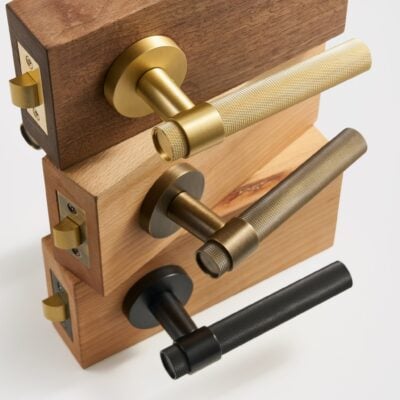
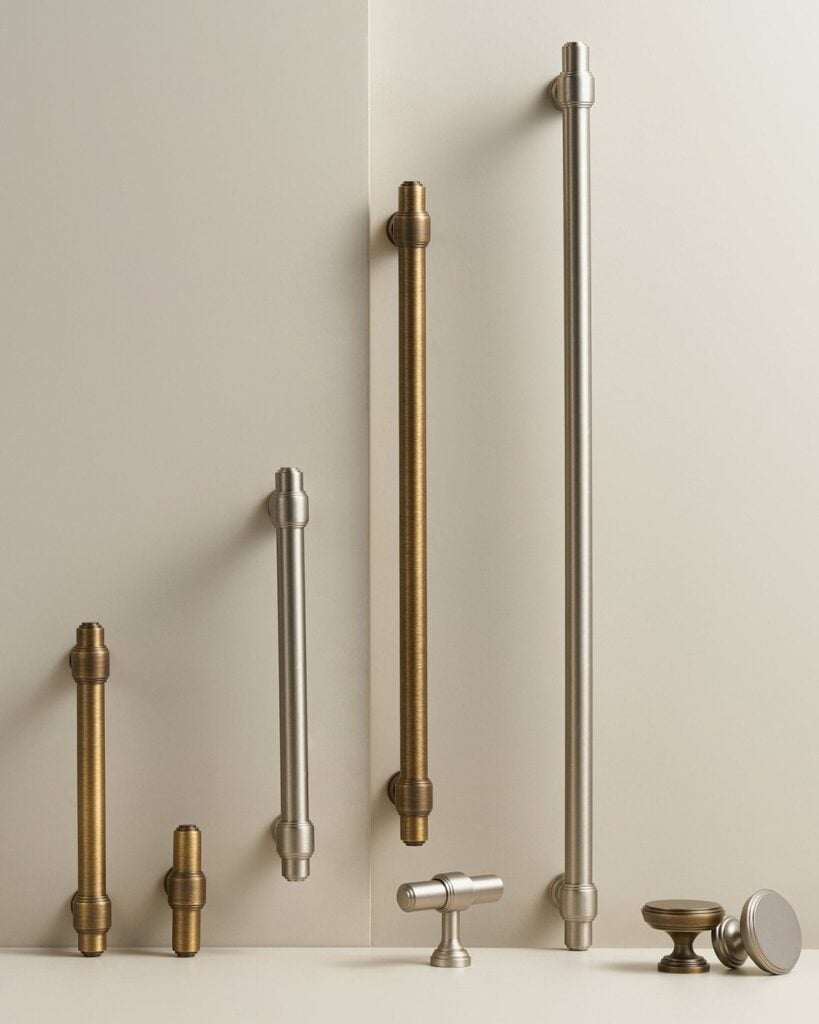
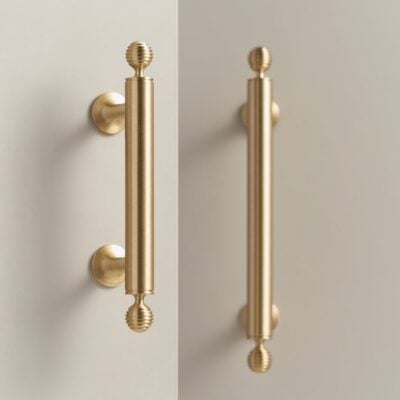
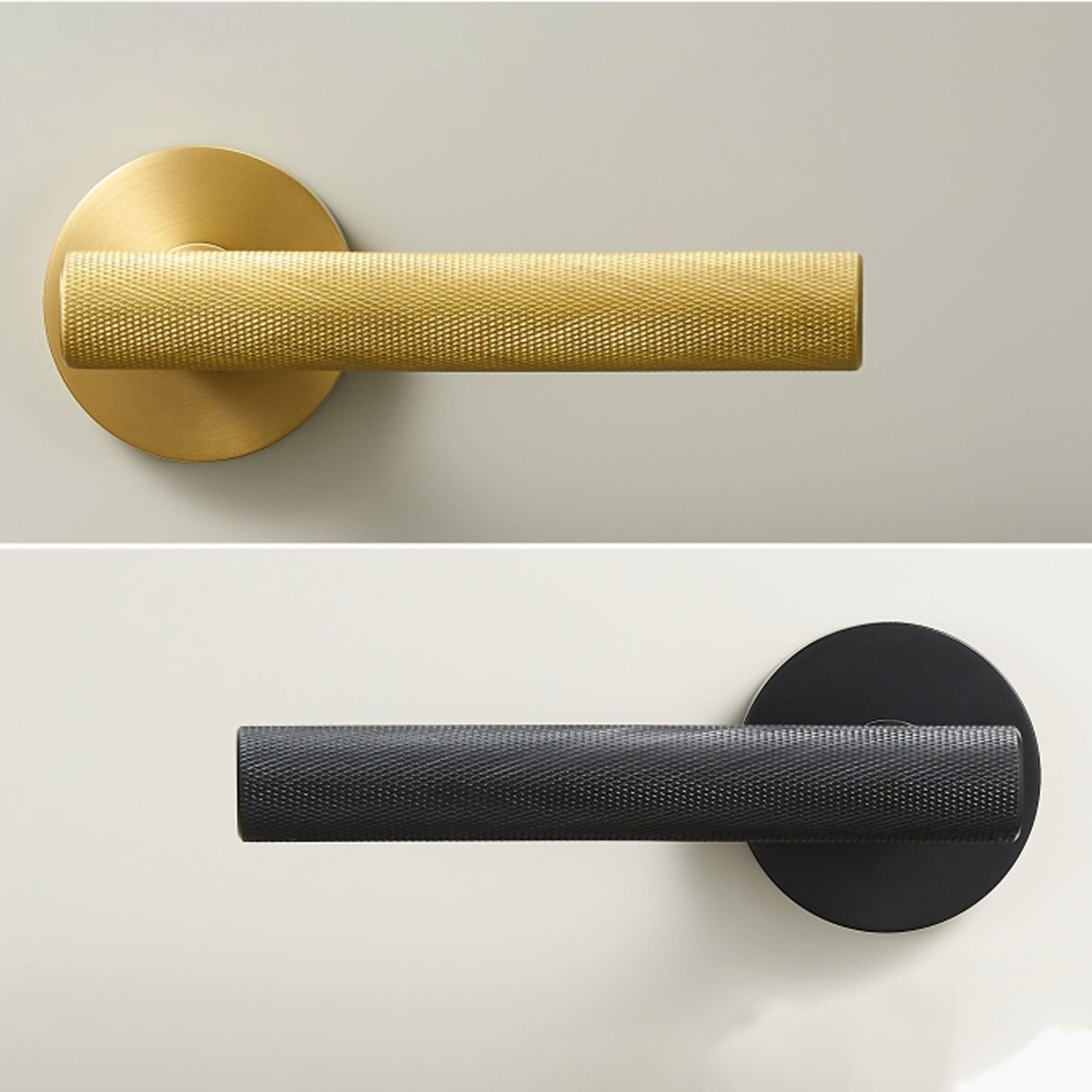
We’d keep knobs on Georgian and Victorian doors, and use levers in Edwardian and later houses or wherever a knob is hard to turn. Our KROM Door Knob is a solid brass knob on a plain round rose, and LUNO is a plain solid brass sphere that fits both the UK and European standard (52 mm) and the North American one (65 mm). Where a lever is the better answer, LITA pairs a diamond-knurled grip with smooth ends on a round rose.
2. Put the knob on a rose or a backplate to suit the door
The preservation architect Susan D. Turner, writing in Traditional Building, notes that historic doors typically had all their hardware matching in style and material, in keeping with their period. We think the plate behind the knob is where that shows first. The Guild of Architectural Ironmongers defines a rose as a small shaped plate that mainly improves the look and fit of a knob or handle, and a backplate as the longer plate a lever lock or latch handle is mounted on.
The plate is old: the V&A holds an early 17th-century handle plate from Suffolk, in pierced wrought iron. House & Garden’s guide dates the larger backplate to the Victorians, and Country Life, writing about front doors, notes that, size permitting, Victorian and early 18th-century doors carried heavy or ornate door furniture, while the Edwardians followed the later Georgians into simpler, more elegant metalwork.
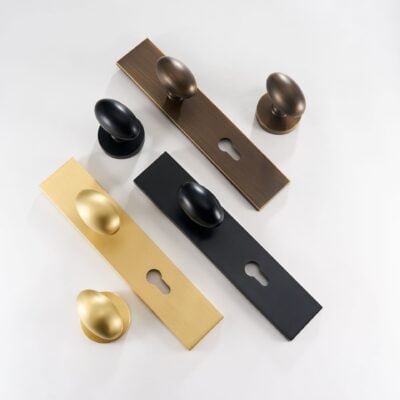
So we’d put a round rose on a late Georgian or an Edwardian door, and save a backplate for a Victorian one with the mouldings to carry it. Our KROM Door Knob with Backplate is the backplate version of KROM; its page says the plate adds visual weight and a more traditional character than the rose, and suits Victorian and Edwardian houses.
3. Let the hinges show, and match them to the handle
The interior designer Linda Hayslett told Homes & Gardens that hinges on interior doors in the same finish as the handles can make a room feel new without any major work. The interior designer Anna Hewitson told SheerLuxe that matching is ideal but not always possible, and where old hinges stay, she suggests painting them in with the door and frame.
The historian Linda Hall, writing in The Building Conservation Directory, records T and H hinges on 17th and 18th-century doors. Period Homes cites Henry Chapman Mercer: cast iron butt hinges, patented in England in 1775, soon replaced wrought iron ones. Turner adds that a pin could be plain or finished with a ball, an acorn or a finial. On a Georgian door, the Georgian Group asks owners to save original iron hinges, often irreplaceable, and to avoid decorative strap hinges that hide a modern one.
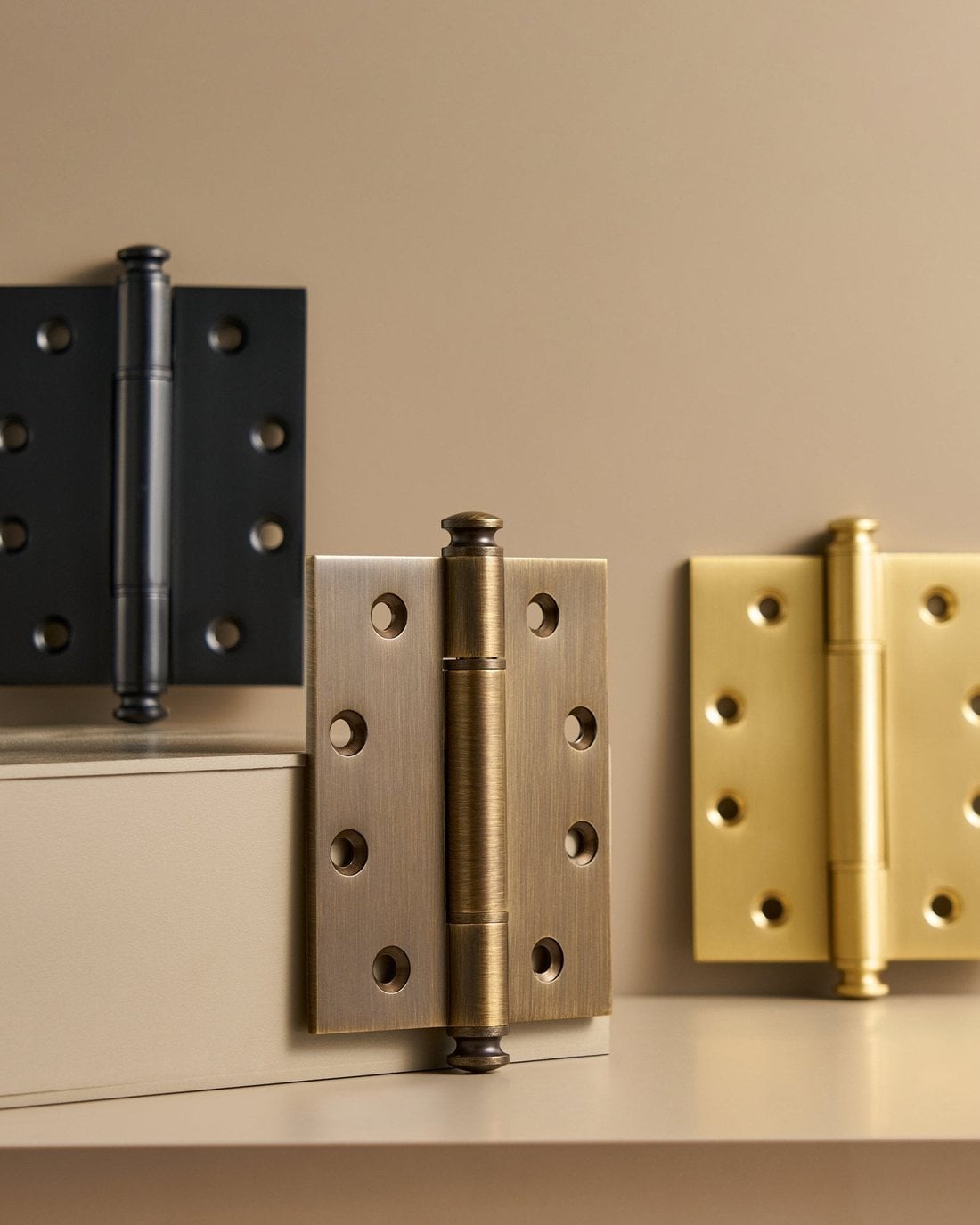
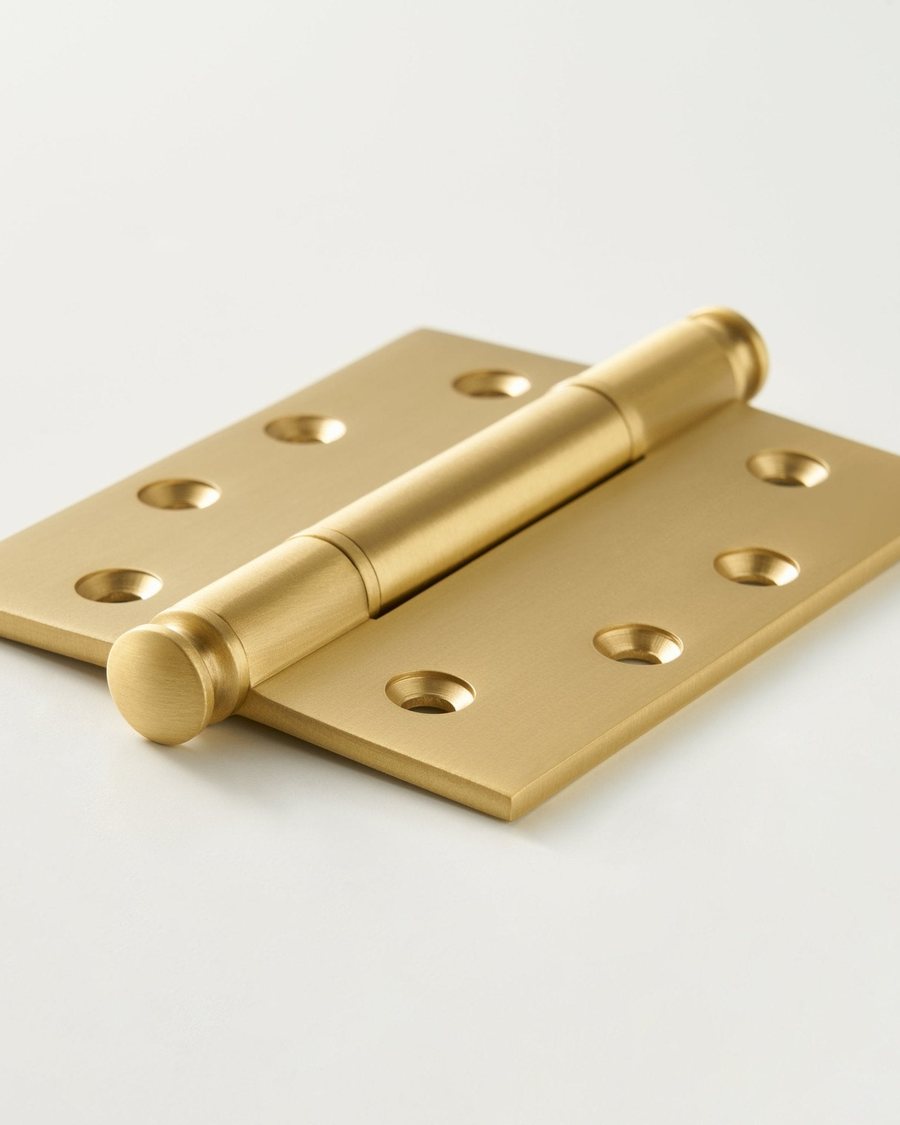
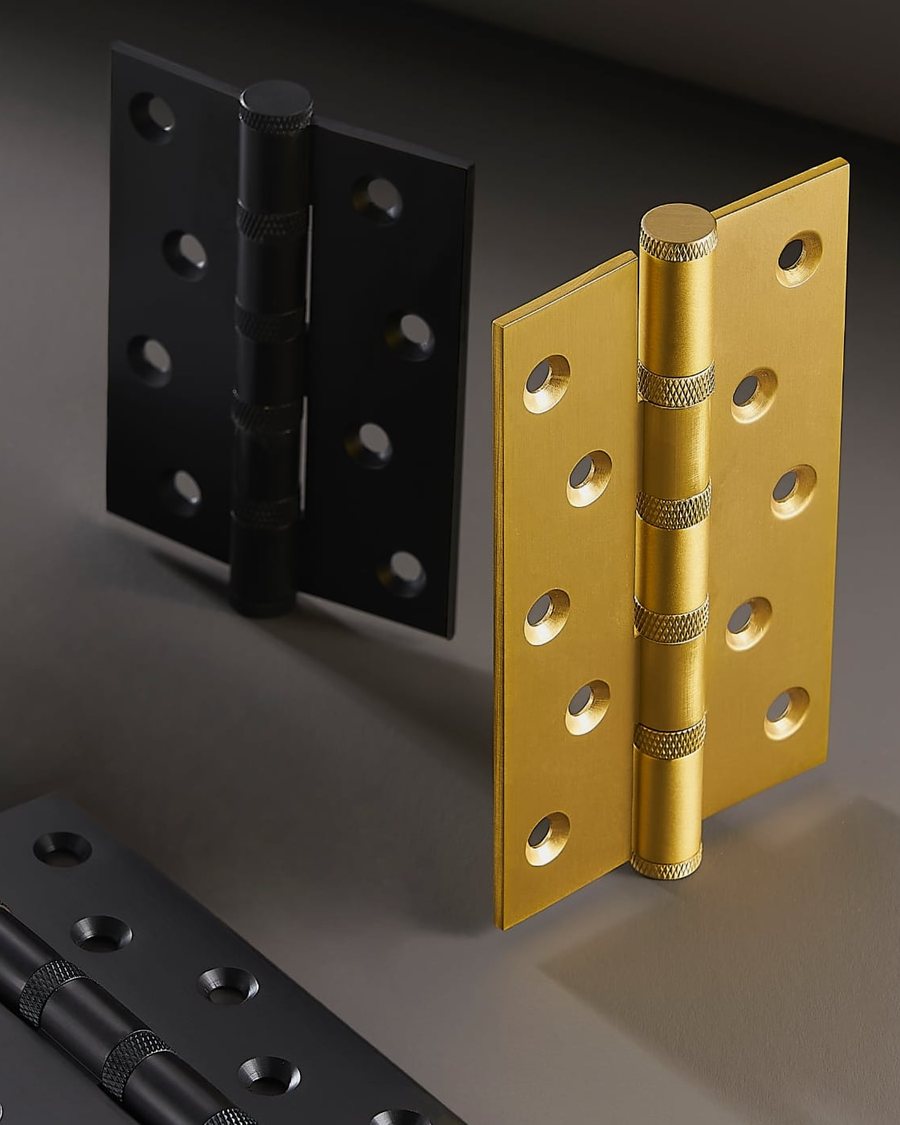
Where a Victorian or Edwardian door needs new hinges, we’d look first at ALVO, a solid brass butt hinge, 102 by 84 mm, with a ball-tip finial and square-cornered leaves, a detail its page calls period. CARDO is plainer, in 102 and 128 mm sizes, in satin brass or matte black, both unlacquered, and PETLYA has a fixed pin.
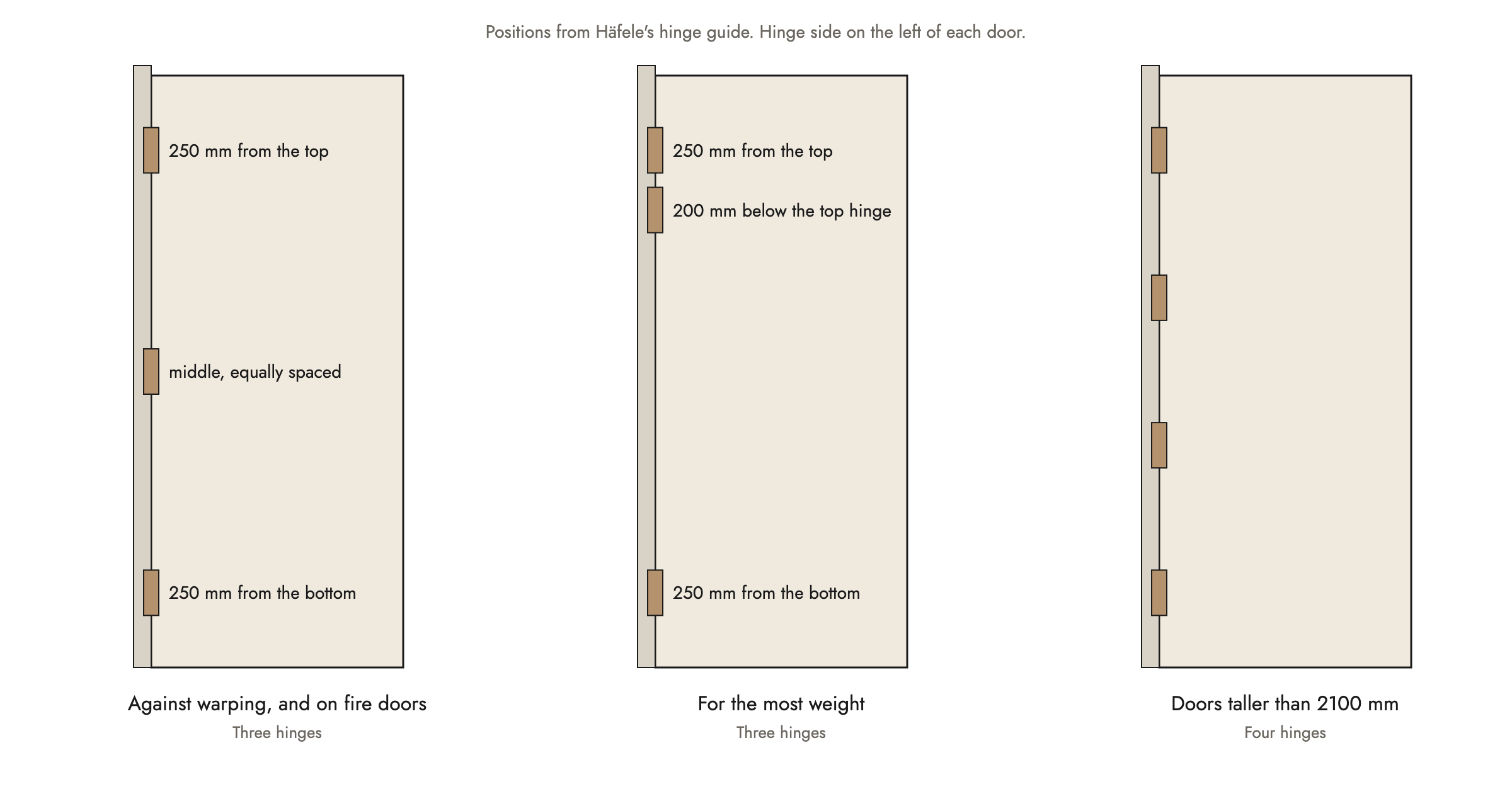
Count the hinges on an old door before adding one. In Turner’s account, doors were long hung on two, and a third at the midpoint became standard practice only in the early 1950s. For a door rehung today, Häfele’s hinge guide fits three, the top and bottom hinges 250 mm from the ends and the middle one equally spaced; to carry the most weight, the second goes 200 mm below the top one, and a door taller than 2100 mm takes four. On a fire door the Guild of Architectural Ironmongers says hinges must be CE or UKCA marked to BS EN 1935, and our hinge pages list no fire rating.
4. Give the keyhole an escutcheon and the right lock behind it
The Georgian Group sets out the order of locks: through the 18th century, brass or iron rim locks, with the mechanism on the face of the door, were most common, and mortice locks set into the wood appeared only towards its end. House & Garden’s guide adds that the rim lock, which needs its own rim knob, was most popular in Victorian and Edwardian houses, and the mortice lock is the most common type in homes from before 1950.
The escutcheon is the small plate around the keyhole. The Guild of Architectural Ironmongers describes it as fitted to match the rest of the door furniture, with a covered one the usual choice on an external door, to keep out draughts. Escutcheons appear beside finger plates for doors in the V&A’s pattern book of metal furniture mounts, probably from Birmingham in the late 18th or early 19th century.
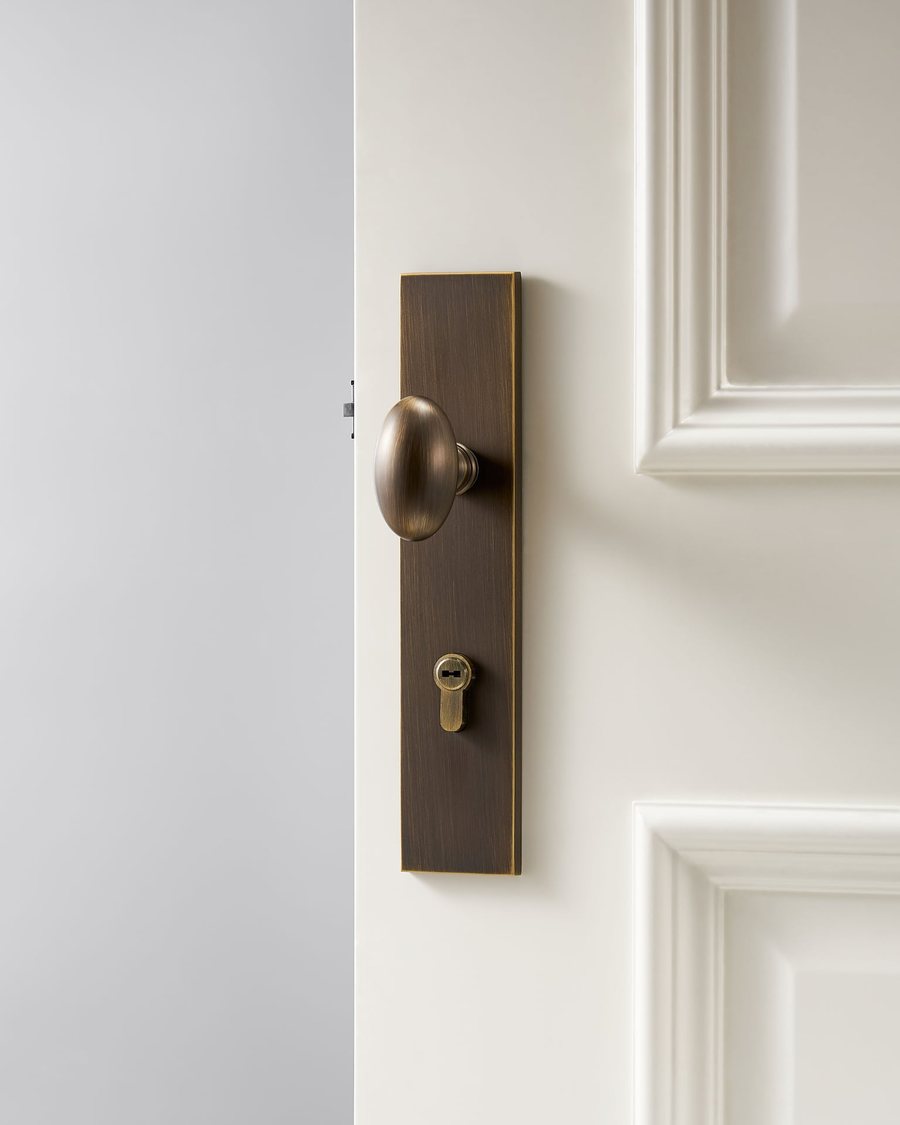
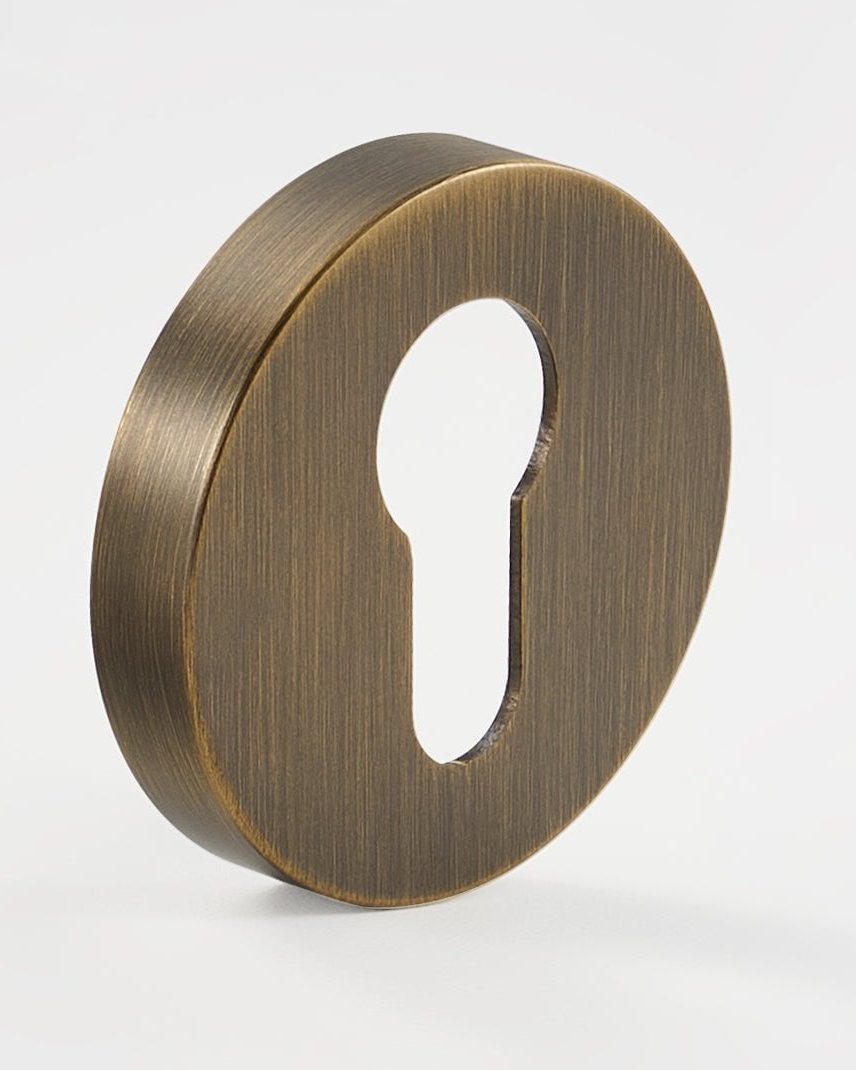
On an internal door with a mortice lock, our KROM knobs come as entry sets with a mortice key lock or a mortice thumbturn lock; our guides to door handle configurations and mortice and tubular latches explain the options. On a front or back door with a cylinder lock, our Solid Brass Keyhole Escutcheon is a plain round plate, 52 mm across for UK and European doors or 65 mm for North American ones, cut for a Euro profile cylinder.
5. Choose one finish for each door and carry it through the house
The interior designer Jen Dallas told Homes & Gardens to choose one look and let it flow through the house. Angelica Squire takes the other view in House & Garden: she would rather mix metals than be “a slave to a single finish”, and says brass switch plates needn’t mean brass handles.
In a period house, brass is the usual starting point. Country Life notes that most traditional door furniture is brass, with bronze and cast iron examples too, and Rupert Cunningham, of Ben Pentreath’s architectural practice, described his ideal front door to the magazine as “six panels, with reclaimed brass hardware.” The Georgian Group adds a caution for front doors: before about 1810, Georgian external fittings were rarely polished brass and were invariably cast iron painted black. Roger Hunt, Period Living’s renovation expert, told Homes & Gardens that brass door furniture needs regular polishing, and that some pieces are lacquered or plated.
The interior designer Cortney Bishop, writing in Homes & Gardens, describes unlacquered brass reacting to the oils from hands and to the air, and Jen Dallas counts the rubbed finish on old door knobs among the layers that tell an old house’s story. Finish is also where designers bring in the new. Rita Konig suggests black porcelain or ebonised wood knobs where brass feels too traditional, Melissa Hutley and Charlie Humm reach for a smooth bronze knob in a contemporary scheme, and Country Life notes designers choosing brushed nickel or polished chrome for a more modern front door. Nina Lichtenstein likes a hand-forged iron knob on a plain hallway door.
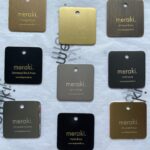
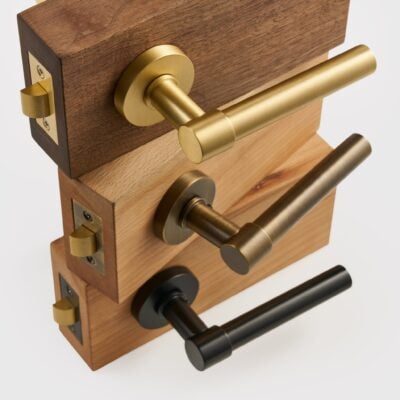
We’d keep knob, rose, hinges and escutcheon on each door in one finish, and one finish for the doors seen together along a hall or landing; the mixing, in our view, belongs between the doors and the lights and switches, where Squire’s example puts it. Our pieces on a house, door by door and mixing metals at home, calmly go further. KROM and ALVO come in antique brass, satin brass and matte black, and our escutcheon and TERRA door stop also come in polished unlacquered brass.
6. Finish with the small pieces: finger plates, door stops and bolts
Nina Lichtenstein reminded Homes & Gardens readers that small hardware is often touched more than any other surface, and finger plates show it best. House & Garden’s guide says they protected the wood of a door, became very popular in the Victorian period and stayed in vogue into the 1920s; the V&A’s pattern book shows them earlier, and the Georgian Group asks Georgian owners to avoid inappropriate ones. Finger plates aren’t in our range.
A Victorian door stop could be an object in its own right: the V&A holds a cast iron and brass door porter modelled as Cerberus by the sculptor John Bell, made in Sheffield around 1848. Ours are quieter. TERRA is a solid brass floor stop 35 mm across, with a black rubber buffer ring, and TELOS is a solid brass cylinder that sits on the floor.
Double doors, which House & Garden notes Georgian architects often used to bring formality to a room, need one more piece to hold the second leaf shut. Our KLINK is a lever flush bolt that recesses into the door edge and shoots into the floor or the head of the frame.
The details by period
The six details for each period, with House & Garden’s dates for the Georgian years.
| Detail | Georgian (1714 to 1830) | Victorian | Edwardian |
|---|---|---|---|
| Knob or lever | Simple painted or brass knobs at waist height; the reeded Bloxwich knob | Beehive and octagonal knobs | Plainer bun knobs; levers come into wide use |
| Plate and fittings | Simple knobs, never massive handles | Larger backplates; heavier front door furniture | Simpler, more elegant metalwork on front doors |
| Lock | Brass or iron rim locks; mortice locks from the end of the century | Rim locks most popular; mortice locks also common | Rim locks most popular; mortice locks also common |
| Hinges | Iron hinges; cast iron butt hinges patented in 1775 | Machine-made hinges by the later 19th century | Butt hinges, still the most common type |
| Small pieces | Finger plates in pattern books; avoid inappropriate ones | Finger plates very popular; cast iron door porters such as John Bell’s | Finger plates still in vogue, on into the 1920s |
Quick answers
What door handles suit a Georgian house?
Simple painted or brass knobs at waist height, according to the Georgian Group. House & Garden says the reeded Bloxwich knob is still popular in Georgian and Regency houses.
Should a Victorian house have door knobs or levers?
Knobs suit the period, beehive or octagonal and often on a larger backplate; levers came into wide use only in the 20th century. A lever still makes sense where a knob is hard to turn.
What door furniture suits an Edwardian house?
Plainer bun knobs, simpler metalwork and, from the start of the 20th century, levers.
Should door hinges match the door handles?
Ideally, yes, as Linda Hayslett suggests. If only the handles change, Anna Hewitson suggests painting the old hinges in with the door.
How many hinges should a period door have?
Many old doors were hung on two. Häfele’s hinge guide fits three today, 250 mm from the top and bottom with the middle one equally spaced, and four on doors over 2100 mm.
What is a door escutcheon?
The small plate around a keyhole, fitted to match the rest of the door furniture; a covered one keeps draughts out on an external door.
Can you mix modern and period door hardware?
Designers do, mostly through material and finish: Rita Konig suggests black porcelain or ebonised wood knobs, and Hutley & Humm a smooth bronze knob.
Sources
- House & Garden: All about door handles and how to choose them. Knobs and levers by period, backplates, rim and mortice locks, hinges, escutcheons and finger plates; Angelica Squire, Hutley & Humm and Rita Konig on choosing and mixing.
- Country Life: What does your front door say about you?. Heavier Victorian door furniture, simpler Edwardian metalwork, brass as the traditional material; Rupert Cunningham on reclaimed brass hardware.
- Homes & Gardens: Designers say this one unassuming feature will make your home look more expensive. Nina Lichtenstein on levers, iron knobs and how often hardware is touched.
- Homes & Gardens: Old house decorating ideas. Jen Dallas on worn door knobs and one look carried through the house.
- Homes & Gardens: 7 ways to elegantly elevate everyday objects in your home. Linda Hayslett on hinges in the same finish as the handles.
- SheerLuxe: Everything You Need To Know About Hardware. Anna Hewitson on matching hinges and painting inherited ones.
- Homes & Gardens: How I choose kitchen fixtures with the perfect patina. Cortney Bishop on how unlacquered brass changes.
- Homes & Gardens: How to restore brass. Roger Hunt on brass door furniture, polishing, lacquer and plating.
- Traditional Building: Hinge History. Susan D. Turner on matching historic hardware, pin finials and the third hinge.
- House & Garden: Everything you need to know about Georgian houses and their enduring charm. The Georgian dates; double doors in Georgian rooms.
- The Georgian Group: Doors (Georgian Group Guide No. 3). Knob type and height, rim and mortice locks, black painted external fittings, iron hinges and finger plates.
- Period Homes: Historic Door Hardware. Henry Chapman Mercer on cast iron butt hinges patented in 1775.
- The Building Conservation Directory: Early and Vernacular Door Fittings, Linda Hall. T and H hinges by period.
- Victoria and Albert Museum: Plate for a handle, early 17th century. A wrought iron handle plate from Suffolk.
- Victoria and Albert Museum: Pattern book of metal furniture mounts. Finger plates for doors and escutcheons in a late 18th or early 19th century pattern book.
- Victoria and Albert Museum: Door stop by John Bell, ca. 1848. A cast iron and brass Victorian door porter.
- Guild of Architectural Ironmongers: Glossary of Terms. Rose, backplate and escutcheon defined; covered escutcheons on external doors.
- Guild of Architectural Ironmongers: Ironmongery for Fire and Escape Doors. Fire door hinges marked to BS EN 1935.
- Häfele UK: Hinge installation hints. Three hinges as normal, their positions, and four on doors over 2100 mm.
Images: Product photographs and diagrams are our own.