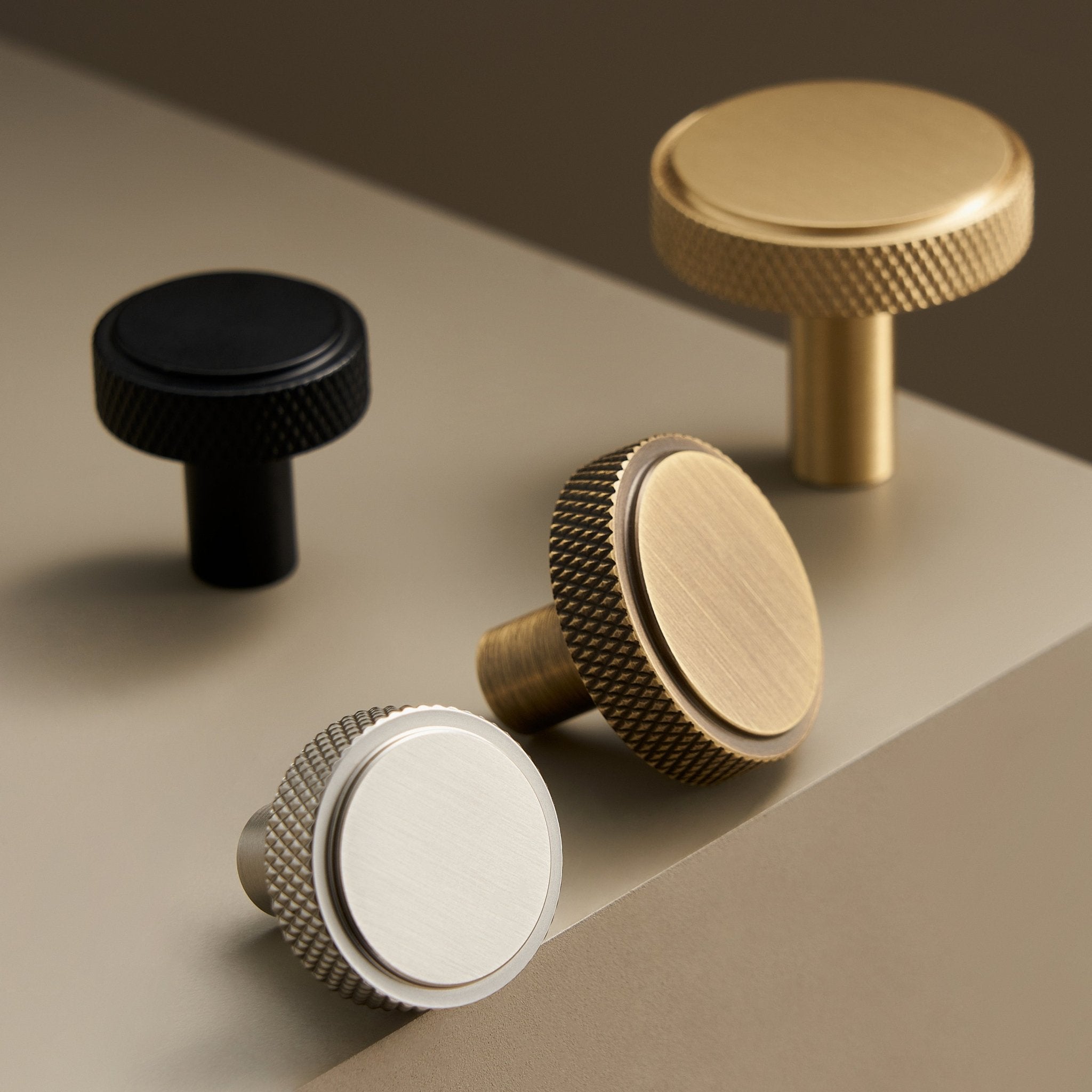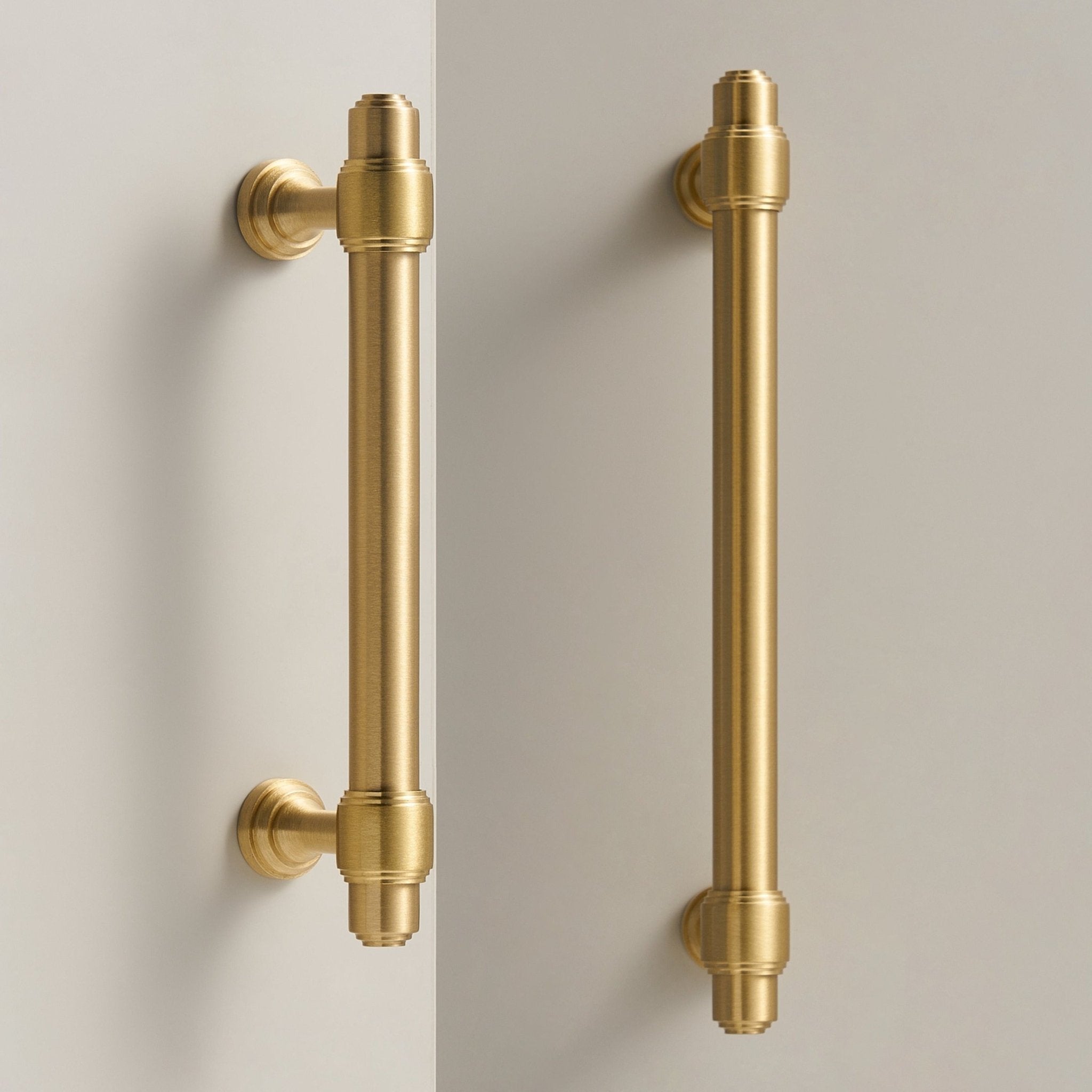














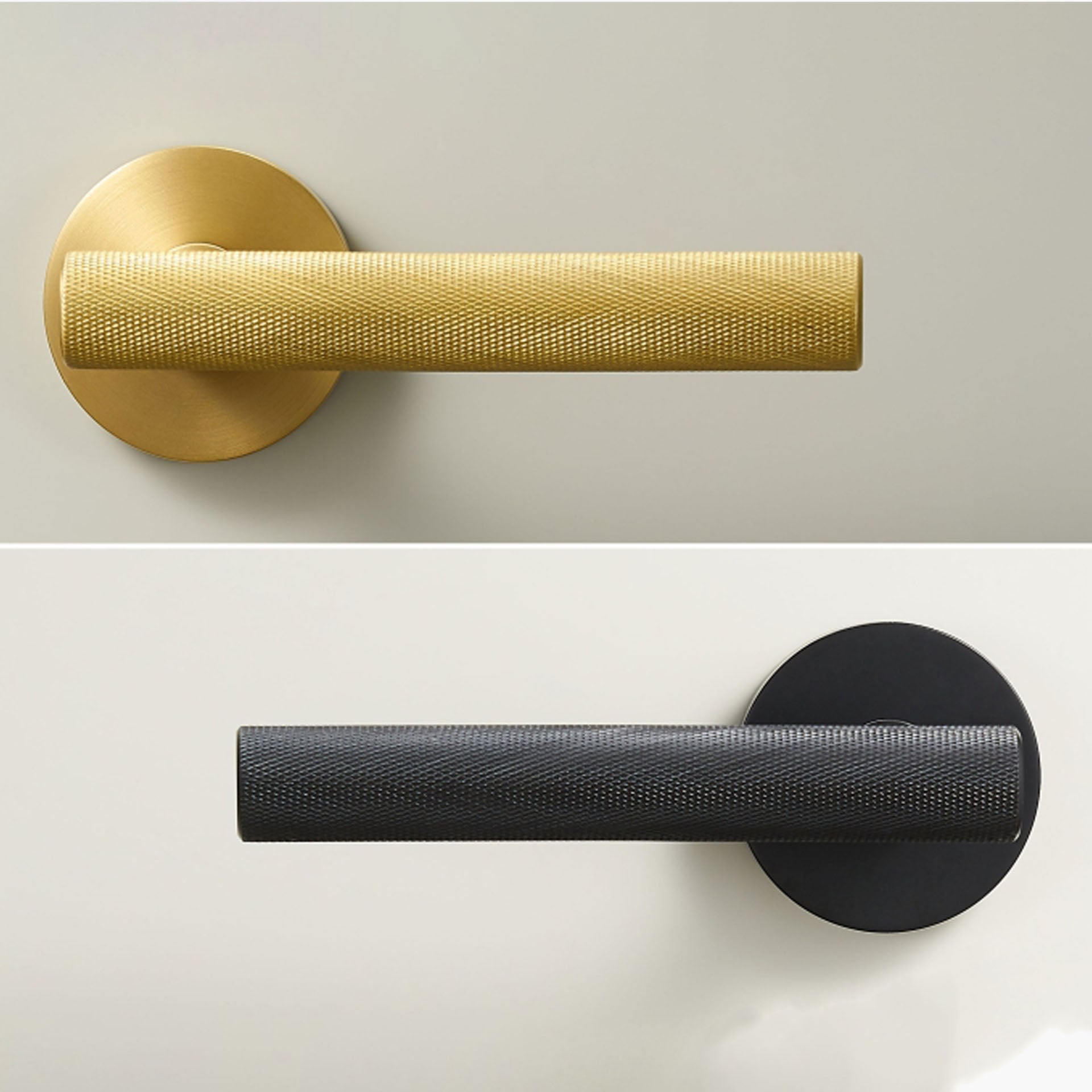
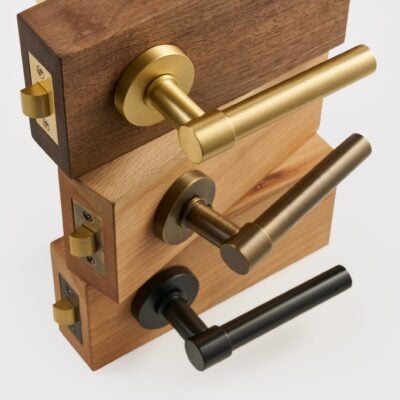

A mortice latch sits in a slot cut into the door edge and is worked by an 8mm square spindle; a North American tubular latch sits in a large cross bore drilled through the door face. Each needs its own handle preparation, and the door, not the handle, decides which.
We sell the same lever in two preparations because the holes drilled in London, Amsterdam and Toronto are not the same, and longer screws do not bridge them. This page explains the two words, why we split them the way we do, and how to tell in five minutes which one a door has. The companion overview is the guide to selecting door hardware.
What is the difference between a mortice latch and a tubular latch?
A mortice latch is a latch case recessed (morticed) into the door edge, held by a rectangular faceplate, and turned by a separate square spindle passing through the door and both levers. Most UK internal latches have a tube-shaped case, so the trade calls them tubular mortice latches; that is the type in every UK/EU VELA and VERTO set.
A tubular latch in the North American sense slides into a 25mm hole in the door edge and meets a much larger hole, usually 54mm, drilled through the door face; the handle mechanism sits inside that hole and drives the latch directly. Same word, different door, and the root of most wrong orders. Our listings say “UK/EU (mortice latch/lock)” for the edge-slot preparation and “North America and Canada (tubular)” only for bored doors: read them as “slot in the edge” and “large hole through the face”.
Four terms to know:
- Backset: the distance from the door edge to the centre of the spindle hole (UK/EU) or of the cross bore (North America). UK 64mm latch cases give 44mm, 76mm cases give 57mm; the longer backset keeps knuckles off the architrave and is the usual trade choice for levers on roses.
- Bore: a round hole through the door face. On a mortice door it is a small clearance hole for the spindle (VELA specifies 25mm; a smaller hole still passes the spindle); on a bored door it is the large hole housing the mechanism.
- Spindle: the square steel bar linking the two levers through the latch. UK/EU spindles are normally 8mm square; BS EN 1906 is the European standard for lever furniture.
- Rose: the round or square plate the lever sits on. It hides the drilling and carries the fixings.
Why is the same handle sold in two preparations?
The lever and rose can be shared worldwide; what sits behind the rose has to engage the latch the door was prepared for. A UK/EU set drives an 8mm spindle through a mortice latch and bolts through small fixing holes. Our North America and Canada set is supplied for a tubular latch to suit bored doors, where industry practice (ANSI/BHMA A156.2) is a 54mm cross bore, a 25mm edge bore and a 60mm or 70mm backset.
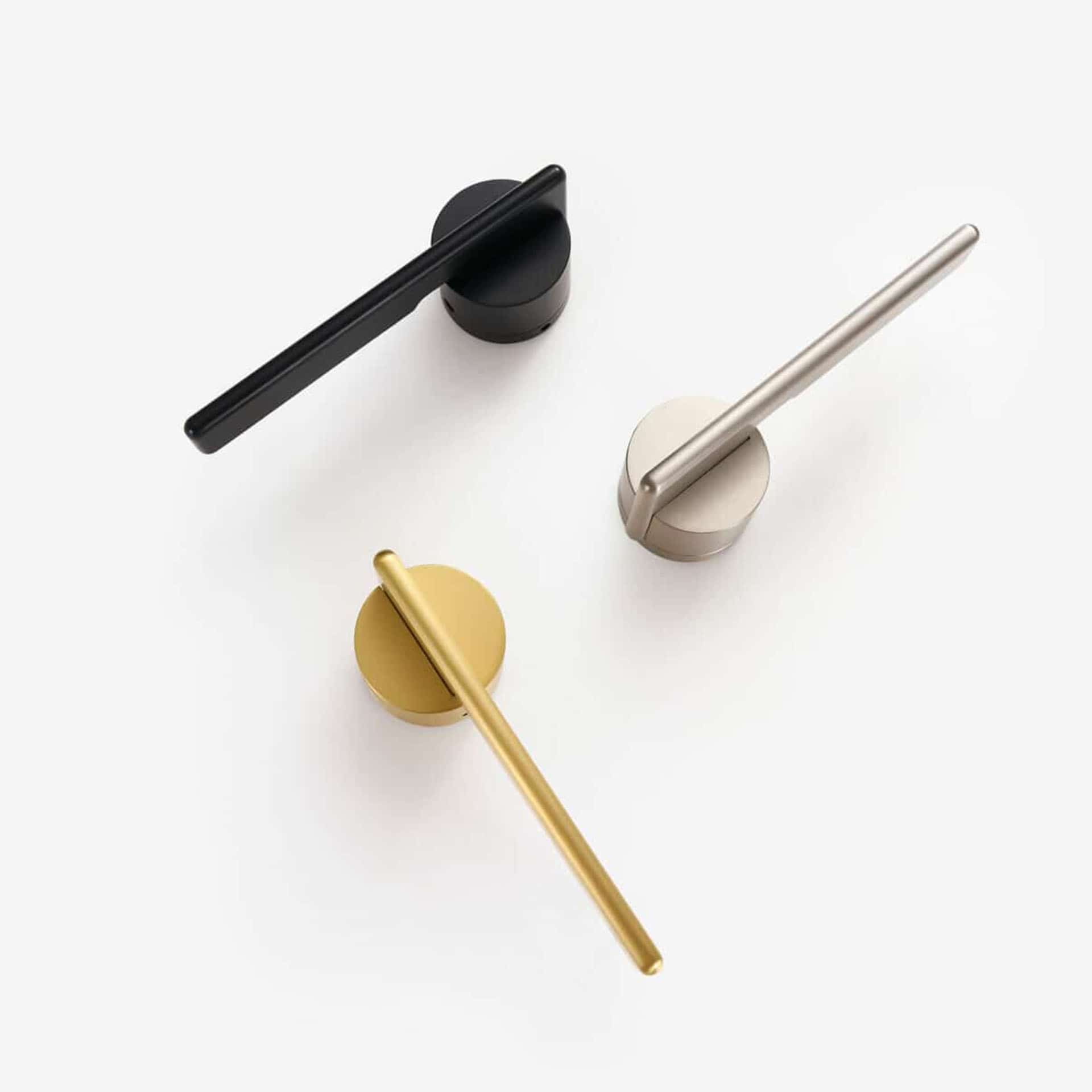
Take the VELA lever door handle as the worked example. In UK/EU preparation it needs one 25mm bore for the spindle plus two 8mm holes at 38mm centres for the bolt-through fixings, all hidden by a 52mm round rose. A door already bored for a North American lockset has a 54mm hole there, wider than the rose, so the mortice set has nothing to fix to. The VERTO offers the same configurations and preparations; its drilling is on its listing.
Every configuration is a complete set: a pair of levers, roses, fixings and the latch or lock for that configuration (the dummy set is a fixed pair with no latch or spindle). Whole-house counts are simple: sets equal doors.
How do UK/EU mortice and North American tubular preparations compare?
| Feature | UK/EU mortice preparation | North America and Canada tubular preparation |
|---|---|---|
| Where the latch sits | Case morticed into the door edge | Cylindrical latch in a 25mm (1 inch) edge bore |
| Edge plate | Rectangular faceplate, about 20 to 25mm wide, two screws | Small plate about 25 x 57mm (1 x 2 1/4 inch) |
| Face drilling | Small spindle hole (VELA: 25mm) plus fixings (VELA: two 8mm at 38mm centres) | One cross bore, usually 54mm (2 1/8 inch) |
| Typical backset | 44mm or 57mm (64mm and 76mm cases) | 60mm (2 3/8 inch) or 70mm (2 3/4 inch) |
| Spindle | Separate 8mm square bar | Drive built into the lockset (industry practice) |
| How the handle fixes | Bolt-through fixings under the rose | Through the cross bore (bored-door practice) |
| Rose | Independent of the latch; VELA rose 52mm | Trim must cover the 54mm bore |
| Door thickness | Commonly 35, 40 or 44mm | Commonly 35mm (1 3/8 inch) internal, 44mm (1 3/4 inch) external |
| Where you find it | UK, Ireland and most of Europe | United States and Canada |
| Our label | UK/EU (mortice latch/lock) | North America and Canada (tubular) |

One number matters most: a face hole of around 25mm or smaller means a mortice door; around 54mm means a bored door.
How do I tell which preparation my door has?
Five minutes on a hung door, latch left in place. Do it on every door in a project: refurbished houses mix eras and preparations.
- Look at the door edge. A rectangular plate around 100mm long and 20 to 25mm wide, held by two screws, is a mortice latch or lock faceplate. A short plate about 25 x 57mm is a North American tubular latch.
- Look at the door face with a lever off. Remove one lever (usually a grub screw under the lever or screws under the rose cover). A small hole with a square bar through it, with or without two smaller fixing holes, is a mortice preparation. A single hole roughly 54mm across is a bored preparation.
- Measure the backset. From the door edge to the centre of the spindle or of the large bore. 44mm or 57mm points to a UK/EU latch; 60mm or 70mm to North American practice. In mortice preparation it does not change which set you buy, because the rose sits wherever the spindle is; note it anyway, because a replacement latch must match the hole already drilled.
- Measure the spindle. On a mortice door, measure the square bar across its flats. 8mm is what the VELA and VERTO are built for. Older or lighter fittings, and some Continental ones, use 7mm; if yours is not 8mm, plan to change the latch or the spindle with the handle.
- Measure the door thickness. Note it when ordering, especially if the door is under 35mm or over 44mm.
If steps 1 and 2 disagree, trust step 2: the face drilling is what the handle has to fit; the edge plate may be a later replacement.
What has to match when I fit a new lever to an existing latch?
Only three things: the preparation (mortice or bored), the spindle size (8mm on a mortice door), and, on a bored door, the cross bore and backset the tubular latch was made for. The old latch brand, finish, rose shape and lever length do not.
On a UK/EU door, a new VELA or VERTO set in mortice preparation will drive any sound latch with an 8mm follower, and the set includes its own latch if you would rather replace it; the VELA lever is sprung, so it returns level even on a tired old latch. If the old rose was larger than 52mm, or the old handle sat on a backplate, expect a paint shadow or screw holes outside the new rose: decorating, not hardware. On a North American door, choose the tubular preparation and check the backset from step 3 so the latch you keep or replace matches.
The internal door handles collection lists each lever with its configuration and preparation options.
How should I order for a mixed project?
Order by door, not by country. One lever specified across a Paris flat, a Toronto house and a refurbished terrace in Leeds is likely to need two preparations and three backsets. Only the preparation column changes.
- List every door with its thickness, edge plate type, face hole size and backset from the check above, then group by preparation.
- Assign the function per door: dummy (fixed) for cupboards, passage for rooms that never lock, privacy for bathrooms and bedrooms, entry (mortice key or thumbturn) where a lock is wanted.
- Count one set per door; each set already contains both levers and its latch or lock.
On the privacy choice: the rose-button set locks with a push-pin through the inside rose and its outside rose is plain, so where release from outside matters (family bathrooms, children, guests, rentals) choose the snib set, which adds a separate privacy bolt with a slotted release on the outer face. Separate privacy snibs exist for other levers.
Joiners, architects and designers can send a door list through the trade programme to have preparation and function checked line by line before ordering.
When should I replace the latch rather than adapt the handle?
Replace the latch when the spindle is not 8mm, when a worn follower lets the lever droop, when the backset puts your knuckles on the frame, or when you are changing function (adding a snib or a key lock to a passage door). A like-for-like swap is quick work for a joiner; packing a spindle with tape gives a lever that hangs, rattles or fails.
Do not convert between preparations: filling a 54mm hole to take a 52mm rose rarely survives, and opening a mortice door to a 54mm bore commits it permanently to bored hardware.
What should I check before ordering?
- Edge plate identified: long rectangular mortice faceplate, or short 25 x 57mm tubular plate.
- Face hole measured with a lever off: small (mortice) or about 54mm (bored).
- Backset measured: 44 or 57mm typical UK/EU; 60 or 70mm typical North America.
- Spindle confirmed 8mm square on a mortice door, or a latch change planned.
- Door thickness noted.
- Function chosen per door as well as preparation, and every door checked on a refurbishment.
If any of these is uncertain, send your notes through the contact page and we will confirm the preparation before you order.
In short
- A mortice latch lives in a slot in the door edge and takes an 8mm square spindle; a North American tubular latch lives in a 54mm cross bore through the face.
- Take a lever off: a face hole of about 25mm means UK/EU (mortice latch/lock), about 54mm means North America and Canada (tubular).
- Only preparation, spindle size and, on bored doors, cross bore and backset must match; the old brand, finish and rose shape do not.
- Every VELA and VERTO configuration is a complete set with both levers and its latch or lock, so count one set per door.
- Never convert a door between preparations; order the one the door already has.
Frequently asked questions
Can I fit a UK handle on an American door?
Not in the same preparation. A UK/EU mortice set expects a small spindle hole under a 52mm rose; an American door has a 54mm cross bore the rose cannot cover. Order the same lever in North America and Canada (tubular) preparation instead.
Is a tubular latch the same as a mortice latch?
Not as we use the words. In the UK the everyday internal latch is often called a tubular mortice latch because its tube-shaped case is morticed into the door edge; in North America a tubular latch is the bored-door type. We say “mortice” for UK/EU and “tubular” only for North America and Canada.
What size is a UK door handle spindle?
8mm square is the standard, and it is what the VELA and VERTO sets are made for. Measure across the flats of the existing bar; if it is smaller, replace the latch or spindle when you fit the new lever.
Does the rose size need to match my old handle?
No. The rose only needs to cover the drilling, and a 52mm rose covers the standard mortice preparation. A larger old rose or backplate may leave a paint line or screw holes to fill.
Do I get the latch with the handle?
Yes. Passage and privacy sets include the latch, entry sets include the mortice lock case (with keys for the key set), and the dummy set is a fixed pair with no latch or spindle.
Which preparation do I choose for a door in Ireland, the Netherlands or Germany?
Almost always UK/EU (mortice latch/lock). European doors use mortice latches and locks, generally with 8mm spindles, although some Continental fittings use 7mm and backsets vary, so run the five-minute check.
Sources and standards
- BS EN 1906: Building hardware. Lever handles and knob furniture. Requirements and test methods.
- BS EN 12209: Building hardware. Mechanically operated locks, latches and locking plates. Requirements and test methods.
- ANSI/BHMA A156.2: Bored and Preassembled Locks and Latches (North American bored-door practice).
- Approved Document M (England) and BS 8300-2: accessibility guidance covering lever handle selection and operation.
- meraki. product specifications and supplier configuration renders for the VELA and VERTO lever door handles (verified August 2026).