









In short
Designers keep naming the hardware you touch. Choose handles with real weight, sized to the door and quiet in shape, in a finish that is allowed to age. Carry one finish, or a deliberate pair, through the house. Give knobs a backplate where the door needs one, and don’t forget the switches.
When Homes & Gardens asked designers which single feature makes a room look more expensive, the magazine reported that the answer was unanimous: hardware. That is a striking answer from people who also choose the sofas, the stone and the paint, and it comes up again and again in the design press.
The designer Clemence Pirajean put it simply to Elle Decoration. For her, a home is about “the feeling of the door handle in your hand”, and all the other small things you touch as you come in. She added that details like these can make a space feel bigger and more luxurious than it is.
This piece gathers what the designers say, and what we have learned ourselves about why some handles make a house feel well made and others don’t.
Why designers keep pointing at the handles
Hardware is the part of a room you actually hold. The American designer Steven Gambrel, in his dos and don’ts for House & Garden, describes it as what you touch and feel when you enter a house, a room or a cupboard. Nina Lichtenstein makes the same point in Homes & Gardens: these small details are touched more than any other surface in a home, so they matter to the hand as much as to the eye.
That touch happens all day, mostly without our noticing. The World of Interiors built a whole shoot for its body issue around the way we pull, turn, slide and push handles, hinges and doorknobs, almost always without thinking about it. Marina Hanisch, speaking to Livingetc, calls hardware the jewellery of the home, the detail that shows a room was considered.
Gambrel also explains why it matters so much in an ordinary house. When the architecture needs a lift, he says, it is often the hardware that brings detail and depth to otherwise plain joinery. A standard door or a simple shaker cupboard changes character with the handle you put on it.
What designers look for, touchpoint by touchpoint
The table sums up the advice in this piece. The left column is where your hand goes most often, and the sections after it explain each point.
| Touchpoint | What designers look for | What to avoid |
|---|---|---|
| Front door | A handle with presence, as the first thing a guest touches | A thin handle that looks like an afterthought |
| Internal doors | A lever or knob that suits the door’s border and the hand | Knobs on doors with a narrow border, where knuckles hit the frame |
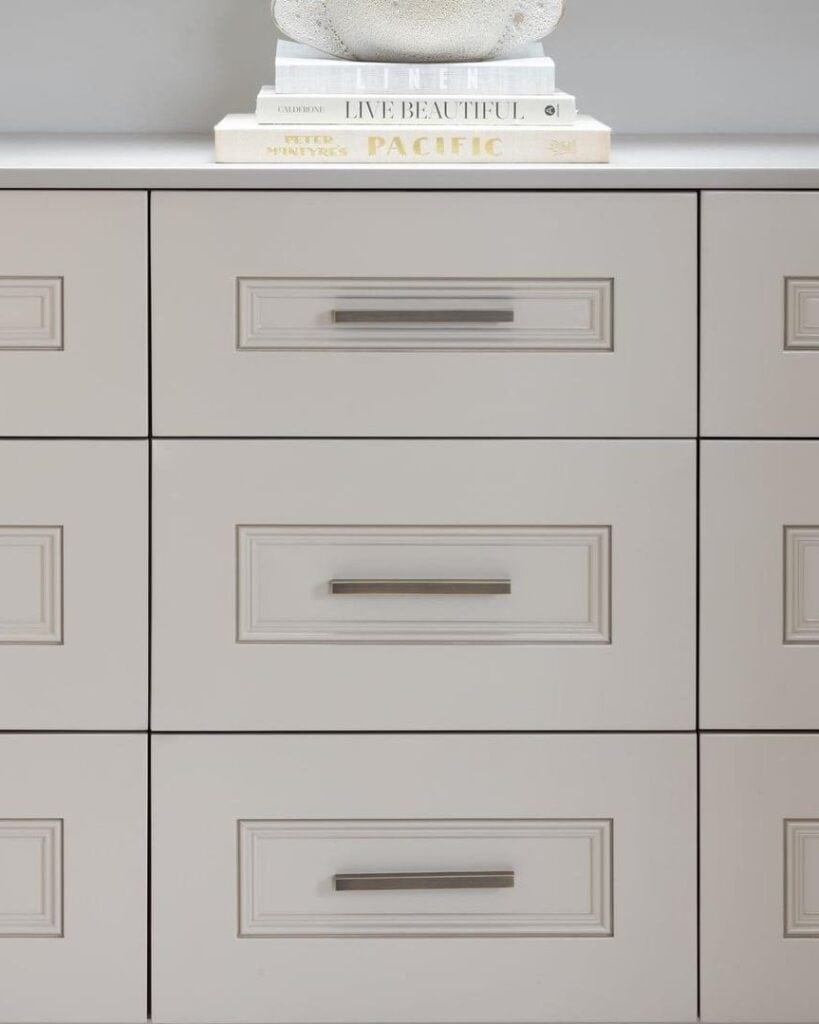
| Kitchen doors and drawers | Solid handles with some weight, in a quiet shape | Thin pulls, and outsized statement shapes |
| Backplates and roses | Substance behind the knob or lever, and protection for the paint | Plates out of scale with the door |
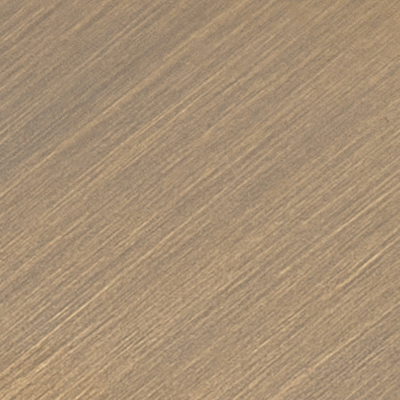
| Finish | A metal that is allowed to age, such as antique, satin or unlacquered brass | A bright finish that looks brand new for ever |
| Switches and sockets | Metal plates that suit the handles, or plates that disappear into the wall | Standard white plastic in a considered room |
Spend on the handles, save on the cupboards
House & Garden has noted that designers often suggest saving on the furniture, from wardrobes to kitchen carcasses, and spending on the hardware instead. In her former house in Spitalfields, the designer Sophie Ashby did exactly that, putting beautiful handles on plain ready-made wardrobes: the money went on the handles and was saved on the carcasses.
Others say the same in their own words. Gambrel’s advice is to allow a budget for really good hardware. Sarah Vanrenen told House & Garden that the wrong ironmongery and handles can make or break a house, so always add some budget for them. Phoebe Hollond’s rule is shorter: “Don’t skimp on ironmongery.” In her view, well-made door furniture makes a house feel luxurious straight away.
It is also one of the easier changes to make. Gloria Sanchez, speaking to Livingetc, points out that upgrading hardware costs relatively little next to the difference it makes to how well made a room seems. Jessica Buckley picks out worktops and hardware as two details that make a big difference to a kitchen’s look. In our experience a tired kitchen with good doors can look new with handles alone, which is why we wrote about the kitchen handle as furniture.
Weight and texture are what the hand notices first
Pick up two handles of the same size and shape and you can tell the better one before you look at it. Manuela Hamilford told Livingetc that because door and cabinet handles are used every day, their weight and finish matter, and that a solid, matte handle feels better to touch and makes a home feel better made.
Jen Dean, in Homes & Gardens, describes the builder basic look as the sum of many default choices, and hardware that works but adds nothing is one of them. Her answer is to choose hardware with some weight. In the same piece Kailee Blalock suggests swapping thin pulls for substantial ones in unlacquered brass or aged bronze.
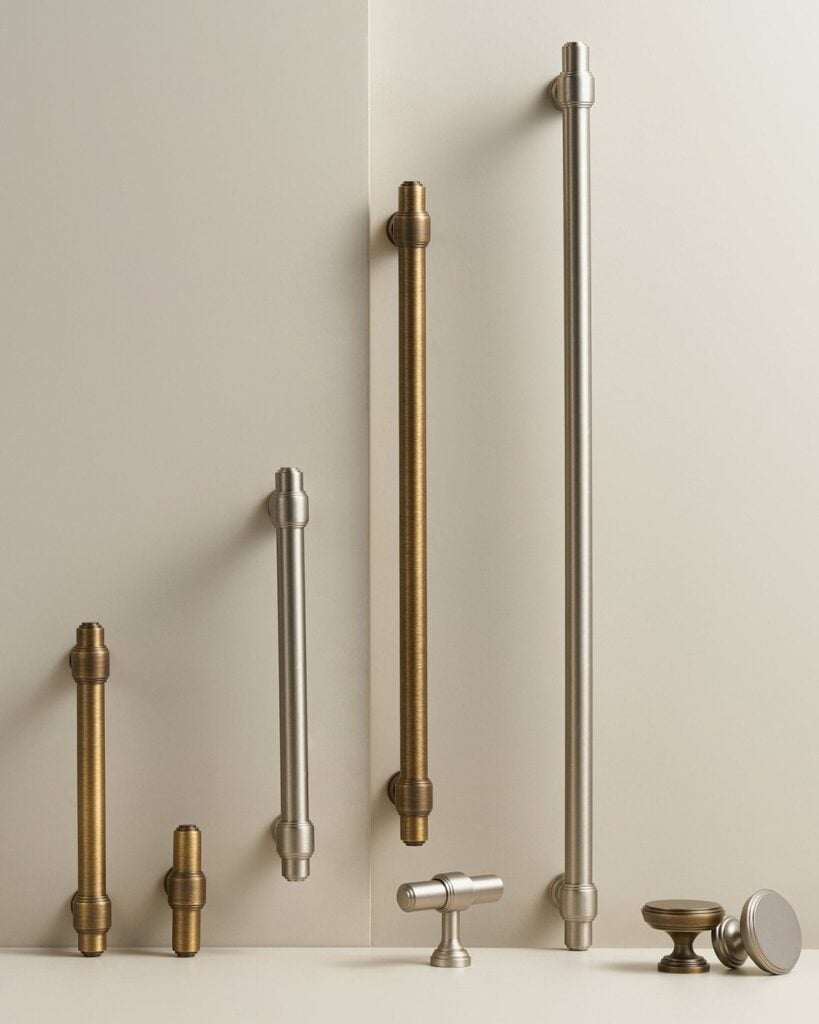
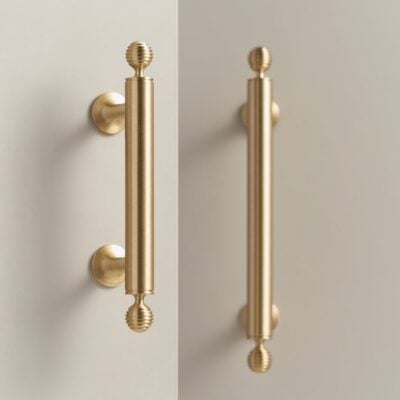
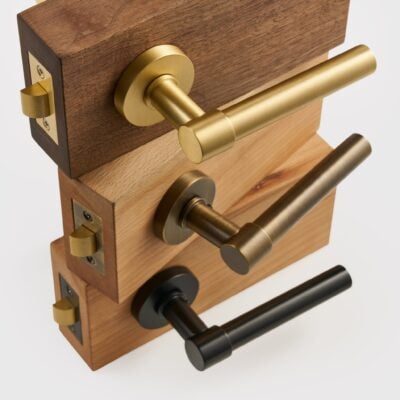
Weight usually comes from the material. A handle cast or machined from solid brass is heavier and more even in the hand than a thin plated shell, and it keeps its colour when the surface wears. Our guide to solid brass and plated hardware explains how to tell them apart. Our HART handles are made entirely from solid brass, in eight sizes from 130 mm to 500 mm.
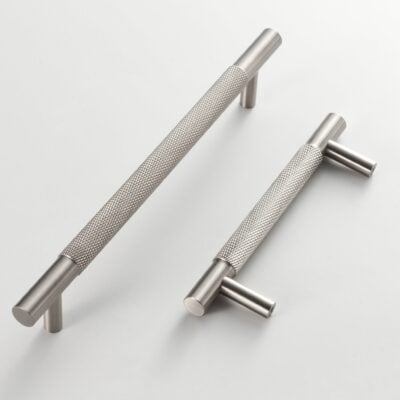
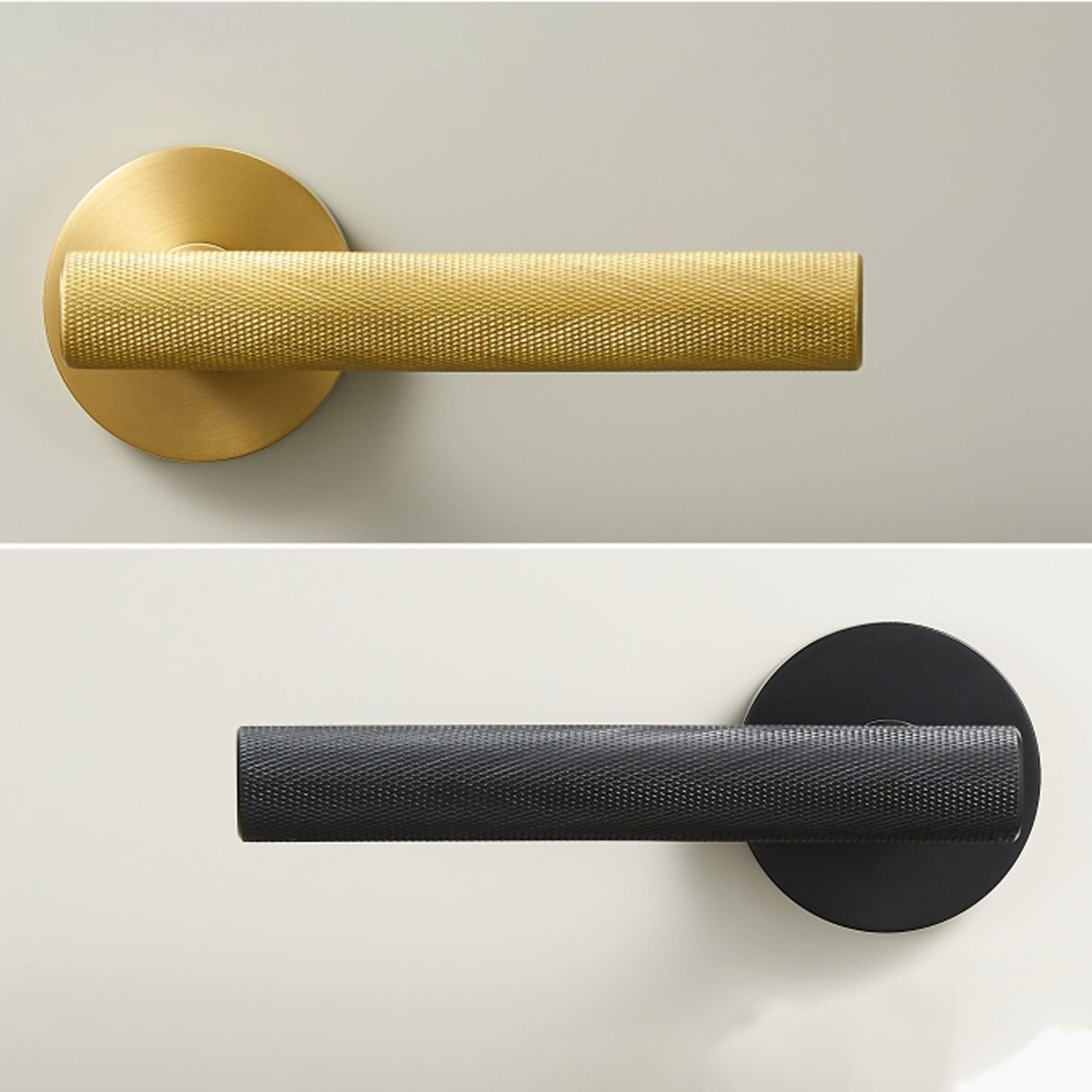
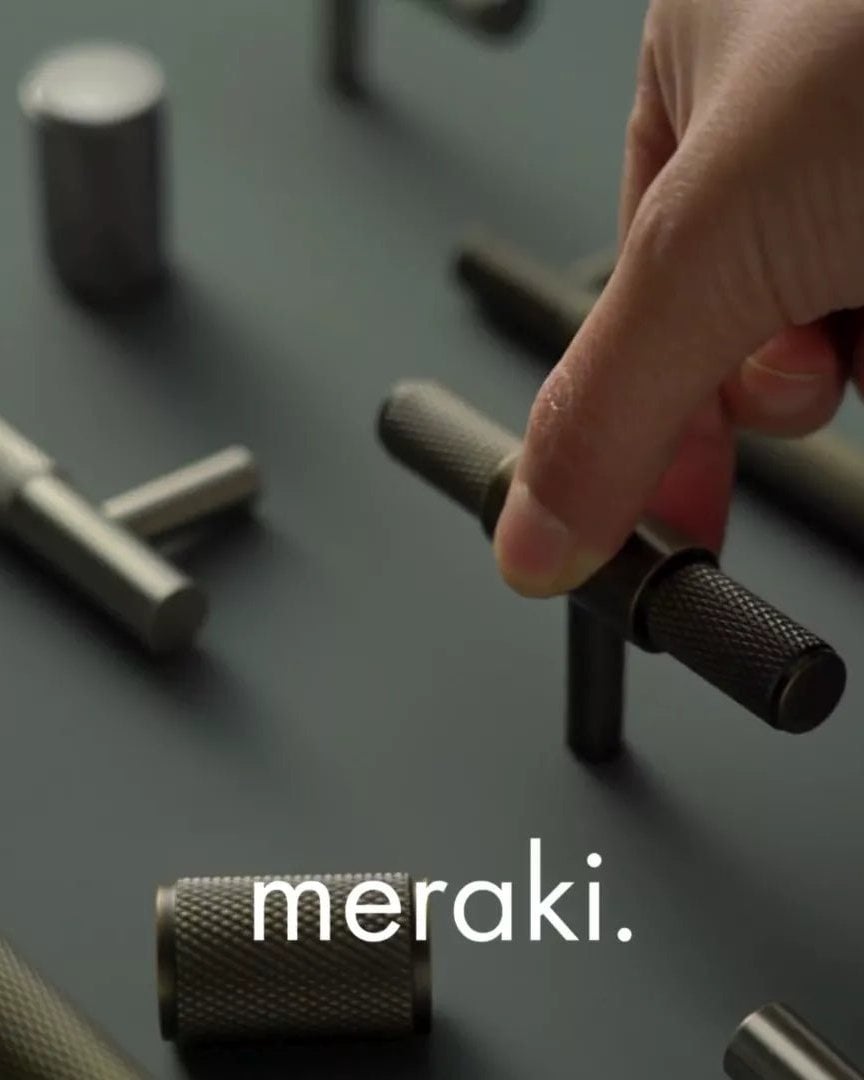
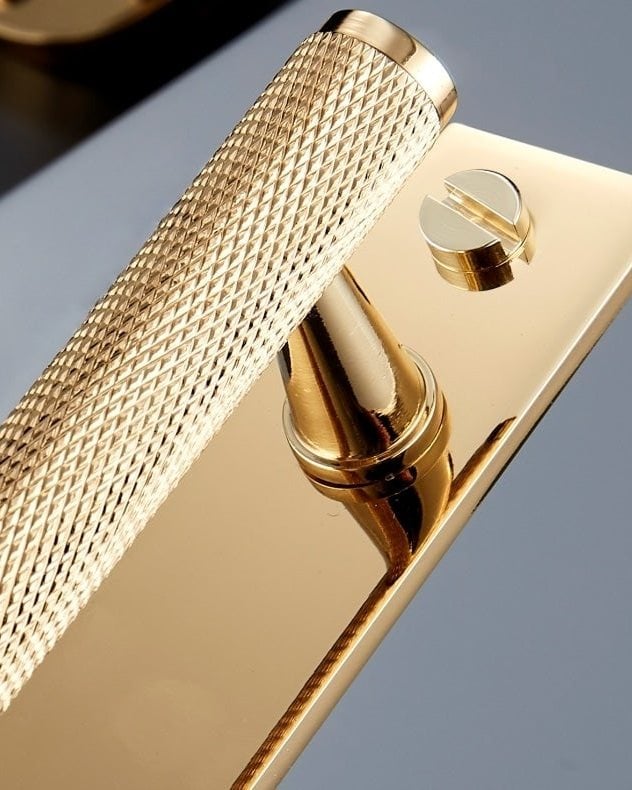
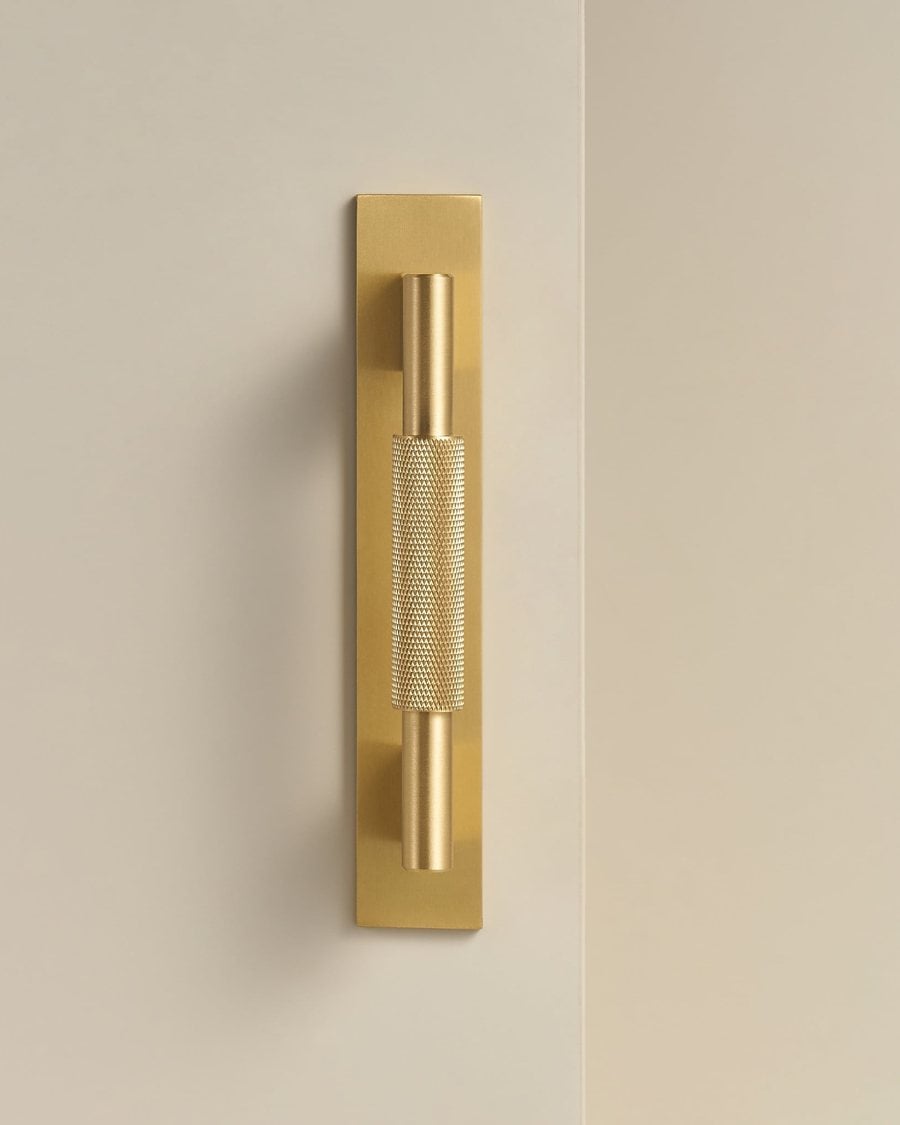
Texture is the other thing the fingers find. Siobhan Kelly, also in Livingetc, says the touch of good hardware brings you into the moment. We think a knurled grip does this better than anything: the fine diamond pattern gives your fingers something to hold, and it catches the light differently from a smooth bar. HART carries its knurl along the full length of the grip. Our guide to knurled hardware has more on the pattern.
Size it to the door, and keep the shape quiet
A handle can be beautifully made and still feel wrong if it doesn’t suit the door. Pandora Taylor’s advice in House & Garden is to check how new handles will work with the doors you have. A knob needs a door with a wide border or a central band, as on a Victorian panelled door. On a door with a narrow border your hand will knock the frame every time you turn it, and that, she says, is when you need a lever. Lichtenstein makes a similar point: a handle that fits your grip, or a lever in place of a knob that is hard to turn, improves the way you use a home every day.
On cupboards the same logic applies to length and projection. Our guide to handle sizes and centres covers how to scale a handle to a drawer, and our piece on period door hardware covers knobs and levers by era.
Scale also works the other way. Architectural Digest reported designers saying that over-the-top hardware, such as large oval pulls, now dates a room. Camilla Clarke, Ottalie Stride and their two partners, in their dos and don’ts for House & Garden, prefer quietly refined shapes that are tactile and simple, and say that simplicity brings a sense of permanence and quiet luxury.
The World of Interiors showed the far end of that idea in a Roman palazzo where the owner disliked handles so much that every door and cupboard opens with a hidden slit. Most of us need something to hold, so we read it as a lesson in restraint rather than removal: one good shape, repeated, looks more expensive than several loud ones.
Choose a finish that is allowed to age
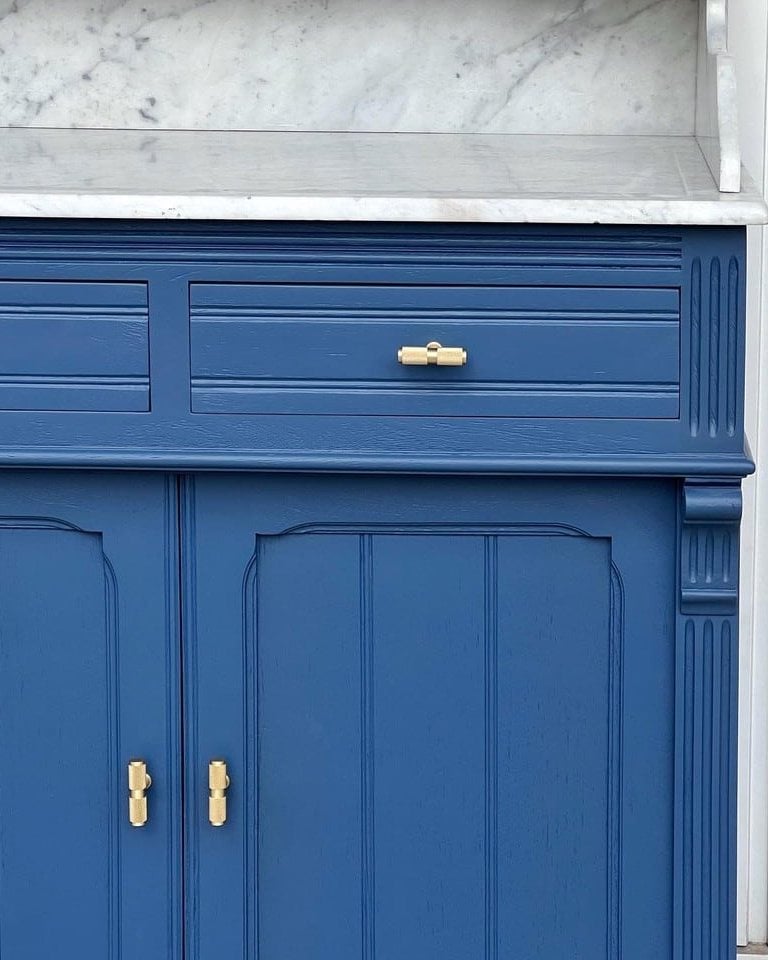
New hardware in a very bright finish can look exactly that: new. Many designers prefer metal that changes with use. Gambrel says antique brass or burnished gunmetal fittings add polish and character to any painted door or cabinet. Anna Haines told House & Garden to steer away from anything too shiny, and finds that aged, brushed and satin brass sit together well.
House & Garden’s piece on patina, drawing on the designer Octavia Dickinson, observes that the things we touch most, light switches, taps and handles, gain their patina sooner than we might expect, and encourages unlacquered brass and unpolished wood. Sarah Solis, in Architectural Digest, prefers finishes that age gracefully, such as unlacquered brass or bronze. Kelly makes the same case for metals that develop a patina, which she says feel made for the room.
In our experience polished unlacquered brass arrives bright and darkens slowly over years, and the places your hand rests stay a little brighter than the rest. That uneven, lived-in look is the point. Antique brass gives an aged look from the first day, and satin brass sits between the two. Our guide to polished unlacquered brass explains how it ages, and the finish care guide covers cleaning each finish.
One finish through the house, or a deliberate pair
Designers disagree here, and both camps make a good case. Susie Atkinson told House & Garden that if you choose antique brass ironmongery, you should stick with it. She might occasionally add bronze, but she would never put those metals with nickel or chrome. Anna Haines takes the other view: not every finish in a house has to match, and it is often better if they don’t. Livingetc, in a piece on backplates, suggests mixing two metals in a room for interest.
Jordan Samson offers a middle way in Homes & Gardens: one finish for all the plumbing, and another for the door and cabinet hardware. We like that rule because it groups things by what you do with them. Everything you hold to open a door or a drawer shares one finish, and the taps or lights can take a second.
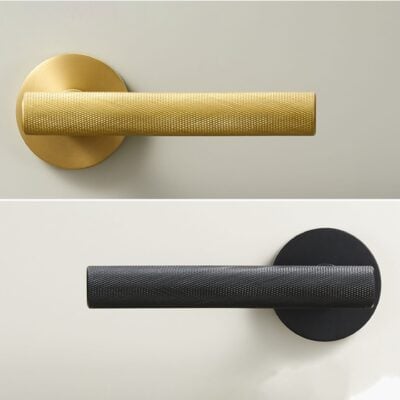
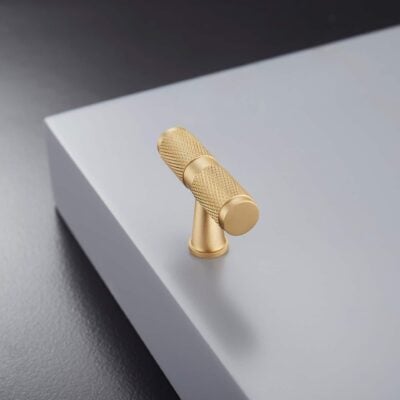
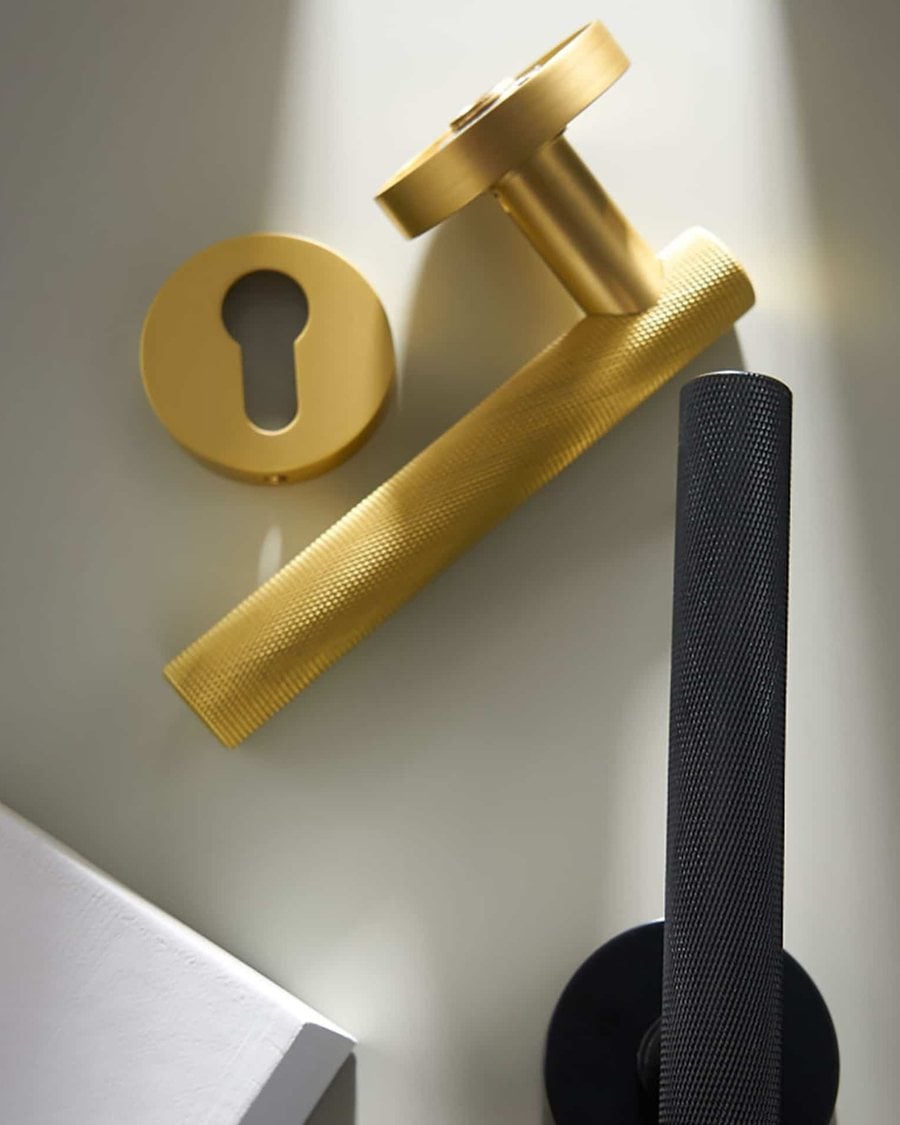
The easiest way to keep that consistency is to choose a family that covers every door and cupboard. Our LUX levers have solid brass levers, roses and lock mechanism, and share their knurl with the LUX cabinet handles, knobs and T-bars, so the same texture runs from the hall to the kitchen. Our guide to mixing metals calmly explains how to add a second finish without the room looking busy.
Backplates and roses add substance
A backplate puts a little more metal behind a knob or handle, and designers have taken to them again. Wendy Smit told Livingetc that backplates on doors and cabinets can lift a space at once, and that they recall an age of real craftsmanship in the home. Lucy MacNicoll, in the same piece, says they have become a feature in their own right, one that highlights the design.
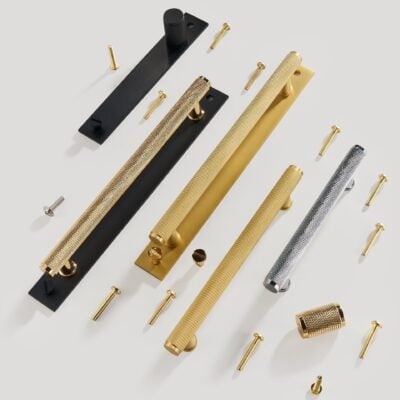
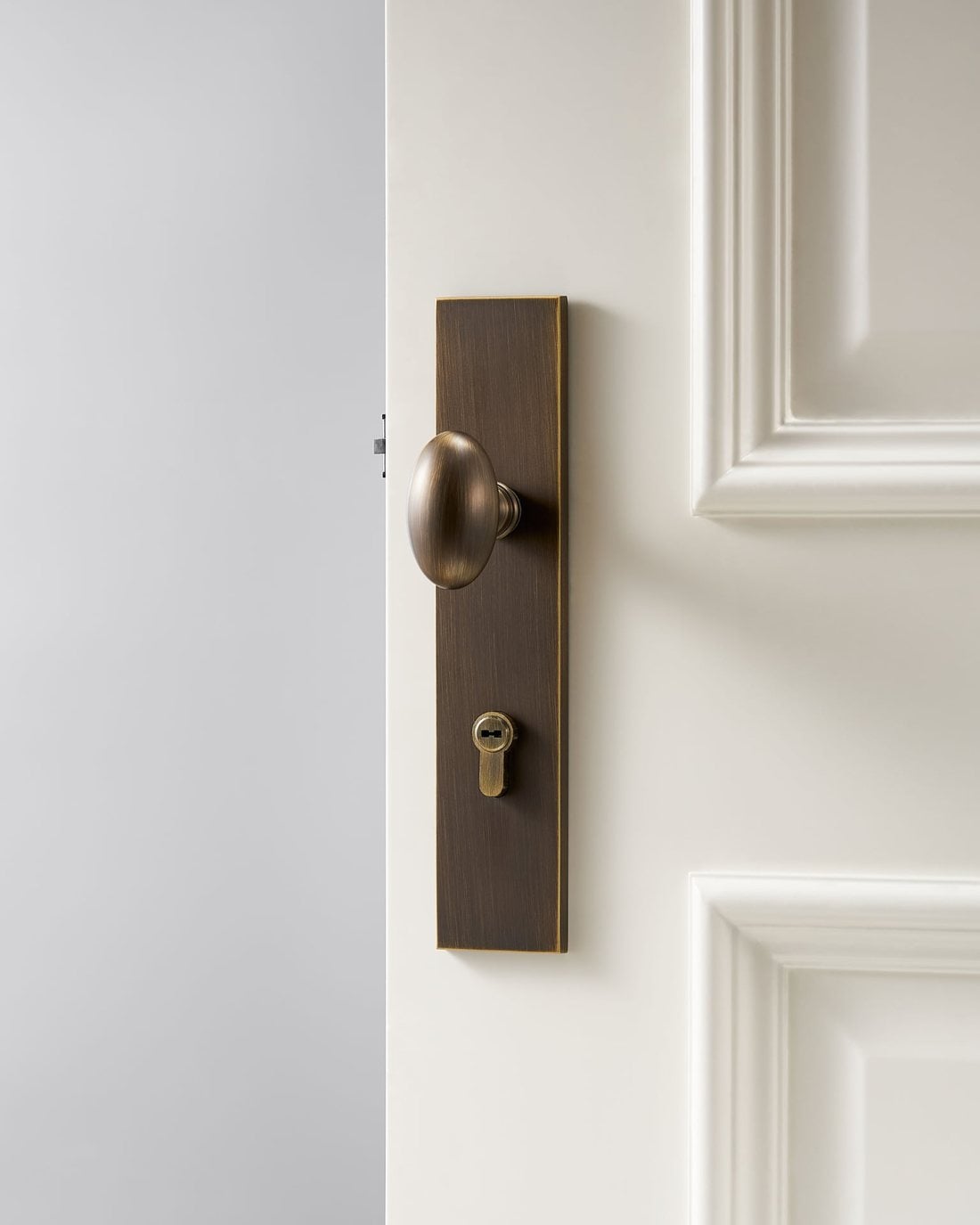
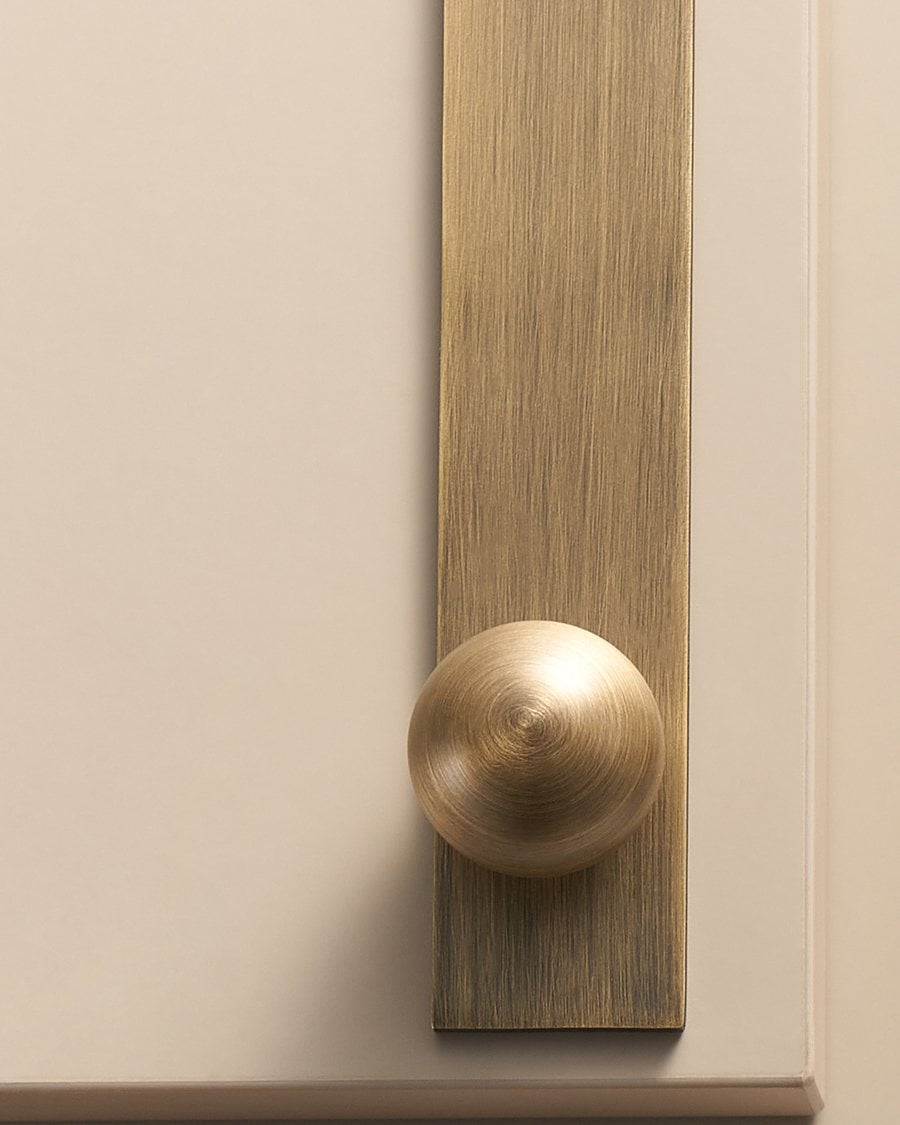
They are practical as well. A plate takes the knocks and fingermarks that would otherwise land on the paint, and on a panelled door it gives a small knob the presence of a larger one. Our KROM door knob with backplate comes in antique brass, satin brass and matte black, as a dummy set or with a lock. For cupboards, BANDA is a slim solid brass backplate, 3 mm thick, in six lengths from 96 mm to 256 mm centres, with square or rounded ends. Our earlier piece on backplates for knobs and handles covers sizes and fixing, and the full range is in backplates.
Don’t forget the switches
Light switches and sockets are touched almost as often as handles. Sarah Solis told Architectural Digest that they are among the most frequently touched things in a home, yet often overlooked. Manuela Hamilford’s advice in Livingetc is that standard white plastic plates can jar in an otherwise considered room. She suggests lining them up, keeping them off the skirting, and choosing a finish that works with the door handles and other metalwork.
Irene Gunter, speaking to Country Life, takes a different line. She never uses white plastic switches outside garages, but her ideal is a switch so subtle you hardly notice it, and her studio will even powder-coat switches and sockets in the colour of the walls. Both approaches work. What they share is that neither leaves the plastic plate as it came.
Where to start
If you are changing things one at a time, start where a guest’s hand goes first. Rachel Chudley told Elle Decoration that someone once described the front door handle as “the handshake of the house”, and she loves the idea. After that, change the doors and drawers you use most, usually the kitchen, the bathroom and your own bedroom, and carry the same finish through as you go.
A finish looks different in your own light than it does on a screen, so it is worth holding one before you commit to a whole house. You can order finish samples of our handles and knobs, and see them against your doors and paint first.
Quick answers
What makes a home look expensive?
Designers name hardware more than anything else: the handles, knobs and levers you touch every day. Solid, weighty pieces in a quiet shape and a finish that ages make a house feel well made.
Is it worth spending more on handles than on kitchen cabinets?
Many designers think so. House & Garden notes that they often save on the carcasses and spend on the handles, because the handles are what you see and touch.
Should door handles match cabinet handles?
It looks calmest when they do. Jordan Samson keeps door and cabinet hardware in one finish and lets the plumbing take another, which is the approach we’d suggest.
Knobs or levers for internal doors?
It depends on the door. Pandora Taylor says a knob needs a wide border or a central band, as on a Victorian panelled door. On a door with a narrow border, choose a lever so your knuckles don’t hit the frame.
Do backplates make doors look more expensive?
Designers quoted by Livingetc think so, and say backplates recall a time of real craftsmanship. A plate also protects the paint around the handle.
Which brass finish looks the most expensive?
We’d choose one that is allowed to age. Antique brass looks aged from the start, satin brass is soft and even, and polished unlacquered brass arrives bright and darkens slowly with use.
Should light switches match the door handles?
Designers differ. Manuela Hamilford matches switches to the handles and metalwork, while Irene Gunter paints them into the wall. Both avoid standard white plastic.
Sources
- Homes & Gardens: Designers say this one unassuming feature will make your home look more expensive. The unanimous answer, hardware, and Nina Lichtenstein on touch and fit in the hand.
- Elle Decoration: Small details make a big impact in this Marylebone pied-à-terre. Clemence Pirajean on the door handle in your hand.
- House & Garden: Steven Gambrel’s dos and don’ts of decorating. A budget for good hardware, touch, and antique brass.
- House & Garden: Why handles and knobs are an interior designer’s secret weapon. Saving on carcasses and spending on handles, as Sophie Ashby did.
- House & Garden: Phoebe Hollond’s dos and don’ts of decorating. Well-made ironmongery and a luxurious house.
- House & Garden: Kitchen renovation, the dos and don’ts. Sarah Vanrenen, Jessica Buckley and Anna Haines on hardware and mixing finishes.
- House & Garden: Pandora Taylor’s dos and don’ts of decorating. Knobs, levers and the door’s border.
- House & Garden: Albion Nord’s dos and don’ts of decorating. Camilla Clarke and Ottalie Stride on quiet, tactile ironmongery.
- House & Garden: Patina, why are we so obsessed with it? Octavia Dickinson on the things we touch most, and unlacquered brass.
- House & Garden: Susie Atkinson’s dos and don’ts of decorating. Sticking with one metal.
- Livingetc: People who have homes that always feel finished plan these things. Manuela Hamilford on weight and on switches, and Marina Hanisch on jewellery.
- Livingetc: Small room details that make compact spaces look more polished. Gloria Sanchez on cost and effect, and Siobhan Kelly on touch and patina.
- Livingetc: Cabinet backplates. Wendy Smit and Lucy MacNicoll on backplates and mixing two metals.
- Homes & Gardens: Things in your home that are giving builder basic. Jen Dean and Kailee Blalock on weighty hardware.
- Homes & Gardens: Jordan Samson on mixing metals. One finish for plumbing, another for door and cabinet hardware.
- Architectural Digest: The best interior design details for making a room feel layered. Sarah Solis on switches and finishes that age.
- Architectural Digest: Home decor faux pas that date your interiors. Oversized hardware.
- Elle Decoration: Rachel Chudley’s rules for decorating a hallway. The front door handle as the handshake of the house.
- Country Life: Light switch alternatives, why it’s time to ditch plastic. Irene Gunter on switches.
- The World of Interiors: With knobs off. A Roman palazzo without handles.
- The World of Interiors: Hardware meets the human body. How we pull, turn, slide and push.
Images: Product photographs are our own.